
-
Your next favorite book
is waiting.
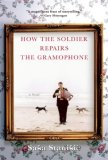
by Sasa Stanisic
For young Aleksandar Krsmanoviæ, his grandfather Slavko’s credo--“the most valuable gift of all is invention, imagination is your greatest wealth”--endows life in Višegrad, Bosnia-Herzegovina with a mythic quality, a kaleidoscopic brilliance. So when his grandfather dies suddenly, Aleks summons this gift of storytelling to see him through his grief. It is a gift he will have to call on again when soldiers transform Višegrad--a town previously unconscious of racial and religious divides--into a nightmarish landscape of terror and violence.
Though Aleks and his family flee to Germany, he is haunted by his past, and especially by Asija, the mysterious girl he tried to save. Desperate to learn of her fate, he sends manic, anguished letters out into the abyss, again turning to language to conjure all that he’s had to forfeit--his homeland, his mother tongue, his innocence. Beneath the infectious vibrancy of Stanišiæ’s voice is a sweetness and pathos that will haunt the reader long after the book ends. Powerful, vivid, funny, and devastating, How the Soldier Repairs the Gramophone captures the catastrophe of war through a child’s eyes and shows how words have the ability to mend what is broken and resurrect what is lost.
"It is difficult to keep up with this frantic pace, but it pays to be patient because a remarkable life's journey unfolds." - Publishers Weekly.
"This book won Germany's Readers' Prize and was nominated for the Deutscher Buchpreis, and rightly so; it's voice of a bold young Europe and a child's-eye view of war all the more poignant because it's not gritty realism." - Library Journal.
"Stanisic has a few writerly tricks that swiftly become irritating: he relies too much on repetition; he can be infuriatingly whimsical and sentimental. But the best sections are exceptionally powerful and moving. As the debut of a young writer, this is a wonderfully inventive and impressive novel." - The Guardian UK.
"Stanisic is an exceptionally talented, impish and caring writer who has walked the edge of the abyss." - Los Angeles Times.
"The novel compellingly asks how damage may be healed. It is not only a gramophone but the human mind that demands restoration from the ravages of history." - The Independent.
"Throughout, Stanisic's choices are excellent, his pacing pitch-perfect. We live, we survive, we heal, the author wants us to see, by telling stories. This is a writer to watch." - San Francisco Chronicle.
This information about How the Soldier Repairs the Gramophone was first featured
in "The BookBrowse Review" - BookBrowse's membership magazine, and in our weekly "Publishing This Week" newsletter. Publication information is for the USA, and (unless stated otherwise) represents the first print edition. The reviews are necessarily limited to those that were available to us ahead of publication. If you are the publisher or author and feel that they do not properly reflect the range of media opinion now available, send us a message with the mainstream reviews that you would like to see added.
Any "Author Information" displayed below reflects the author's biography at the time this particular book was published.
Sasa Stanisi? was born in Visegrad in Bosnia-Herzegovina in 1978. At the age of fourteen, he fled to Germany with his family and went on to study literature in Heidelberg and Leipzig. How the Soldier Repairs the Gramophone is his first novel.

If you liked How the Soldier Repairs the Gramophone, try these:
The King Is Always Above the People
by Daniel Alarcon
Published 2018
A slyly political collection of stories about immigration, broken dreams, Los Angeles gang members, Latin American families, and other tales of high stakes journeys, from the award-winning author of War by Candlelight and At Night We Walk in Circles.
by Amit Chaudhuri
Published 2016
A beguiling new novel, at once wistful and ribald, about a day in the life of two Indian men in London, each coping in his own way with alienation, solitariness, and the very art of living.

by Jill Alexander Essbaum
Published 2015
A striking debut novel of marriage, fidelity, sex, and morality, featuring a fascinating heroine who struggles to live a life with meaning.
Theo of Golden by Allen Levi
One spring morning, a stranger arrives in the small southern city of Golden. No one knows where he has come from…or why…




Your guide toexceptional books
BookBrowse seeks out and recommends the best in contemporary fiction and nonfiction—books that not only engage and entertain but also deepen our understanding of ourselves and the world around us.

