
-
Your next favorite book
is waiting.
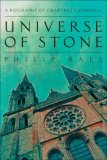
A Biography of Chartres Cathedral
by Philip Ball
Chartres Cathedral, south of Paris, is revered as one of the most beautiful and profound works of art in the Western canon. But what did it mean to those who constructed it in the twelfth and thirteenth centuries? And why, during this time, did Europeans begin to build churches in a new style, at such immense height and with such glorious play of light, in the soaring manner we now call Gothic?
Universe of Stone shows that the Gothic cathedrals encode a far-reaching shift in the way medieval thinkers perceived their relationship with their world. For the first time, they began to believe in an orderly, rational world that could be investigated and understood. This change marked the beginning of Western science and also the start of a long and, indeed, unfinished struggle to reconcile faith and reason.
By embedding the cathedral in the culture of the twelfth century—its schools of philosophy and science, its trades and technologies, its politics and religious debates—Philip Ball makes sense of the visual and emotional power of Chartres. Beautifully illustrated and written, filled with astonishing insight, Universe of Stone argues that Chartres is a sublime expression of the originality and vitality of a true "first renaissance," one that occurred long before the birth of Leonardo da Vinci, Michelangelo, or Francis Bacon.
"Starred. Ball's passion, sharp critical mind and fluid prose open a window onto the remote, alien world we call the Middle Ages." - Publishers Weekly.
"A revelatory look at a seminal period in art history." - Kirkus Reviews.
This information about Universe of Stone was first featured
in "The BookBrowse Review" - BookBrowse's membership magazine, and in our weekly "Publishing This Week" newsletter. Publication information is for the USA, and (unless stated otherwise) represents the first print edition. The reviews are necessarily limited to those that were available to us ahead of publication. If you are the publisher or author and feel that they do not properly reflect the range of media opinion now available, send us a message with the mainstream reviews that you would like to see added.
Any "Author Information" displayed below reflects the author's biography at the time this particular book was published.
Philip Ball is a consulting editor for Nature magazine and a regular commentator on science in Great Britain. His book Bright Earth was a finalist for the National Book Critics Circle Award, and he won Great Britain's prestigious Aventis Prize for Science Books for Critical Mass. He lives in London.

If you liked Universe of Stone, try these:

by Adam Johnson
Published 2016
Winner of the Pulitzer Prize for his acclaimed and bestselling novel The Orphan Master's Son, Adam Johnson is one of America's most provocative and powerful authors. In Fortune Smiles - his first book since Orphan Master - he continues to give voice to characters rarely heard from, while offering something we all seek from fiction: a new way of ...
by Phil Klay
Published 2015
Redeployment takes readers to the frontlines of the wars in Iraq and Afghanistan, asking us to understand what happened there, and what happened to the soldiers who returned.
A Constellation of Vital Phenomena
by Anthony Marra
Published 2014
A brilliant debut novel that brings to life an abandoned hospital where a tough-minded doctor decides to harbor a hunted young girl, with powerful consequences.

L.A. Women by Ella Berman
Two ambitious writers in 1960s LA face betrayal when one writes a novel based on the other's life.






Your guide toexceptional books
BookBrowse seeks out and recommends the best in contemporary fiction and nonfiction—books that not only engage and entertain but also deepen our understanding of ourselves and the world around us.

