
-
Your next favorite book
is waiting.
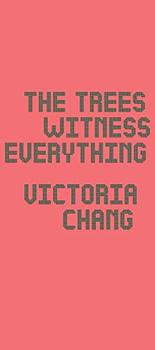
by Victoria Chang
A lover of strict form, best-selling poet Victoria Chang turns to compact Japanese waka, powerfully innovating on tradition while continuing her pursuit of one of life's hardest questions: how to let go.
In The Trees Witness Everything, Victoria Chang reinvigorates language by way of concentration, using constraint to illuminate and free the wild interior. Largely composed in various Japanese syllabic forms called "wakas," each poem is shaped by pattern and count. This highly original work innovates inside the lineage of great poets including W.S. Merwin, whose poem titles are repurposed as frames and mirrors for the text, stitching past and present in complex dialogue. Chang depicts the smooth, melancholic isolation of the mind while reaching outward to name―with reverence, economy, and whimsy―the ache of wanting, the hawk and its shadow, our human urge to hide the minute beneath the light.
"Chang follows Obit (2020) with a new collection in four sublime parts. At the start, Chang works with a traditional Japanese form, waka, also known as tanka, or short poem, and adroitly uses titles of poems by W. S. Merwin as prompts, creating astonishingly subtle poems that gracefully bloom. In 'The String,' she writes, 'When the earth rotates, / a person not tied down with / longing falls off into space.' The book's second section is 'Marfa, Texas,' a long poem sculpted out of reflection on that enigmatic art mecca in the West Texas desert. Lines pop out: 'Here, / you can pay someone to clip / off your shadow and walk it / across the border.' Or 'Here, / when I cry in my head, my / tears come out as letters.' The poet's dialog with Merwin continues in part three, 'The Shipwreck,' as she offers 'I sit at my desk. / Desire is an anchor— / I lift it and words come up.' Wildness is alive throughout in birds—hawks, crows, and wounded larks—along with crickets and beetles that appear between sentences. 'Love Letters' closes this enlightened collection, which reads as an amalgam of buoyant messages from the pandemic we're all experiencing with lines like: 'Don't forget what happened / last year—when you missed people / so much you let them in.' Poetic wisdom past and present is very much alive here." —Booklist (starred review)
"The elegant and reflective fourth collection from Chang presents a moving elegy for both her deceased mother and the dying Earth, using form to capture the fleeting nature of life... . The poems seem like fragments of enlightenment collectively working toward a revelation... . For those who are grieving and those who have grieved, Chang offers beautiful insights, and a path toward healing." —Publishers Weekly
"From Victoria Chang, who grabbed attention with her recent OBIT, The Trees Witness Everything uses Japanese syllabic forms called wakas to plumb our rich interior lives." —Library Journal
This information about The Trees Witness Everything was first featured
in "The BookBrowse Review" - BookBrowse's membership magazine, and in our weekly "Publishing This Week" newsletter. Publication information is for the USA, and (unless stated otherwise) represents the first print edition. The reviews are necessarily limited to those that were available to us ahead of publication. If you are the publisher or author and feel that they do not properly reflect the range of media opinion now available, send us a message with the mainstream reviews that you would like to see added.
Any "Author Information" displayed below reflects the author's biography at the time this particular book was published.
Born in Detroit, Michigan to Taiwanese immigrants, Victoria Chang was educated at the University of Michigan, Harvard University, and Stanford Business School and holds an MFA in poetry from Warren Wilson. She is the author of six books of poetry, including Obit, which was named a "New York Times 100 Notable Books of 2020" and included on Time Magazine's "100 Must-Read Books of 2020." She lives in Southern California with her family and serves as the Program Chair of Antioch's Low-Residency MFA Program.

If you liked The Trees Witness Everything, try these:
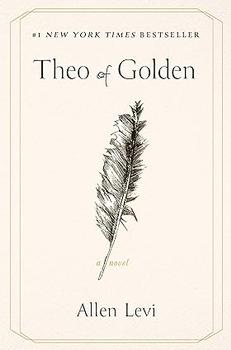
Theo of Golden by Allen Levi
One spring morning, a stranger arrives in the small southern city of Golden. No one knows where he has come from…or why…






Your guide toexceptional books
BookBrowse seeks out and recommends the best in contemporary fiction and nonfiction—books that not only engage and entertain but also deepen our understanding of ourselves and the world around us.

