
-
Your next favorite book
is waiting.
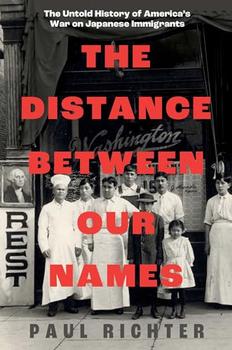
The Untold History of America's War on Japanese Immigrants
by Paul Richter
A gripping historical account about the harrowing struggles of Japanese immigrants in the US during the years leading to World War II.
In 1872, a new Japanese government's first diplomatic delegation to the United States was greeted with rapturous welcome in San Francisco. For over ten days of lavish parties, the city's elite admired the emissaries' silk robes and noble bearing and began forging what they expected would be a special relationship between ascendant Pacific nations. Three decades later, a young Japanese immigrant disembarked at the very same waterfront to a different reception. "I was baptized with horse dung," Nisuke Mitsumori recalled. "This was my very first impression of America." Mitsumori arrived in the first angry days of America's war on Japanese immigrants, a populist convulsion that became one of the nation's darkest episodes of ethnic strife. In the early 1900s, Japanese immigrants faced mob violence and property destruction. Exclusionary laws restricted Japanese immigrants' rights to own property, vote, and marry outside their race. Tensions intensified until 120,000 Japanese Americans were imprisoned in camps during World War II.
The Distance Between Our Names is the story of the early battles over Japanese immigration—the less dramatic, more insidious chapter. Esteemed journalist Paul Richter researched hundreds of memoirs, public records, news reports, and oral histories to deliver an urgent account of immigration history. This highly relevant book is enlivened by intimate stories of the newcomers—high and humble—such as the children banned from public schools, farmers struggling in a system rigged against them, the women who were swindled into marriages resulting in lifetimes of hardship, immigrant leaders battling to forestall punitive laws. Taken together, The Distance Between Our Names is a stunning narrative of resilience and struggle, a gripping story of one community's brave fight for dignity in the face of savage discrimination.
Media reviews not yet available.
This information about The Distance Between Our Names was first featured
in "The BookBrowse Review" - BookBrowse's membership magazine, and in our weekly "Publishing This Week" newsletter. Publication information is for the USA, and (unless stated otherwise) represents the first print edition. The reviews are necessarily limited to those that were available to us ahead of publication. If you are the publisher or author and feel that they do not properly reflect the range of media opinion now available, send us a message with the mainstream reviews that you would like to see added.
Any "Author Information" displayed below reflects the author's biography at the time this particular book was published.
Paul Richter has written about national affairs and foreign policy for four decades. As a journalist for the Los Angeles Times, he was based in Los Angeles, New York, and Washington, DC, and reported from sixty countries. During his years in Los Angeles he was principal author of California and the American Tax Revolt: Proposition 13 Five Years Later. His last book was The Ambassadors: America's Diplomats on the Front Lines. The volume won the American Academy of Diplomacy's Douglas Dillon Award for Books of Distinction on the Practice of American Diplomacy. He lives in the Washington, DC, area.

If you liked The Distance Between Our Names, try these:
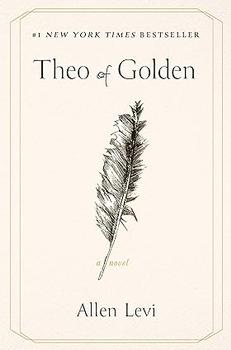
Theo of Golden by Allen Levi
One spring morning, a stranger arrives in the small southern city of Golden. No one knows where he has come from…or why…






Your guide toexceptional books
BookBrowse seeks out and recommends the best in contemporary fiction and nonfiction—books that not only engage and entertain but also deepen our understanding of ourselves and the world around us.

