
-
Your next favorite book
is waiting.
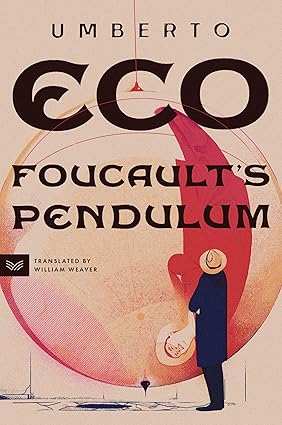
Infused with history and crackling suspense, Umberto Eco's celebrated international bestseller—a cerebral classic, prescient of our own times, about a literary joke that goes terribly awry, unexpectedly plunging its creators into mortal danger.
A man named Colonel Ardenti tells three cynical book editors that he has discovered a coded message about a centuries-old Knights Templar plan to tap a mystic source of power greater than atomic energy. The editors, bored from tooling with manuscripts on the occult and inspired by the colonel's outlandish claims, devise a literary prank for their own amusement. Using a computer, into which they enter bits of information on the Knights Templar, Satanic initiation rites, Rosicrucianism, the measurements of the Great Pyramid, and supernatural and occult phenomenon, they create a map indicating a point from which all the powers of the earth can be controlled—a point located at Foucault's Pendulum in Paris.
The editors are convinced they've devised the ultimate literary joke, a game to consume conspiracy theorists, mystical buffs, and everyone else fool enough to play.
But their joke becomes all too terrifyingly real when people begin to disappear mysteriously, beginning with the Colonel... .
"By turns scholarly, spooky, satirical and deadly... . No reader is likely to stop reading. Or want to." —Washington Post
"As brilliant and quirky as The Name of the Rose, as mischievous and wide-ranging ... A virtuoso performance." —San Francisco Chronicle
"An encyclopedic detective story about a search for the center of an ancient, still-living conspiracy of men who seek not merely power over the earth but the power of the earth itself ... An intellectual triumph." —New York Times Book Review
"Reads as if it were written by the most popular lecturer on campus with the instincts of a Catskill Mountains tumbler who keeps the one-liners coming ... On almost every page, Eco comes up with some fresh notion or turn of phrase that displays his original mind... . Once the reader gets on the Eco carousel it's hard to get off." —New York Times
This information about Foucault's Pendulum was first featured
in "The BookBrowse Review" - BookBrowse's membership magazine, and in our weekly "Publishing This Week" newsletter. Publication information is for the USA, and (unless stated otherwise) represents the first print edition. The reviews are necessarily limited to those that were available to us ahead of publication. If you are the publisher or author and feel that they do not properly reflect the range of media opinion now available, send us a message with the mainstream reviews that you would like to see added.
Any "Author Information" displayed below reflects the author's biography at the time this particular book was published.
Umberto Eco (1932–2016) was the author of numerous essay collections and seven novels, including The Name of the Rose, The Prague Cemetery, and Inventing the Enemy. He received Italy's highest literary award, the Premio Strega; was named a Chevalier de la Légion d'Honneur by the French government; and was an honorary member of the American Academy of Arts and Letters.

If you liked Foucault's Pendulum, try these:
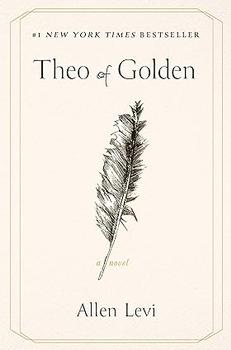
Theo of Golden by Allen Levi
One spring morning, a stranger arrives in the small southern city of Golden. No one knows where he has come from…or why…

Your guide toexceptional books
BookBrowse seeks out and recommends the best in contemporary fiction and nonfiction—books that not only engage and entertain but also deepen our understanding of ourselves and the world around us.

