
-
Your next favorite book
is waiting.
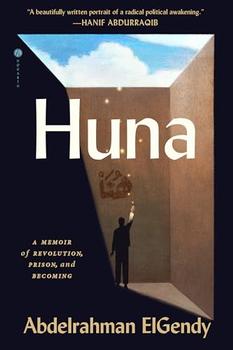
A Memoir of Revolution, Prison, and Becoming
by Abdelrahman ElGendy
A gripping, deeply moving memoir of survival, education, and resistance by a student protestor–turned–political prisoner in post-revolution Egypt.
In 2013, two years after the January 25 revolution, seventeen-year-old Abdelrahman ElGendy was a budding student activist in Cairo. Hope for a free Egypt had dissipated, and when that summer's military coup unleashed unprecedented massacres of protesters, Abdelrahman didn't hesitate—he joined the street movement. His father, fearing for his son's safety, accompanied him to a mass demonstration. But minutes after they arrived, they were swept up in a brutal police crackdown, and their lives were shattered.
Crushed inside a holding cell, Abdelrahman first heard the words of the Arab world's most enduring protest song, "Sawfa Nabqa Huna"—We Will Remain Here. He wondered: If no one wanted to remain behind bars, what was the "here" they chose to inhabit?
Abdelrahman would spend the next six years as a political prisoner chasing this Huna, shuffled, alongside his father, from jail cell, to pre-trial detention center, to The Scorpion, Egypt's most infamous prison complex. As his body broke under the grind of incarceration with no end in sight, he turned to the only refuge left to him: the page. He earned his bachelor's degree in engineering while imprisoned, read and wrote voraciously, and, through writing, bore witness.
In his remarkable debut, Abdelrahman offers not a promise of hope but a provocation. When the very things that can save you—tenderness, family, friendship, language—are used against you, how can you find the courage to love? Huna is a reckoning with what it takes—and what it costs—to remain when erased, and of what endures, perhaps more faithfully, beyond hope.
"You don't read Huna, you live it, savor it, bite, suck up each word—the taste in your mouth? An untranslatable term Abdelrahman ElGendy teaches us, qahr: an injustice, rage, helplessness, but also a divine retribution. In Abdelrahman ElGendy's hands, the brutal, idiotic DNA of authoritarianism has no chance, its grip is futile. ElGendy has purposely sweetened the nightmare, I hope readers learn the lesson. I will never be the same after reading Huna—a pivotal addition to world literature." —Javier Zamora, New York Times bestselling author of Solito
"Huna is a beautifully written portrait of a radical political awakening—a portrait that does not prioritize the harms and brutalities of the state, even though they are endured. But a portrait that, instead, affords an immense patience and dignity to the land and its people. To the heart and its ferocity. To all of the things that turn a person towards rigorous and principled action." —Hanif Abdurraqib, New York Times bestselling author of There's Always This Year
This information about Huna was first featured
in "The BookBrowse Review" - BookBrowse's membership magazine, and in our weekly "Publishing This Week" newsletter. Publication information is for the USA, and (unless stated otherwise) represents the first print edition. The reviews are necessarily limited to those that were available to us ahead of publication. If you are the publisher or author and feel that they do not properly reflect the range of media opinion now available, send us a message with the mainstream reviews that you would like to see added.
Any "Author Information" displayed below reflects the author's biography at the time this particular book was published.
Abdelrahman ElGendy is an author and translator from Cairo. A winner of the Samir Kassir Press Freedom Award, he holds an MFA in Nonfiction Writing from the University of Pittsburgh, and his work appears in publications including The Washington Post, Foreign Policy, The Nation, and Guernica. His poetry and prose translations from Arabic appear in Ploughshares, Poetry Northwest, Literary Hub, Words Without Borders, and elsewhere. ElGendy's work has received awards or fellowships from the Elizabeth George Foundation, the Heinz Foundation, the de Groot Foundation, Virginia Center for Creative Arts, and the Arab American National Museum. Huna is his debut memoir.

If you liked Huna, try these:
L.A. Women by Ella Berman
Two ambitious writers in 1960s LA face betrayal when one writes a novel based on the other's life.






Your guide toexceptional books
BookBrowse seeks out and recommends the best in contemporary fiction and nonfiction—books that not only engage and entertain but also deepen our understanding of ourselves and the world around us.

