
-
Your next favorite book
is waiting.
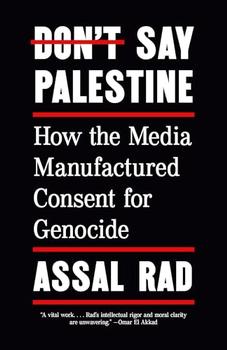
How the Media Manufactured Consent for Genocide
by Assal Rad
A searing indictment of Western media that lays bare how the "free press," long tasked with speaking truth to power, instead became a vital part of the machinery that enabled the genocide in Palestine.
If you're not writing the truth about crimes against humanity, you're culpable in them.
Activist and Middle East historian Assal Rad is known as the "headline fixer" for her powerful posts that illustrate how mainstream Western media's coverage of the Gaza Genocide is filled with double standards. Israelis are described as "children" and "civilians," while Palestinians are "people under 18" and "collateral damage"; Israelis are killed; Palestinians die. Even in the wake of the so-called ceasefire, major Western media continually obfuscates Israeli violence in Palestine: For example, the Associated Press reported that "Gaza's living conditions worsen as strong winds and hypothermia kill 5." No, Rad corrects: Gaza's living conditions worsen as Israel blocks aid.
In Don't Say Palestine, Rad reveals a pattern of dehumanizing language—in outlets from CNN and the AP to the BBC and The New York Times—so consistently employed throughout the Palestinian genocide that it amounts to a policy. Mainstream Western media consistently downplays Israeli responsibility, "others" Palestinians, and casts doubt on inviolable tenets of international law like the sanctity of hospitals and journalists in war zones. This groundbreaking, eye-opening exposé offers both a moral reckoning and an urgent call to action, mapping with devastating clarity the media's complicity in whitewashing a human rights crisis.
"A poignant reminder of the power of words to normalise, or legitimise, genocide." —Yanis Varoufakis, author of Technofeudalism
"When so many chose indifference and obfuscation, Assal insists on clarity, honesty, and integrity. She documents how complicity for a livestreamed genocide was perpetrated. It is a chronicle of depravity and the depraved, and of the operation of cynicism on a grand dehumanizing scale." —Ussama Makdisi, author of Anti-Palestinianism
This information about Don't Say Palestine was first featured
in "The BookBrowse Review" - BookBrowse's membership magazine, and in our weekly "Publishing This Week" newsletter. Publication information is for the USA, and (unless stated otherwise) represents the first print edition. The reviews are necessarily limited to those that were available to us ahead of publication. If you are the publisher or author and feel that they do not properly reflect the range of media opinion now available, send us a message with the mainstream reviews that you would like to see added.
Any "Author Information" displayed below reflects the author's biography at the time this particular book was published.
Assal Rad is an activist, historian of the modern Middle East, and a fellow at the Arab Center Washington DC and DAWN. Her first book, The State of Resistance: Politics, Culture, and Identity in Modern Iran, was published by Cambridge University Press in 2022. Her writing has appeared in Newsweek, The National Interest, The Independent, Foreign Policy, and other publications, and she has appeared as a commentator on BBC World, Al Jazeera, CNN, NPR, and elsewhere.

If you liked Don't Say Palestine, try these:

L.A. Women by Ella Berman
Two ambitious writers in 1960s LA face betrayal when one writes a novel based on the other's life.






Your guide toexceptional books
BookBrowse seeks out and recommends the best in contemporary fiction and nonfiction—books that not only engage and entertain but also deepen our understanding of ourselves and the world around us.

