
-
Your next favorite book
is waiting.
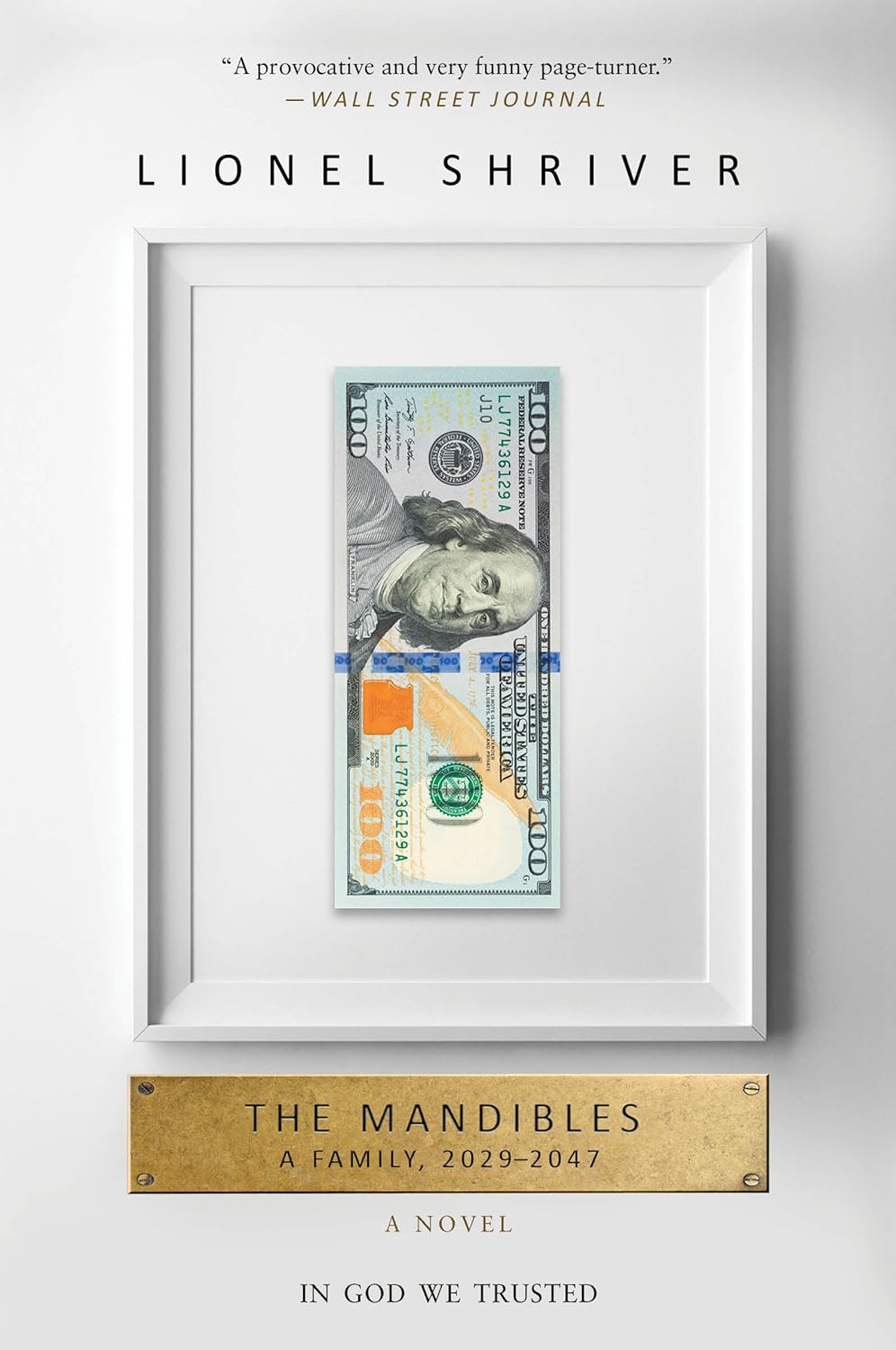
by Lionel Shriver
With dry wit and psychological acuity, this near-future novel explores the aftershocks of an economically devastating U.S. sovereign debt default on four generations of a once-prosperous American family.
Down-to-earth and perfectly realistic in scale, this is not an over-the-top Blade Runner tale. It is not science fiction.
In 2029, the United States is engaged in a bloodless world war that will wipe out the savings of millions of American families. Overnight, on the international currency exchange, the "almighty dollar" plummets in value, to be replaced by a new global currency, the "bancor." In retaliation, the president declares that America will default on its loans. "Deadbeat Nation" being unable to borrow, the government prints money to cover its bills. What little remains to savers is rapidly eaten away by runaway inflation.
The Mandibles have been counting on a sizable fortune filtering down when their ninety-seven-year-old patriarch dies. Once the inheritance turns to ash, each family member must contend with disappointment, but also—as the U.S. economy spirals into dysfunction—the challenge of sheer survival.
Recently affluent, Avery is petulant that she can't buy olive oil, while her sister, Florence, absorbs strays into her cramped household. An expat author, their aunt, Nollie, returns from abroad at seventy-three to a country that's unrecognizable. Her brother, Carter, fumes at caring for their demented stepmother, now that an assisted living facility isn't affordable. Only Florence's oddball teenage son, Willing, an economics autodidact, will save this formerly august American family from the streets.
The Mandibles is about money. Thus it is necessarily about bitterness, rivalry, and selfishness—but also about surreal generosity, sacrifice, and transformative adaptation to changing circumstances.
"It's probably already obvious that Shriver isn't the kind of writer who lets her themes rise gently to the surface. She seizes them with an almost animalistic ferocity and interrogates them for all they're worth. Her smart, satirical fiction is old-fashioned in that it serves as a vehicle for investigating political and social question, but it's also almost uncannily of its moment…Shriver has always seemed to be at least a few steps ahead of the rest of us, but her new novel establishes her firmly as the Cassandra of American letters." ―The New York Times Book Review
"In spite of its dark, dog-eat-dog pessimism, the novel holds out hope that the most basic units of the social fabric just might hold together under the pressure of extreme duress. Strangers can't always be trusted, and the government will do everything it can to bleed you dry, but families, even squabbling, deeply dysfunctional ones, have a way of banding together to look out for their own. The moral of the story, in other words, is to cultivate your own garden, which is just what the Mandibles end up leaving New York to do." ―The New Yorker
"Instead of '1984,' read this." ―The Washington Post
"Shriver's imaginative novel works as a mishmash of literary fiction and dystopian satire." ―Publishers Weekly
"This is a sharp, smart, snarky satire of every conspiracy theory and hot-button political issue ever spun; one that, at first glance, might induce an absurdist chuckle, until one realizes that it is based on an all-too plausible reality." ―Booklist
This information about The Mandibles was first featured
in "The BookBrowse Review" - BookBrowse's membership magazine, and in our weekly "Publishing This Week" newsletter. Publication information is for the USA, and (unless stated otherwise) represents the first print edition. The reviews are necessarily limited to those that were available to us ahead of publication. If you are the publisher or author and feel that they do not properly reflect the range of media opinion now available, send us a message with the mainstream reviews that you would like to see added.
Any "Author Information" displayed below reflects the author's biography at the time this particular book was published.
Lionel Shriver has published many novels, a collection of essays, and a column in the Spectator since 2017, and her journalism has been featured in publications including Harper's, the London Times, UnHerd, and The Wall Street Journal, among many others. A multiply best-selling writer and winner of the UK's Orange Prize, she lives in Portugal and Brooklyn, New York.

If you liked The Mandibles, try these:

L.A. Women by Ella Berman
Two ambitious writers in 1960s LA face betrayal when one writes a novel based on the other's life.






Your guide toexceptional books
BookBrowse seeks out and recommends the best in contemporary fiction and nonfiction—books that not only engage and entertain but also deepen our understanding of ourselves and the world around us.

