
-
Your next favorite book
is waiting.
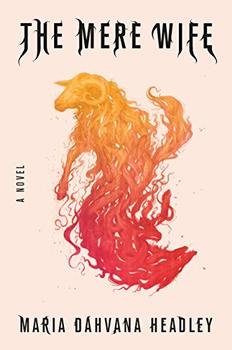
New York Times bestselling author Maria Dahvana Headley presents a modern retelling of the literary classic Beowulf, set in American suburbia as two mothers―a housewife and a battle-hardened veteran―fight to protect those they love in The Mere Wife.
From the perspective of those who live in Herot Hall, the suburb is a paradise. Picket fences divide buildings―high and gabled―and the community is entirely self-sustaining. Each house has its own fireplace, each fireplace is fitted with a container of lighter fluid, and outside―in lawns and on playgrounds―wildflowers seed themselves in neat rows. But for those who live surreptitiously along Herot Hall's periphery, the subdivision is a fortress guarded by an intense network of gates, surveillance cameras, and motion-activated lights.
For Willa, the wife of Roger Herot (heir of Herot Hall), life moves at a charmingly slow pace. She flits between mommy groups, playdates, cocktail hour, and dinner parties, always with her son, Dylan, in tow. Meanwhile, in a cave in the mountains just beyond the limits of Herot Hall lives Gren, short for Grendel, as well as his mother, Dana, a former soldier who gave birth as if by chance. Dana didn't want Gren, didn't plan Gren, and doesn't know how she got Gren, but when she returned from war, there he was. When Gren, unaware of the borders erected to keep him at bay, ventures into Herot Hall and runs off with Dylan, Dana's and Willa's worlds collide.
"[A] stunner: a darkly electric reinterpretation of Beowulf that upends its Old English framework to comment on the nature of heroes and how we 'other' those different from ourselves... A strange tale told with sharp poetic imagery and mythic fervor." ―Booklist (starred review)
"There's not a false note in this retelling, which does the Beowulf poet and his spear-Danes proud." ―Kirkus Reviews (starred review)
"Headley (Magonia) applies the broad contours of the Beowulf story to her tale but skillfully seeds her novel with reflections on anxieties and neuroses that speak to the concerns of modern parenting." ―Publishers Weekly
"The Mere Wife [is] an intense, visceral reading experience... [the book is] a revisioning of Beowulf, and Maria finds the bones, the sharp edges, the bleeding heart of that story, and tells it against a modern context." ―Kat Howard, author of An Unkindness of Magicians
"Maria Dahvana Headley is a gift, a genius, and an absolute wonder; I would follow her anywhere." ―Carmen Maria Machado, author of Her Body and Other Parties
This information about The Mere Wife was first featured
in "The BookBrowse Review" - BookBrowse's membership magazine, and in our weekly "Publishing This Week" newsletter. Publication information is for the USA, and (unless stated otherwise) represents the first print edition. The reviews are necessarily limited to those that were available to us ahead of publication. If you are the publisher or author and feel that they do not properly reflect the range of media opinion now available, send us a message with the mainstream reviews that you would like to see added.
Any "Author Information" displayed below reflects the author's biography at the time this particular book was published.
Maria Dahvana Headley is a #1 New York Times-bestselling author and editor. Her novels include Magonia, Aerie, and Queen of Kings, and she has also written a memoir, The Year of Yes. With Kat Howard, she is the author of The End of the Sentence, and with Neil Gaiman, she is co-editor of Unnatural Creatures. Her short stories have been shortlisted for the Shirley Jackson, Nebula, and World Fantasy Awards, and her work has been supported by the MacDowell Colony and by Arte Studio Ginestrelle, where the first draft of The Mere Wife was written. She was raised with a wolf and a pack of sled dogs in the high desert of rural Idaho, and now lives in Brooklyn.

If you liked The Mere Wife, try these:
Theo of Golden by Allen Levi
One spring morning, a stranger arrives in the small southern city of Golden. No one knows where he has come from…or why…






Your guide toexceptional books
BookBrowse seeks out and recommends the best in contemporary fiction and nonfiction—books that not only engage and entertain but also deepen our understanding of ourselves and the world around us.

