-
Your next favorite book
is waiting.
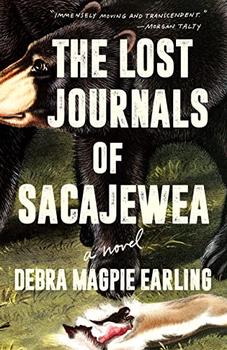
A Novel
by Debra Magpie Earling
From the award-winning author of Perma Red comes a devastatingly beautiful novel that challenges prevailing historical narratives of Sacajewea.
"In my seventh winter, when my head only reached my Appe's rib, a White Man came into camp. Bare trees scratched sky. Cold was endless. He moved through trees like strikes of sunlight. My Bia said he came with bad intentions, like a Water Baby's cry."
Among the most memorialized women in American history, Sacajewea served as interpreter and guide for Lewis and Clark's Corps of Discovery. In this visionary novel, acclaimed Indigenous author Debra Magpie Earling brings this mythologized figure vividly to life, casting unsparing light on the men who brutalized her and recentering Sacajewea as the arbiter of her own history.
Raised among the Lemhi Shoshone, in this telling the young Sacajewea is bright and bold, growing strong from the hard work of "learning all ways to survive": gathering berries, water, roots, and wood; butchering buffalo, antelope, and deer; catching salmon and snaring rabbits; weaving baskets and listening to the stories of her elders. When her village is raided and her beloved Appe and Bia are killed, Sacajewea is kidnapped and then gambled away to Charbonneau, a French Canadian trapper.
Heavy with grief, Sacajewea learns how to survive at the edge of a strange new world teeming with fur trappers and traders. When Lewis and Clark's expedition party arrives, Sacajewea knows she must cross a vast and brutal terrain with her newborn son, the white man who owns her, and a company of men who wish to conquer and commodify the world she loves.
Written in lyrical, dreamlike prose, The Lost Journals of Sacajewea is an astonishing work of art and a powerful tale of perseverance—the Indigenous woman's story that hasn't been told.
"[In The Lost Journals of Sacajewea] the suffering—and bold, ingenious agency—of women held as captives by both Native and Euro-Americans is rendered with special vividness [...] The narration is rich in realistic detail but animated by a dreamlike intensity [...] Throughout the text, Sacajewea memorably enacts what Gerald Vizenor dubs survivance, the negotiation of existential challenges with a spirited, oppositional inventiveness. A profoundly moving imagining of the impressions and contributions of a major historical figure." —Kirkus Reviews (starred review)
"Earling adds a much-needed Native woman's perspective to Sacajewea's story, bringing a note of resilience to her unflinching account of the white men's violence and depredation: 'Women do not become their Enemy captors. We survive them.' This is a beautiful reclamation." —Publishers Weekly
This information about The Lost Journals of Sacajewea was first featured
in "The BookBrowse Review" - BookBrowse's membership magazine, and in our weekly "Publishing This Week" newsletter. Publication information is for the USA, and (unless stated otherwise) represents the first print edition. The reviews are necessarily limited to those that were available to us ahead of publication. If you are the publisher or author and feel that they do not properly reflect the range of media opinion now available, send us a message with the mainstream reviews that you would like to see added.
Any "Author Information" displayed below reflects the author's biography at the time this particular book was published.
Debra Magpie Earling is the author of The Lost Journals of Sacajewea and Perma Red. She has received a National Endowment for the Arts grant, a Guggenheim Fellowship, and the Montana Book Award. She retired from the University of Montana where she was named professor emeritus in 2021. She is Bitterroot Salish.

If you liked The Lost Journals of Sacajewea, try these:
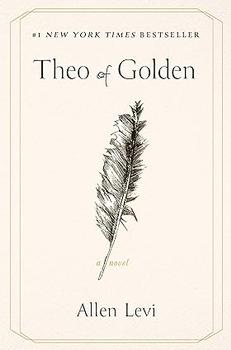
Theo of Golden by Allen Levi
One spring morning, a stranger arrives in the small southern city of Golden. No one knows where he has come from…or why…


Your guide toexceptional books
BookBrowse seeks out and recommends the best in contemporary fiction and nonfiction—books that not only engage and entertain but also deepen our understanding of ourselves and the world around us.