
-
Your next favorite book
is waiting.
Summary | Discuss | Reviews | More Information | Read-Alikes
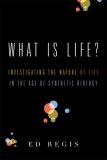
Investigating the Nature of Life in the Age of Synthetic Biology
by Ed Regis
In 1944, the Nobel Prize–winning physicist Erwin Schrödinger published a groundbreaking little book called What Is Life? In fewer than one hundred pages, he argued that life was not a mysterious or inexplicable phenomenon, as many people believed, but a scientific process like any other, ultimately explainable by the laws of physics and chemistry.
Today, more than sixty years later, members of a new generation of scientists are attempting to create life from the ground up. Science has moved forward in leaps and bounds since Schrödinger’s time, but our understanding of what does and does not constitute life has only grown more complex. An era that has already seen computer chip–implanted human brains, genetically engineered organisms, genetically modified foods, cloned mammals, and brain-dead humans kept “alive” by machines is one that demands fresh thinking about the concept of life.
While a segment of our national debate remains stubbornly mired in moral quandaries over abortion, euthanasia, and other “right to life” issues, the science writer Ed Regis demonstrates how science can and does provide us with a detailed understanding of the nature of life. Written in a lively and accessible style, and synthesizing a wide range of contemporary research, What Is Life? is a brief and illuminating contribution to an age-old debate.
War and Peace Side Read: Week 2, June 8-June 14, to the end of Book 1/Part 2
Analysis, Chapters 1-8: Tolstoy arranges these chapters to illustrate the pyramidical structure of the military chain of command. First, reproducing some of the men's conversations, he shows us the broad base of the mass of common soldiers. Then he scales to the top as he depicts Kutuzov and the ...
-kim.kovacs
1000 Books February 2026 Read: The Man in the High Castle by Philip K. Dick
If you haven't already read it, I highly recommend It Can't Happen Here, by Sinclair Lewis. This is a novel. Fiction. A made-up story. Not true. What can't happen here? Fascism. Americans would never elect a fascist demagogue as president. But in this made-up story, that's exactly what happens—wi...
-Cathryn_Conroy
If you could meet one author in person, living or dead, who would it be and why did you choose them?
This will no doubt be the oddest answer you receive, but I would like to meet Margaret Mitchell. Most people know little about her life, but she was a fascinating character in her own right. Born in 1900 she was raised by well-to-do and educated parents and subject to the influences of a region f...
-Leslie_R
What audience would you recommend Daughters of Shandong to? Is there another book or author you feel has a similar theme or style?
Readers who enjoy historical fiction and nonfiction would capture a sense of the pain and misery inflicted on the Chinese, especially women, as they fled the cruel regime of Mao. I read The Daughters of the Flower Fragrant Garden featured several years ago in Book Browse book club. The subject wa...
-Carol_Sullivan
What are some of the most pressing injustices that continue to affect women and girls today? What do you think we can do to change them?
All the previous posts are spot on. The USA is going backwards driven by The Heritage Foundation, Project 2025 and the misogynists that run it and follow them. Organized religion which almost exclusively uses the patriarchal system to control women and children and to amass power plays a foundati...
-Gerrie_B
In what ways did growing up in the era of Maoism mobilize May to seek refuge in America? What are the social and political differences between these two specific cultures that might have influenced her choices?
May had to make such difficult decisions in her early life under the strict regime of Maoism. She was first and foremost a scientist yet her studies were restricted because of the doctrines practiced in China centering on collectivization. She could not use her knowledge for learning and progress...
-Mary_H1
"Although he touches on the fact that being able to distinguish animate from inanimate entities is of critical philosophical importance for debates over such issues as abortion, stem cell research and euthanasia, he never does more than scratch the surface of any of these topics." - Publishers Weekly.
"This slim volume by agile science writer Regis (The Biology of Doom) reminds you how exciting and provocative science can be ... A book that could spark young minds toward a career in science." - Library Journal.
"Lucid and exciting." - Kirkus Reviews.
This information about What Is Life? was first featured
in "The BookBrowse Review" - BookBrowse's membership magazine, and in our weekly "Publishing This Week" newsletter. Publication information is for the USA, and (unless stated otherwise) represents the first print edition. The reviews are necessarily limited to those that were available to us ahead of publication. If you are the publisher or author and feel that they do not properly reflect the range of media opinion now available, send us a message with the mainstream reviews that you would like to see added.
Any "Author Information" displayed below reflects the author's biography at the time this particular book was published.

If you liked What Is Life?, try these:

by Vince Vawter
Published 2014
For fans of To Kill a Mockingbird, The King's Speech, and The Help. A boy who stutters comes-of-age in the segregated South, during the summer that changes his life.
by Benjamin Lytal
Published 2013
A stunning debut novel of first love set against the art scene of late-90s Tulsa by a former New Yorker editorial staffer
by Kathryn Stockett
Published 2011
Winner of BookBrowse's 2009 Reader Awards. Three extraordinary women start a movement that forever changes a small town in 1960s Mississippi, and the way women — mothers, daughters, caregivers, friends — view one another. The Help is a timeless and universal story about the lines we abide by, and the ones we don't.
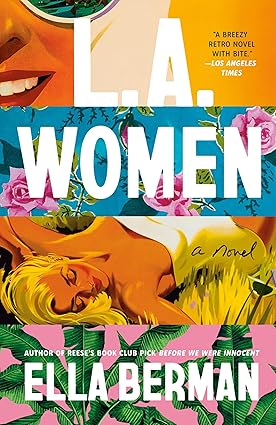
L.A. Women by Ella Berman
Two ambitious writers in 1960s LA face betrayal when one writes a novel based on the other's life.






Your guide toexceptional books
BookBrowse seeks out and recommends the best in contemporary fiction and nonfiction—books that not only engage and entertain but also deepen our understanding of ourselves and the world around us.

