-
Your next favorite book
is waiting.
Summary | Discuss | Reviews | More Information | Read-Alikes
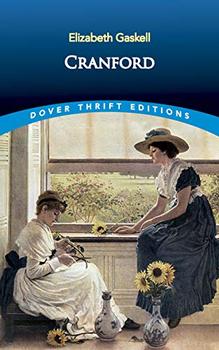
A sensitive and moving portrait of a Victorian town, captured at a transitional period in English society, Cranford first appeared serially in Charles Dickens's magazine Household Words from 1851 to 1853, and in book form in 1853.
Author Elizabeth Gaskell situated her stories in a hamlet very like the one in which she grew up, and her affectionate but unsentimental portraits of the residents of Cranford offer a realistic view of life and manners in an English country village during the 1830s.
Cranford recounts the events and activities in the lives of a group of spinsters and widows who struggle in genteel poverty to maintain their standards of propriety, decency, and kindness. Tales of the heroism and self-sacrifice of Captain Brown, the surprising betrothal of Lady Glenmire, and the future for pretty but poor Miss Jessie support a web of subtle but serious themes that include the movement from aristocratic to middle-class values, the separate spheres and diverse experiences of men and women, and the curious coexistence of customs old and new in a changing society.
Often referred to as Mrs. Gaskell, the author preferred Cranford to all her other works, which include a popular biography of her friend Charlotte Brontë. Praised by Charles Dickens as "delightful, and touched with the most tender and delicate manner," the novel remains a favorite with students and aficionados of nineteenth-century literature.
BookBrowsers ask Graham Watson
I came to Elizabeth Gaskell a little later, being introduced to her as a character within the Brontë story as it was told in various books about them. She was friends with the eldest surviving Brontë sibling - Charlotte - and produced the very first biography of her within two years of Charlotte'...
-Graham_W
Media reviews not yet available.
This information about Cranford was first featured
in "The BookBrowse Review" - BookBrowse's membership magazine, and in our weekly "Publishing This Week" newsletter. Publication information is for the USA, and (unless stated otherwise) represents the first print edition. The reviews are necessarily limited to those that were available to us ahead of publication. If you are the publisher or author and feel that they do not properly reflect the range of media opinion now available, send us a message with the mainstream reviews that you would like to see added.
Any "Author Information" displayed below reflects the author's biography at the time this particular book was published.
Elizabeth Cleghorn Gaskell, née Stevenson (29 September 1810 – 12 November 1865), often referred to simply as Mrs. Gaskell, was an English novelist and short story writer during the Victorian era. Her novels offer a detailed portrait of the lives of many strata of society, including the very poor, and as such are of interest to social historians as well as lovers of literature.

If you liked Cranford, try these:
Theo of Golden by Allen Levi
One spring morning, a stranger arrives in the small southern city of Golden. No one knows where he has come from…or why…






Your guide toexceptional books
BookBrowse seeks out and recommends the best in contemporary fiction and nonfiction—books that not only engage and entertain but also deepen our understanding of ourselves and the world around us.