-
Your next favorite book
is waiting.
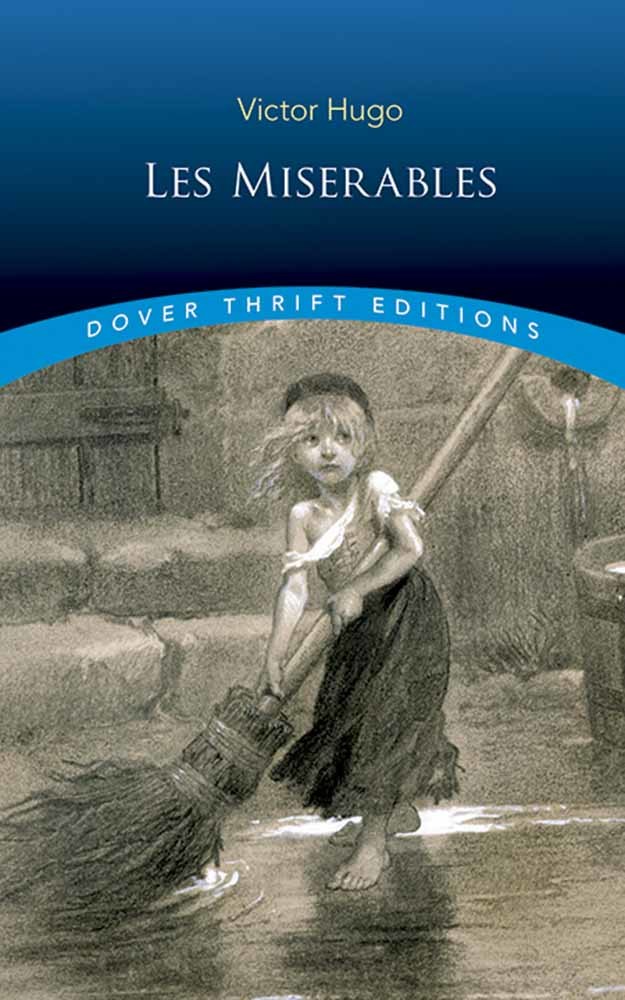
Victor Hugo's towering novel of Jean Valjean, his unjust imprisonment, and his lifelong flight from a relentless police officer.
A thrilling tale of narrow escapes, romance in the midst of a revolution, and battlefield heroism, Victor Hugo's sprawling 1862 novel focuses on the Parisian underworld. Ex-convict Jean Valjean, who served 19 years in prison for stealing bread, attempts to redeem his life by helping the downtrodden. But his every move is dogged by the implacable policeman, Inspector Javert, whose relentless pursuit of a reformed criminal reflects a morally empty state that values retribution rather than justice.
One of the first modern novels, Les Misérables took the unprecedented step of featuring a working-class hero and examining society's role in fostering crime and criminal behavior. Its portrait of altruism in the face of misery, poverty, and injustice is memorable for its vivid characterizations and its gripping plot, which unfolds in the manner of a detective story. An instant success around the world upon its initial publication, the book has inspired countless dramatic adaptations, including one of the world's longest-running musicals, and is routinely ranked among the top 100 novels of all time.
Media reviews not yet available.
This information about Les Miserables was first featured
in "The BookBrowse Review" - BookBrowse's membership magazine, and in our weekly "Publishing This Week" newsletter. Publication information is for the USA, and (unless stated otherwise) represents the first print edition. The reviews are necessarily limited to those that were available to us ahead of publication. If you are the publisher or author and feel that they do not properly reflect the range of media opinion now available, send us a message with the mainstream reviews that you would like to see added.
Any "Author Information" displayed below reflects the author's biography at the time this particular book was published.
After Napoleon III seized power in 1851, French writer Victor Marie Hugo went into exile and in 1870 returned to France; his novels include The Hunchback of Notre Dame (1831) and Les Misérables (1862).
This poet, playwright, novelist, dramatist, essayist, visual artist, statesman, and perhaps the most influential, important exponent of the Romantic movement in France, campaigned for human rights. People in France regard him as one of greatest poets of that country and know him better abroad.

If you liked Les Miserables, try these:
Theo of Golden by Allen Levi
One spring morning, a stranger arrives in the small southern city of Golden. No one knows where he has come from…or why…






Your guide toexceptional books
BookBrowse seeks out and recommends the best in contemporary fiction and nonfiction—books that not only engage and entertain but also deepen our understanding of ourselves and the world around us.