
-
Your next favorite book
is waiting.
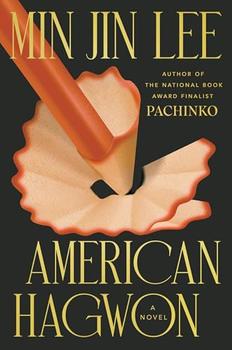
At last, the National Book Award finalist and NYT bestselling author of Pachinko returns with a breathtaking contemporary epic: Min Jin Lee has written a masterpiece by turns sweeping and intimate, one that reckons with ambition and moderation, lust and loyalty, personal dreams and familial duty.
In schools and churches, hotel rooms and nail salons, law firms and fried-fish shops; in cramped, dingy apartments and luxury, gated communities, the men, women, and children in American Hagwon struggle to find satisfaction and meaning in a world that seems to grow less forgiving with each passing year.
Once comfortably middle class in Korea, John and Helen Koh and their three children—Bo, DH, and Mido—find their lives upended, first by a shocking betrayal by John's oldest friend, then by the 1997 Asian financial crisis. Desperately striving to regain their footing, they leave Seoul for Sydney and eventually settle in Southern California—where new vistas of opportunity open up for the children as their parents, strangers in a strange land, must adjust to a new life in which their experience and education mean little, and they set their sights on whatever it takes to provide for their children's futures.
The Kohs, their friends, relatives, and even their foes move in and out of each other's lives as they navigate new courses across the years, always nursing the almost all-consuming faith that education will lead the next generation to success and security. In American Hagwon, Min Jin Lee has crafted an unforgettable, panoramic novel where the smallest of gestures can have enormous repercussions, where the bonds of family and of memory twist and fray but rarely break, and where willful self-sacrifice—for the benefit of loved ones and even strangers—is a kind of prayer.
"Magnificent—a deep education from a master storyteller. Surfacing stirring questions about diaspora and striving and the burdens we place on the shoulders of parents and children alike, American Hagwon is among the very best novels of immigration. A work of grace and beauty that unspools one thread at a time, much like life itself." ―Matthew Desmond, author of Poverty, by America and Evicted, winner of the Pulitzer Prize
"A novel of extraordinary ambition. Min Jin Lee has constructed a world so rich and intricate that you forget you're reading—you're simply living alongside the Kohs as they navigate betrayal, displacement, and the shifting promises of a better future. A stunning achievement." ―Tara Westover, author of Educated
This information about American Hagwon was first featured
in "The BookBrowse Review" - BookBrowse's membership magazine, and in our weekly "Publishing This Week" newsletter. Publication information is for the USA, and (unless stated otherwise) represents the first print edition. The reviews are necessarily limited to those that were available to us ahead of publication. If you are the publisher or author and feel that they do not properly reflect the range of media opinion now available, send us a message with the mainstream reviews that you would like to see added.
Any "Author Information" displayed below reflects the author's biography at the time this particular book was published.
Min Jin Lee is the author of the novels Free Food for Millionaires and Pachinko, a finalist for the National Book Award, runner-up for the Dayton Literary Peace Prize, and a New York Times "100 Best Books of the Century." She serves as the New York State Author Laureate from 2025 through 2027. She is the 2024 recipient of The Fitzgerald Prize for Literary Excellence. Lee has received the Manhae Grand Prize for Literature, the Bucheon Diaspora Literary Award, and the Samsung Happiness for Tomorrow Award for Creativity from South Korea. She is the recipient of fellowships in Fiction from the Guggenheim Foundation, the Harvard Radcliffe Institute, and the New York Foundation for the Arts. Lee is an inductee of the New York Foundation for the Arts Hall of Fame and the New York State Writers Hall of Fame. She lives in Harlem with her family.

If you liked American Hagwon, try these:
Theo of Golden by Allen Levi
One spring morning, a stranger arrives in the small southern city of Golden. No one knows where he has come from…or why…






Your guide toexceptional books
BookBrowse seeks out and recommends the best in contemporary fiction and nonfiction—books that not only engage and entertain but also deepen our understanding of ourselves and the world around us.

