
-
Your next favorite book
is waiting.
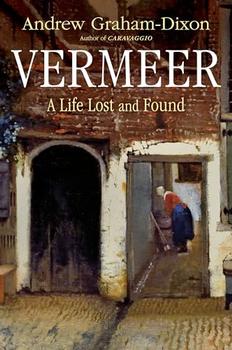
A Life Lost and Found
by Andrew Graham-Dixon
This revelatory biography persuasively addresses the two great unresolved questions about Vermeer: why did he paint his pictures, and what do they mean?
One spring day in 1683, a notary's clerk in Delft entered the home of the late Magdalena Pieters van Ruijven and stumbled upon one of the wonders of the seventeenth-century world: twenty paintings by Johannes Vermeer. Rather than dispel the mysteries of Vermeer's life, this discovery merely gave rise to more questions: How had this one Dutchwoman come to possess the majority of the master's work? And why have these images―among the most beautiful, even sublime, in the history of art―defied explanation for so long?
Following new leads and drawing on freshly uncovered evidence from Dutch archives, acclaimed art historian Andrew Graham-Dixon fills these long-standing gaps in art history, presenting a dramatic and transformative new interpretation of Vermeer's life and work. Dixon considers Vermeer holistically, placing him in his complex historical, social, religious, political, and artistic context in order to understand what spaces he occupied in his life and how the texture of these spaces inspired his paintings and distinguished him from his artistic contemporaries. Dixon also interrogates the nature of Vermeer's relationship with the Van Ruijven family, which was unlike any other known relationship in that time period, and discusses how this dynamic shaped his artistic practice.
Rich with piercingly direct descriptions of Vermeer's paintings, Graham-Dixon's biography is full of revelations. It upends the master's enigmatic reputation and depicts him instead as a pioneer of the early Enlightenment, a pacifist who was deeply affected by the wars and religious conflicts of the Dutch Republic and allied to a radical movement driven underground by persecution. In Vermeer: A Life Lost and Found, Dixon does what countless art historians and scholars before him failed to: he brings Johannes Vermeer, renowned for his use of chiaroscuro, out of the shadows and into the light.
"Along the way, Graham-Dixon makes informed, well-researched guesses about whom Vermeer might have apprenticed with, among other mysteries. Serious Vermeer fan won't want to miss this." ―Publishers Weekly (starred review)
"A well-researched, penetrating investigation." —Kirkus Reviews
"[Andrew Graham-Dixon's Vermeer] is well-grounded in scholarship and the writing is lively and adroit." ―Financial Times (UK)
"Graham-Dixon's amazing discoveries will surprise and delight...[T]he best biography of Vermeer and the most complete analysis of his artwork that has ever been published."— Times Literary Supplement (UK)
"Vermeer is art detective-work at its best. The joy of it is that Graham-Dixon's discoveries deepen the love, as well as the understanding, of an already dearly beloved Master." ―Sue Prideaux, author of Wild Thing: A Life of Paul Gaugin
This information about Vermeer was first featured
in "The BookBrowse Review" - BookBrowse's membership magazine, and in our weekly "Publishing This Week" newsletter. Publication information is for the USA, and (unless stated otherwise) represents the first print edition. The reviews are necessarily limited to those that were available to us ahead of publication. If you are the publisher or author and feel that they do not properly reflect the range of media opinion now available, send us a message with the mainstream reviews that you would like to see added.
Any "Author Information" displayed below reflects the author's biography at the time this particular book was published.
Andrew Graham–Dixon is an art historian, biographer, and broadcaster. He was for many years the main art critic of the Independent and The Sunday Telegraph and is the author of the award–winning biography Caravaggio: A Life Sacred and Profane. He lives in East Sussex.

If you liked Vermeer, try these:
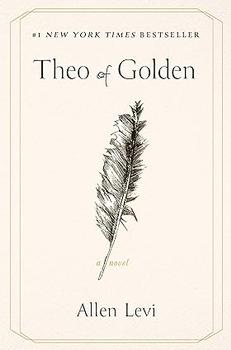
Theo of Golden by Allen Levi
One spring morning, a stranger arrives in the small southern city of Golden. No one knows where he has come from…or why…

Your guide toexceptional books
BookBrowse seeks out and recommends the best in contemporary fiction and nonfiction—books that not only engage and entertain but also deepen our understanding of ourselves and the world around us.

