
-
Your next favorite book
is waiting.
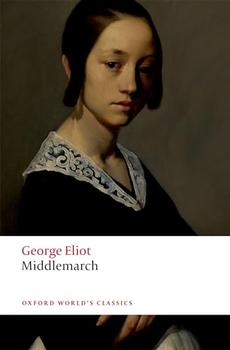
by George Eliot
'The growing good of the world is partly dependent on unhistoric acts.'
The greatest 'state of the nation' novel in English, Middlemarch addresses ordinary life at a moment of great social change, in the years leading to the Reform Act of 1832. Through her portrait of a Midlands town, George Eliot addresses gender relations and class, self-knowledge and self-delusion, community and individualism.
Eliot follows the fortunes of the town's central characters as they find, lose, and rediscover ideals and vocations in the world. Through its psychologically rich portraits, the novel contains some of the great characters of literature, including the idealistic but naive Dorothea Brooke, beautiful and egotistical Rosamund Vincy, the dry scholar Edward Casaubon, the wise and grounded Mary Garth, and the brilliant but proud Dr Lydgate. In its whole view of a society, the novel offers enduring insight into the pains and pleasures of life with others, and explores nearly every subject of concern to modern life: art, religion, science, politics, self, society, and, above all, human relationships.
Media reviews not yet available.
This information about Middlemarch (Oxford World's Classics) was first featured
in "The BookBrowse Review" - BookBrowse's membership magazine, and in our weekly "Publishing This Week" newsletter. Publication information is for the USA, and (unless stated otherwise) represents the first print edition. The reviews are necessarily limited to those that were available to us ahead of publication. If you are the publisher or author and feel that they do not properly reflect the range of media opinion now available, send us a message with the mainstream reviews that you would like to see added.
Any "Author Information" displayed below reflects the author's biography at the time this particular book was published.
Mary Ann Evans, known by her pen name George Eliot, was an English novelist, poet, journalist, translator, and one of the leading writers of the Victorian era. She wrote seven novels: Adam Bede (1859), The Mill on the Floss (1860), Silas Marner (1861), Romola (1862–1863), Felix Holt, the Radical (1866), Middlemarch (1871–1872) and Daniel Deronda (1876). Like Charles Dickens and Thomas Hardy, she emerged from provincial England; most of her works are set there. Her works are known for their realism, psychological insight, sense of place and detailed depiction of the countryside. Middlemarch was described by the novelist Virginia Woolf as "one of the few English novels written for grown-up people" and by Martin Amis and Julian Barnes as the greatest novel in the English language.

If you liked Middlemarch (Oxford World's Classics), try these:

L.A. Women by Ella Berman
Two ambitious writers in 1960s LA face betrayal when one writes a novel based on the other's life.






Your guide toexceptional books
BookBrowse seeks out and recommends the best in contemporary fiction and nonfiction—books that not only engage and entertain but also deepen our understanding of ourselves and the world around us.

