-
Your next favorite book
is waiting.
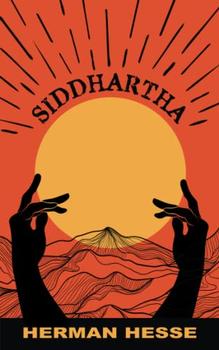
When Herman Hesse visited India in the early days of the 20th century, he was captivated by the people, their customs, their culture, and their religion.
On returning to Germany, he wrote a masterpiece on a young man's search for identity and meaning in a civilization that has lost its way. Loosely based on the early life of the Buddha, the book documents the journey of self-discovery and spiritual awakening of a character called Siddhartha.
The name Siddhartha was the one the Buddha was known by before his renunciation. Siddhartha in Sanskrit is translated as "Siddha" (achieved) and "artha" (what was searched for). The novel follows Siddhartha from a life of comfort of privilege to his quest for truth in a world plagued by sorrow and suffering.
The themes of Siddhartha are universal in that they are an account of a young person's search for meaning — one that all readers can relate to. As Hesse skillfully takes us on a journey, he uses his poetic prose to challenge our preconceived notions of what a spiritual life and meaningful self-enrichment entail. Blind adherence to all systems of belief is shunned in favor of living in the moment and appreciating its ever-changing nature. Generations of readers have and will continue to find wisdom in the pages of Siddhartha.
Media reviews not yet available.
This information about Siddhartha was first featured
in "The BookBrowse Review" - BookBrowse's membership magazine, and in our weekly "Publishing This Week" newsletter. Publication information is for the USA, and (unless stated otherwise) represents the first print edition. The reviews are necessarily limited to those that were available to us ahead of publication. If you are the publisher or author and feel that they do not properly reflect the range of media opinion now available, send us a message with the mainstream reviews that you would like to see added.
Any "Author Information" displayed below reflects the author's biography at the time this particular book was published.
Many works, including Siddhartha (1922) and Steppenwolf (1927), of German-born Swiss writer Hermann Hesse concern the struggle of the individual to find wholeness and meaning in life; he won the Nobel Prize for literature in 1946.

If you liked Siddhartha, try these:

L.A. Women by Ella Berman
Two ambitious writers in 1960s LA face betrayal when one writes a novel based on the other's life.






Your guide toexceptional books
BookBrowse seeks out and recommends the best in contemporary fiction and nonfiction—books that not only engage and entertain but also deepen our understanding of ourselves and the world around us.