
-
Your next favorite book
is waiting.
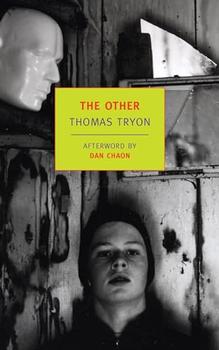
by Thomas Tryon
Holland and Niles Perry are identical thirteen-year-old twins. They are close, close enough, almost, to read each other's thoughts, but they couldn't be more different.
Holland is bold and mischievous, a bad influence, while Niles is kind and eager to please, the sort of boy who makes parents proud. The Perrys live in the bucolic New England town their family settled centuries ago, and as it happens, the extended clan has gathered at its ancestral farm this summer to mourn the death of the twins' father in a most unfortunate accident. Mrs. Perry still hasn't recovered from the shock of her husband's gruesome end and stays sequestered in her room, leaving her sons to roam free. As the summer goes on, though, and Holland's pranks become increasingly sinister, Niles finds he can no longer make excuses for his brother's actions.
Thomas Tryon's best-selling novel about a homegrown monster is an eerie examination of the darkness that dwells within everyone. It is a landmark of psychological horror that is a worthy descendent of the books of James Hogg, Robert Louis Stevenson, Shirley Jackson, and Patricia Highsmith.
"Truly extraordinary! One of those books over which everybody will take leave their senses, all seven of them…" —Kirkus Reviews
"It is perhaps unfair and a little inaccurate to typecast The Other as a horror story. It is so ingenious and well-written that it transcends that—or any—label. The setting is the small Connecticut town of Pequot Landing, which under other circumstances, might be idyllic. But the people who inhabit Tryon's New England are just as haunted as O'Neill's, and a lot more violent…His [Tryon's] characterizations have depth and subtlety, the narrative is well-paced and suspenseful. Where he really excels is with mood and atmosphere. Rarely have such commonplace surroundings been made to seem quite so dark and menacing and chillingly evil." —Chicago Tribune
This information about The Other was first featured
in "The BookBrowse Review" - BookBrowse's membership magazine, and in our weekly "Publishing This Week" newsletter. Publication information is for the USA, and (unless stated otherwise) represents the first print edition. The reviews are necessarily limited to those that were available to us ahead of publication. If you are the publisher or author and feel that they do not properly reflect the range of media opinion now available, send us a message with the mainstream reviews that you would like to see added.
Any "Author Information" displayed below reflects the author's biography at the time this particular book was published.
Thomas Tryon (1926–1991) was born in Hartford, Connecticut into a family whose New England roots stretch back to the seventeenth century. After serving in the navy during World War II , he attended Yale, and upon graduation began an acting career that would take him from a made-for-television Disney western to Hollywood, where he was featured in several B movies as well as Otto Preminger's The Cardinal. Preminger's treatment of Tryon was so cruel as to become a Hollywood legend, and Tryon turned to writing. His first book, The Other (1971), was an immediate success, spending more than six months on the New York Times best-seller list and allowing him to quit acting for good; a film adaptation, with a screenplay by Tryon and directed by Robert Mulligan, appeared in 1972. Tryon wrote two more novels set in the fictional Pequot Landing of The Other, Harvest Home (1973) and Lady (1974), before turning to works like All That Glitters (1986), that explore the dark side of the golden age of Hollywood. At the time of his death Tryon was working on a historical trilogy set in early nineteenth-century Connecticut.

If you liked The Other, try these:
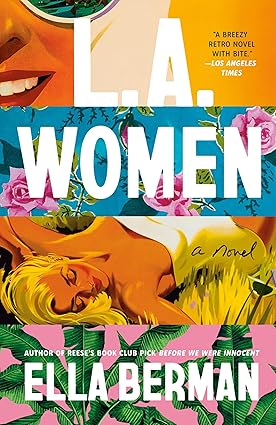
L.A. Women by Ella Berman
Two ambitious writers in 1960s LA face betrayal when one writes a novel based on the other's life.






Your guide toexceptional books
BookBrowse seeks out and recommends the best in contemporary fiction and nonfiction—books that not only engage and entertain but also deepen our understanding of ourselves and the world around us.

