
-
Your next favorite book
is waiting.
Summary | Excerpt | Reviews | Beyond the book | Read-Alikes | Genres & Themes | Author Bio

The Story of Nature's Revolutionaries
by David George Haskell Book Reviewed by:
An exquisite exploration of the power of flowers, placing them at the center of the story of how evolution created the world we know today.
We live on a floral planet, yet flowers don't get the credit they deserve. We admire them for their aesthetics, not their power. In this exquisite exploration of the role flowers played in creating the world we know today, David George Haskell observes, smells, and studies flowers such as magnolias, orchids, and roses, as well as fascinating but less celebrated flowers such as seagrasses and tea to show us what we've been missing.
Flowers are beautiful revolutionaries. When they evolved, they remade the natural world: Gorgeous petals and alluring aromas transformed former enemies into cooperative partners. Flowers reinvented plant sexuality and motherhood, bringing male and female together in the same flower and amply provisioning seeds and fruits, innovations that also feed legions of animals, ourselves included. Through radical genetic flexibility, flowers turned past environmental upheavals into opportunities for renewal. This inventiveness allowed them to build and sustain rainforests, savannahs, prairies, and even ocean shores.
Without flowers, human beings would not exist. We are a floral species. Flowers catalyzed our evolution, and we now depend on them for food and a healthy planet. When we perfume ourselves, give a loved one a bouquet, or use blooms in gardens and religious ceremonies, we honor the special bond between people and flowers. The study of flowers also shaped modern science and horticulture in ways both marvelous and, sometimes, unjust.
Looking to the future, flowers offer us lessons on resilience and creativity in the face of rapid environmental change. We need floral creativity, beauty, and joy more than ever. How Flowers Made Our World combines lyrical writing, sensual exploration, and the latest in scientific research to explore some of the most consequential life forms ever to have evolved, showing how our planet came to be and how it thrives today.
What's for dinner? Grass. Wherever you live, some kind of grass is probably feeding you.
When the prophet Isaiah proclaimed that "feeding all flesh is grass," he intended a commentary on the fleeting nature of human life, but he also spoke an ecological truth. In Isaiah's time and in ours, grass sustains us. If we stacked in 50‑kilogram sacks the total cereal harvest in 2023, the pile would reach to the moon forty times. That's 2,836 million metric tons of grass flowers matured into seed. Three grasses—rice, maize, and wheat—account for 90 percent of this superabundance, supplying us with two thirds of food calories. The juices of sugarcane, another grass, supply another 1,900 million metric tons. Barley, sorghum, oats, millet, rye, and wild rice are grasses, too. Livestock fattens on grass from pasture and the maize‑filled troughs of feedlots. While our great ape cousins feed on forest fruits, leaves, and animal prey, we depend on grasses. If we named ...
The Orchid chapter provides a deeper dive into flowers' co-evolution with other non-human species, but for readers more interested in what this all means for people, the Grass, Rose, and Tea chapters provide the most eye-opening connections between the floral world and our own. The chapter on roses explores the many ways plants use scents for their own ends, but Haskell also shows the cultural functions of flowers throughout human history... Casual plant fans will learn new things, while grizzled veterans will appreciate the nuanced perspective...continued
Full Review
 (867 words)
(Reviewed by Rose Rankin).
 Elizabeth Kolbert, author of The Sixth Extinction
David George Haskell's great strength as a writer is that he is open to surprise. He regards the planet as a strange and beautiful place. How Flowers Made Our World is at once closely observed, richly reported, and mind-blowing. Rebecca Solnit, author of Orwell's Roses
'Who runs the world? Girls!' sang Beyonce a while back, but really it's flowers and flowering plants that run this world and have for more than a hundred million years. In this vividly written book, David George Haskell shows how they do that, how flowering plants made the modern world from prairies and rainforests to bees and butterflies, how the most trivialized part of the natural world is among its most powerful and essential.
Elizabeth Kolbert, author of The Sixth Extinction
David George Haskell's great strength as a writer is that he is open to surprise. He regards the planet as a strange and beautiful place. How Flowers Made Our World is at once closely observed, richly reported, and mind-blowing. Rebecca Solnit, author of Orwell's Roses
'Who runs the world? Girls!' sang Beyonce a while back, but really it's flowers and flowering plants that run this world and have for more than a hundred million years. In this vividly written book, David George Haskell shows how they do that, how flowering plants made the modern world from prairies and rainforests to bees and butterflies, how the most trivialized part of the natural world is among its most powerful and essential.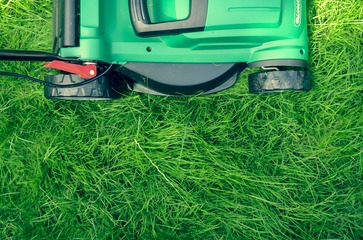 The smell of cut grass is a ubiquitous scent of summer, but did you know it's actually a cry for help? What we smell is a volatile organic compound (VOC) released by grass blades to signal that they're under attack. This is just one manifestation of how plants use chemical signals to communicate, and humans have only recently begun to understand how widespread and effective these signals are.
David George Haskell describes this phenomenon with flowers using scents to attract pollinators, the same aromas that attract human admirers. But these scents can also be used for protection or even deception, as he recounts in How Flowers Made Our World:
"Go away, say the chemicals, this plant is nasty. These volatiles not only taste bad or are ...
If you liked How Flowers Made Our World, try these:

by Adam Nicolson
Published 2025
An intimate exploration of the lives of birds and their interactions with man, by a preeminent naturalist.

by Rob Dunn
Published 2025
How rethinking our relationships with other species can help us reimagine the future of humankind.

by Zoë Schlanger
Published 2025
Award-winning Atlantic staff writer Zoë Schlanger delivers a groundbreaking work of popular science that probes the hidden world of the plant kingdom and reveals the astonishing capabilities of the green life all around us.

L.A. Women by Ella Berman
Two ambitious writers in 1960s LA face betrayal when one writes a novel based on the other's life.






