
-
Your next favorite book
is waiting.
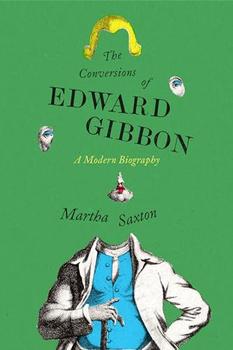
A Modern Biography
by Martha Saxton
A new feminist biography of the incomparably influential English historian Edward Gibbon, author of The History of the Decline and Fall of the Roman Empire.
The Enlightenment-era, six-volume epic The History of the Decline and Fall of the Roman Empire is to history what In Search of Lost Time is to fiction. Edward Gibbon's chronicle of the late Roman period continues to be, nearly 250 years after its original publication, the best-known work of history written in the English language. Gibbon's flights of lyricism, his ironic observations, his unflagging devotion to reason over piety, come to form a captivating history of the Imperial Roman world and an epochal model of historiography with which all subsequent historians must contend.
In The Conversions of Edward Gibbon, the last work of the celebrated feminist historian Martha Saxton, we come to know the man and the methods. Saxton's illuminating biography―the first in twenty years―follows Gibbon from his unhappy childhood in Surrey, to his time at Oxford and his flirtation with deism, through his writing life and his physical suffering in later age.
Gibbon is in some respects everything Saxton seeks to turn against in her own work, and while she writes unsparingly of the historian's foibles and cruelties, her interest comes from a place of deep curiosity, to understand why Gibbon, unlike many other Enlightenment thinkers who generally regarded their female contemporaries as potential allies in building the more equitable civil society that they envisaged, remained so personally barbed and cold to the women in his life and work.
What emerges is a portrait of a complex historian and a decaying antique empire, all bathed in the light of the tumultuous eighteenth century.
Media reviews not yet available.
This information about The Conversions of Edward Gibbon was first featured
in "The BookBrowse Review" - BookBrowse's membership magazine, and in our weekly "Publishing This Week" newsletter. Publication information is for the USA, and (unless stated otherwise) represents the first print edition. The reviews are necessarily limited to those that were available to us ahead of publication. If you are the publisher or author and feel that they do not properly reflect the range of media opinion now available, send us a message with the mainstream reviews that you would like to see added.
Any "Author Information" displayed below reflects the author's biography at the time this particular book was published.
Martha Saxton (1945–2023) was a historian and biographer. She wrote Being Good: Women's Moral Values in Early America and biographies of Mary Washington, Louisa May Alcott, and Jayne Mansfield. Saxton received a PhD from Columbia University before joining the faculty at Amherst College, where she taught history and women's studies for twenty years.

If you liked The Conversions of Edward Gibbon, try these:

by Daisy Dunn
Published 2024
A dazzlingly ambitious history of the ancient world that places women at the center—from Cleopatra to Boudica, Sappho to Fulvia, and countless other artists, writers, leaders, and creators of history
by Ian McEwan
Published 2023
From the best-selling author of Atonement and Saturday comes the epic and intimate story of one man's life across generations and historical upheavals. From the Suez Crisis to the Cuban Missile Crisis, the fall of the Berlin Wall to the current pandemic, Roland Baines sometimes rides with the tide of history, but more often struggles against it.
by Ruth Padel
Published 2012
This remarkable book brings us an intimate and moving interpretation of the life and work of Charles Darwin, by Ruth Padel, an acclaimed British poet and a direct descendant of the famous scientist.

L.A. Women by Ella Berman
Two ambitious writers in 1960s LA face betrayal when one writes a novel based on the other's life.






Your guide toexceptional books
BookBrowse seeks out and recommends the best in contemporary fiction and nonfiction—books that not only engage and entertain but also deepen our understanding of ourselves and the world around us.

