-
Your next favorite book
is waiting.
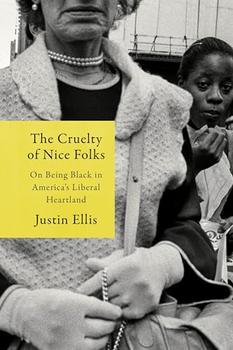
On Being Black in America's Liberal Heartland
by Justin Ellis
A revelatory look at one of America's most progressive cities—Minneapolis—as journalist Justin Ellis returns to his hometown to grapple with the quiet history of white supremacy there in the wake of George Floyd's murder, and in turn uncovers his family's story of surviving "Minnesota nice."
It's the "North," they like to say, not the Midwest. It's different. We're nice here, progressive; Minneapolis is a city for everyone. But in 2020, George Floyd's murder by police left many Americans stunned and wondering, "how could this happen in Minneapolis?" To Ellis, the real question is what made people think it couldn't?
The Minneapolis Justin Ellis knows and loves—where he grew up and his family has lived for generations—is not the idealistic metropolis that its politicians and its most vocal proponents proclaim. The city of lakes was built on discrimination—in its housing, its schools, its politics—much like all other American cities. Black families were systematically cut out of the prosperous neighborhoods, lush parks and pristine lakes that make Minneapolis a haven of the heartland. Because of its image as a liberal ally in the fight for civil rights, Minneapolis has rarely been forced to confront this fact. In reality, as in the rest of America since its founding, the struggles of Black families in Minnesota have been celebrated or erased in an effort to maintain neighborly harmony and the quality of life Minnesotans cherish above all else.
The Cruelty of Nice Folks is both an indictment of the false face of progressivism and a love letter to the ways Black life has thrived despite the forces working against it. From the original theft of land upon which Minneapolis was built, through his family's journey to establish a life there, to George Floyd's murder, The Cruelty of Nice Folks is about one place—but it's also about America. It is the story of a racial reckoning deferred, and of an America that remains tethered to the inequalities it has always been unwilling to confront.
"Juxtaposing more than a hundred years of de facto segregation, police violence, and unfulfilled promises and the experiences of his own relatives, [Ellis] examines the toll of polite racism on a family and a community .... with relentless precision." —Booklist (starred review)
"An urgent critique of 'polite' racism that demands attention." —Kirkus Reviews
"[P]enetrating and moving...a searing account of Black survival in a city built on broken promises, and a damning view of liberalism as willing to pick and choose when equality is a virtue." —Publishers Weekly
"Ellis grapples with the quiet history of white supremacy in so-called nice Minneapolis in this highly recommended book for readers interested in social justice." —Library Journal
"In writing a book about Minneapolis, Justin Ellis has really written a book about America's favorite lie—that good intentions lead to justice. Ellis is a rigorous historian and a visceral storyteller, and he has produced something essential: a reckoning with a city that wanted to be a safe haven for all and built a foundation that made this impossible." —Aaron Robertson, author of The Black Utopians
This information about The Cruelty of Nice Folks was first featured
in "The BookBrowse Review" - BookBrowse's membership magazine, and in our weekly "Publishing This Week" newsletter. Publication information is for the USA, and (unless stated otherwise) represents the first print edition. The reviews are necessarily limited to those that were available to us ahead of publication. If you are the publisher or author and feel that they do not properly reflect the range of media opinion now available, send us a message with the mainstream reviews that you would like to see added.
Any "Author Information" displayed below reflects the author's biography at the time this particular book was published.
Justin Ellis is a journalist and co-owner of Defector, a worker-owned media company. His work has appeared at ESPN, the Atlantic, The New York Times, Boston Globe and GQ. His TV credits include the Netflix docuseries How to Fix a Drug Scandal and Wyatt Cenac's Problem Areas on HBO. He lives in New York City.

If you liked The Cruelty of Nice Folks, try these:

by Wright Thompson
Published 2025
A shocking and revelatory account of the murder of Emmett Till that lays bare how forces from around the world converged on the Mississippi Delta in the long lead-up to the crime, and how the truth was erased for so long.

by Rachel Eliza. Griffiths
Published 2024
Two Black sisters growing up in small-town New England fight to protect their home, their bodies, and their dreams as the Civil Rights Movement sweeps the nation in this "magical, magnificent novel" (Marlon James) from "a startlingly fresh voice" (Jacqueline Woodson).
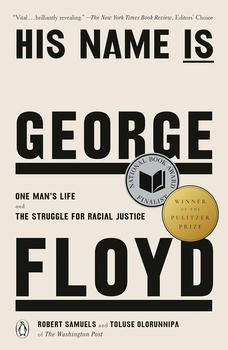
by Robert Samuels
Published 2024
A landmark biography by two prizewinning Washington Post reporters that reveals how systemic racism shaped George Floyd's life and legacy - from his family's roots in the tobacco fields of North Carolina, to ongoing inequality in housing, education, health care, criminal justice, and policing - telling the singular story of how one man's tragic ...
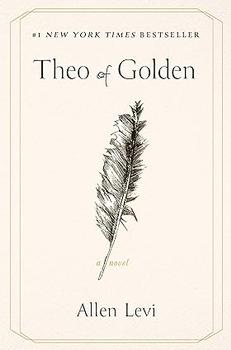
Theo of Golden by Allen Levi
One spring morning, a stranger arrives in the small southern city of Golden. No one knows where he has come from…or why…

Your guide toexceptional books
BookBrowse seeks out and recommends the best in contemporary fiction and nonfiction—books that not only engage and entertain but also deepen our understanding of ourselves and the world around us.