
-
Your next favorite book
is waiting.
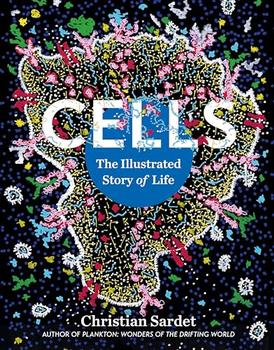
The Illustrated Story of Life
by Christian Sardet
For fans of The Song of the Cell―a profusely, creatively illustrated journey through the origins and evolution of the building blocks of life, from an award-winning biologist and illustrator.
In the fifteenth century, as astronomers charted the skies and explorers mapped the globe, the nature of life itself remained a mystery. It wasn't until the seventeenth century that Robert Hooke, looking through one of the earliest microscopes, coined the term cell. Nearly two centuries later, biologists established that all living organisms―from animals and plants to algae and fungi―are composed of cells. Around the same time, Charles Darwin introduced his theory of evolution, proposing that all life on Earth shares a common origin. Today, the scientific community has defined that origin as LUCA―the Last Universal Common Ancestor.
Unraveling how LUCA―the ancestral cell―emerged billions of years ago and gradually evolved into the vast diversity of life-forms we see today is a fascinating journey through history, biology, and the essence of what it means to be alive. Blending art with science, biologist Christian Sardet takes you on an exploration of DNA, RNA, proteins, protists, viruses, cell reproduction, aging, death, and more.
Written in clear, accessible language and accompanied by artful illustrations, Cells: The Illustrated Story of Life offers an authoritative and visually captivating overview of the building blocks of life. Designed for visual learners and curious minds alike, this immersive exploration of life and evolution brings readers up to date with the latest discoveries―revealing how cells function, how they have evolved, and why they fascinate us.
"A dazzling illustrated overview of the origin and evolution of living things, from the first protocells to complex multicellular organisms... informative and entertaining." ―Publishers Weekly (starred review)
"Award-winning French scientist Sardet takes readers through the history of how we came to understand cells as the basis of all living things and even explains the interesting origin of the term 'cell'... the story flows plainly and effortlessly. Sardet's hand-drawn illustrations are easy to understand, almost telling the story on their own." ―Library Journal (starred review)
"A vibrant exploration of the history of life and how it works at the most basic level." ―Kirkus Reviews
This information about Cells was first featured
in "The BookBrowse Review" - BookBrowse's membership magazine, and in our weekly "Publishing This Week" newsletter. Publication information is for the USA, and (unless stated otherwise) represents the first print edition. The reviews are necessarily limited to those that were available to us ahead of publication. If you are the publisher or author and feel that they do not properly reflect the range of media opinion now available, send us a message with the mainstream reviews that you would like to see added.
Any "Author Information" displayed below reflects the author's biography at the time this particular book was published.
Christian Sardet, PhD, is a founder of and emeritus researcher at the Developmental Biology Laboratory at the Institut de la Mer de Villefranche (IMEV), under the aegis of the Centre National de la Recherche Scientifique (CNRS) and Paris-Sorbonne University. He earned his PhD in biochemistry from the University of California, Berkeley. He is the author of many scientific publications and of the book Plankton: Wonders of the Drifting World (University of Chicago Press, 2015) and is one of the founders of the Tara Oceans expedition. Sardet is the recipient of two prizes from the French Academy of Sciences and the Légion d'Honneur, among many other awards. He is also an artist and the creator of award-winning films. Sardet lives near Nice in the south of France.

If you liked Cells, try these:

by Zoë Schlanger
Published 2025
Award-winning Atlantic staff writer Zoë Schlanger delivers a groundbreaking work of popular science that probes the hidden world of the plant kingdom and reveals the astonishing capabilities of the green life all around us.

by Ferris Jabr
Published 2025
A vivid account of a major shift in how we understand Earth, from an exceptionally talented new voice. Earth is not simply an inanimate planet on which life evolved, but rather a planet that came to life.
by Guido Tonelli
Published 2022
A breakout bestseller in Italy, now available for American readers for the first time, Genesis: The Story of How Everything Began is a short, humanistic tour of the origins of the universe, earth, and life - drawing on the latest discoveries in physics to explain the seven most significant moments in the creation of the cosmos.
Theo of Golden by Allen Levi
One spring morning, a stranger arrives in the small southern city of Golden. No one knows where he has come from…or why…






Your guide toexceptional books
BookBrowse seeks out and recommends the best in contemporary fiction and nonfiction—books that not only engage and entertain but also deepen our understanding of ourselves and the world around us.

