
-
Your next favorite book
is waiting.

A novel of secrets and female solidarity set in post-war Milan, by one of Italy's most significant women writers.
Fausta Cialente (1898–1994) was a novelist, journalist, political activist, and one of the first self-declared feminist Italian writers. Though the fascists censored her early work, she continued as an active member in the anti-fascist movement while living abroad in Egypt, writing pamphlets and making daily broadcasts from Radio Cairo against the Italian regime. She returned home after the war and eventually began publishing again, winning Italy's most important literary award, the Strega Prize, in 1976.
In A Very Cold Winter, it is 1946 and Milan is in ruins. A woman named Camilla opens her illegally occupied attic to her extended family as they rebuild their lives among the rubble. The absence of men—lost to war, death, or abandonment—leaves the burden of survival to the women, who use the attic to incubate fragile futures: Camilla works to carry the family toward dignity and normalcy; Lalla dreams of becoming a novelist to escape their grim reality; Regina, widowed by the war, pins her hopes on her infant daughter; Alba chases independence and love. Varying political ideologies, loyalties, and wartime secrets filter through the house, creating a thick net of tension. As the narrative roams from the thoughts of character to character, the residents of this "hotel for the poor" consider their own complicity and moral compromises, wondering if they're able to escape the weight of what they've lived through.
Fausta Cialente's exquisite prose captures the frailty of the human heart in its desperate search for connection. An introduction from author and Italian translator Claudia Durastanti frames this classic feminist icon for the modern American reader. Tender, thought-provoking, and devastatingly beautiful, A Very Cold Winter is about the impossibility of forgetting the past and the difficulty of living with it.
"In this overdue translation of Cialente's vital 1966 novel, a family struggles to find harmony while crammed together in a frigid Milan squat ... The result is an exquisite chronicle of frozen hearts and their gradual thaw." —Publishers Weekly (starred review)
"As simple and nourishing as the matriarch's egg soup, Cialente's prose shows how women brought Italy out of postwar malaise." —Kirkus Reviews
This information about A Very Cold Winter was first featured
in "The BookBrowse Review" - BookBrowse's membership magazine, and in our weekly "Publishing This Week" newsletter. Publication information is for the USA, and (unless stated otherwise) represents the first print edition. The reviews are necessarily limited to those that were available to us ahead of publication. If you are the publisher or author and feel that they do not properly reflect the range of media opinion now available, send us a message with the mainstream reviews that you would like to see added.
Any "Author Information" displayed below reflects the author's biography at the time this particular book was published.
Author, journalist, and translator, Fausta Cialente was one of the first self-declared feminist Italian writers. Her early work anticipated modern feminism by decades, however, distribution was limited by the Fascist censorship that followed her refusal to cut depictions of a lesbian affair from her first book Natalia (1931). Contributing to the anti-Fascist movement through her journalism from Egypt, Cialente returned home after the war, and after a long silence, she began publishing again in 1961, eventually winning the prestigious Strega Prize in 1976. With her expatriation that can be interpreted as an influence on the statelessness of her work, Cialente remained far from literary circles and wrote only when she had the urge. Perhaps due to these factors and the initial censorship, her critical recognition came late, and consequently, there has been limited international exposure to this exceptional Italian writer. Cialente spent the last period of her life in Pangbourne, England, working mainly on translations into Italian from English, including Turn of the Screw by Henry James, and she remained there until her death in 1994 at the age of 96.

If you liked A Very Cold Winter, try these:

by Suzanne Cope
Published 2025
The gripping, true, and untold history of the Italian anti-fascist resistance during World War II, told through the stories of four spectacularly courageous women fighters.

by Jo Piazza
Published 2025
From bestselling author and award-winning journalist Jo Piazza, comes a transporting novel rooted in the author's own family history about a long-awaited trip to Sicily, a disputed inheritance, and a family secret that some will kill to protect ...

Looking at Women Looking at War
by Victoria Amelina
Published 2025
Destined to be a classic, a poet's powerful look at the courage of resistance.
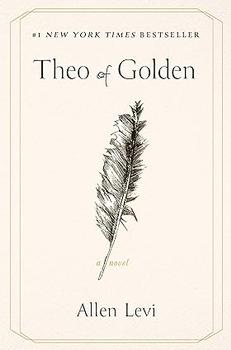
Theo of Golden by Allen Levi
One spring morning, a stranger arrives in the small southern city of Golden. No one knows where he has come from…or why…






Your guide toexceptional books
BookBrowse seeks out and recommends the best in contemporary fiction and nonfiction—books that not only engage and entertain but also deepen our understanding of ourselves and the world around us.

