
-
Your next favorite book
is waiting.
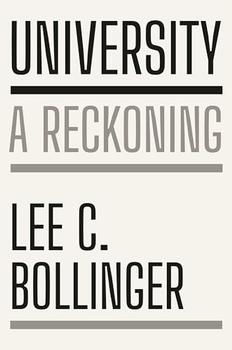
A Reckoning
by Lee C. Bollinger
From perhaps the most important university leader of the twenty-first century, an account of the university in the age of authoritarianism and a new case for its place in the American system.
The American university―one of the most successful institutions in human history―is facing an unprecedented assault from the president of the United States. Experts on authoritarianism have drawn comparisons to Turkey and Hungary, where strongmen subdued universities as part of their power grabs. Yet as former Columbia president Lee C. Bollinger points out in his powerful account of the university's significance, in such dire times one has no choice but to state clearly and forcefully what one stands for.
Defenses of the university usually emphasize the practical benefits it offers to society: highly skilled graduates who can thrive in an information-saturated world; scientific research that leads to important advances in health; technological breakthroughs that contribute to the American economy being the envy of the world. Bollinger offers a more original, and more sweeping, account. He reveals how the structure of the university contributes to the success of the American system―because it provides those who study and work within it a degree of creative freedom hard to find elsewhere―and why that structure is both impossible to re-create and vulnerable to outside attack. The fundamental mission of the university is to enhance knowledge, but this is not merely a high-minded idea. It is, as Bollinger demonstrates, a notion rooted deeply in the Constitution, specifically the First Amendment, the basis of our political and social life. The university helps realize the First Amendment; the First Amendment helps make the university.
Bollinger argues that, with the press diminished, the university remains the only source of truth-seeking for those who still believe in democracy. The stakes are self-evident: The university must be defended if the American experiment is to continue.
"An idealistic vision of the American university as a place of free thought and socially responsible teaching." —Kirkus Reviews
This information about University was first featured
in "The BookBrowse Review" - BookBrowse's membership magazine, and in our weekly "Publishing This Week" newsletter. Publication information is for the USA, and (unless stated otherwise) represents the first print edition. The reviews are necessarily limited to those that were available to us ahead of publication. If you are the publisher or author and feel that they do not properly reflect the range of media opinion now available, send us a message with the mainstream reviews that you would like to see added.
Any "Author Information" displayed below reflects the author's biography at the time this particular book was published.
Lee C. Bollinger is an American legal scholar and educator who served as the nineteenth president of Columbia University, from 2002 to 2023. He is currently president emeritus and the Seth Low Professor of the University. He also served as the president of the University of Michigan from 1997 to 2002. A renowned expert on the First Amendment and freedom of speech and press, he lives in New York City.

If you liked University, try these:
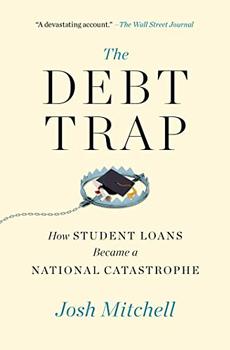
by Josh Mitchell
Published 2022
From acclaimed Wall Street Journal reporter Josh Mitchell, the dramatic, untold story of student debt in America.
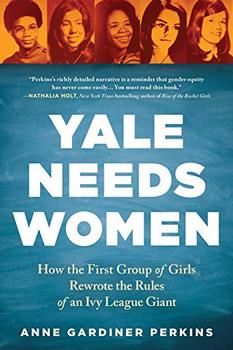
by Anne Gardiner Perkins
Published 2021
"If Yale was going to keep its standing as one of the top two or three colleges in the nation, the availability of women was an amenity it could no longer do without."
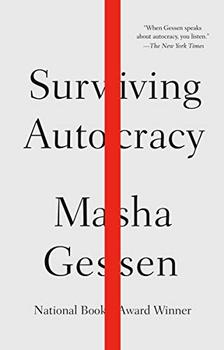
by Masha Gessen
Published 2021
A bestselling, National Book Award–winning journalist's bracing elucidation of our tumultuous times.

L.A. Women by Ella Berman
Two ambitious writers in 1960s LA face betrayal when one writes a novel based on the other's life.






Your guide toexceptional books
BookBrowse seeks out and recommends the best in contemporary fiction and nonfiction—books that not only engage and entertain but also deepen our understanding of ourselves and the world around us.

