
-
Your next favorite book
is waiting.
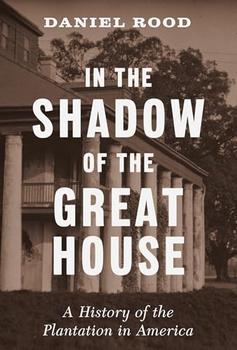
A History of the Plantation in America
by Daniel Rood
A sweeping, 400–year history of American slavery and American capitalism told through the emergence, evolution, and persistence of the plantation.
We imagine the plantation―the big house, the porticos, the slave quarters, the vast cotton fields―as situated firmly in the dismal American past. Yet as historian Daniel Rood shows in In the Shadow the Great House, the plantation is still very much with us today. Opening with the origins of the plantation on the tiny sugar–producing island of São Tomé in the 1500s, Rood then brings us to North America, and traces, in succession, the establishment of tobacco plantations in Virginia, rice plantations in the Carolina Low Country, and cotton plantations in the Deep South. He rewrites our understanding of these phenomena, showing, with uncommon precision, how enslaved people built the American landscape even as they suffered under a brutal labor regime. He then moves to the post–slavery era, demonstrating that the plantation evolved into agribusiness, chicken farming, and other developments we usually associate with modern capitalism. Drawing surprising connections between past and present, Rood argues that the plantation was, and in many respects remains, the engine of American "progress."
"What could have been a dry economic study becomes a far more personal and affecting account through Rood's consistent foregrounding of the humanity, resilience, and skill of plantation laborers who introduce new crops, foodways, and agricultural techniques, and forge families and communities—even in the most dire circumstances. An important and revelatory work that brings economic history to life with narrative and nuance." —Kirkus Reviews (starred review)
"No leisurely anachronism, the plantation still casts a deep shadow over American life. In this transatlantic history covering five centuries and four continents, Daniel Rood deftly explores the volatile power of plantations to reshape environments, disseminate miseries, concentrate wealth, and generate rebellions? By creating new forms of exploitation, plantations endure even where slavery has receded." ―Alan Taylor, author of American Civil Wars: A Continental History, 1850–1873
"In this brilliant and wide-ranging book, Daniel Rood provides us with an ecological, architectural, cultural, and, above all, economic history of one of the primary emblems and engines of American history: the plantation. As much as that of its cognates―the factory and the prison―the history of the plantation demands our attention and has now found its perfect chronicler." ―Walter Johnson, author of River of Dark Dreams: Slavery and Empire in the Cotton Kingdom
This information about In the Shadow of the Great House was first featured
in "The BookBrowse Review" - BookBrowse's membership magazine, and in our weekly "Publishing This Week" newsletter. Publication information is for the USA, and (unless stated otherwise) represents the first print edition. The reviews are necessarily limited to those that were available to us ahead of publication. If you are the publisher or author and feel that they do not properly reflect the range of media opinion now available, send us a message with the mainstream reviews that you would like to see added.
Any "Author Information" displayed below reflects the author's biography at the time this particular book was published.
Daniel Rood is associate professor of history at the University of Georgia, specializing in the history of Atlantic slavery. He is the author of The Reinvention of Atlantic Slavery: Technology, Labor, Race, and Capitalism in the Greater Caribbean. He lives in Athens, Georgia.

If you liked In the Shadow of the Great House, try these:

by Greg Grandin
Published 2026
From the Pulitzer Prize–winning historian, the first comprehensive history of the Western Hemisphere, a sweeping five-century narrative of North and South America that redefines our understanding of both.

by Scott Shane
Published 2024
A riveting account of the extraordinary abolitionist, liberator, and writer Thomas Smallwood, who bought his own freedom, led hundreds out of slavery, and named the underground railroad, from Pulitzer Prize-winning author and journalist, Scott Shane. Flee North tells the story for the first time of an American hero all but lost to history.
by David Graeber
Published 2023
A dramatically new understanding of human history, challenging our most fundamental assumptions about social evolution―from the development of agriculture and cities to the origins of the state, democracy, and inequality―and revealing new possibilities for human emancipation.
Theo of Golden by Allen Levi
One spring morning, a stranger arrives in the small southern city of Golden. No one knows where he has come from…or why…






Your guide toexceptional books
BookBrowse seeks out and recommends the best in contemporary fiction and nonfiction—books that not only engage and entertain but also deepen our understanding of ourselves and the world around us.

