
-
Your next favorite book
is waiting.
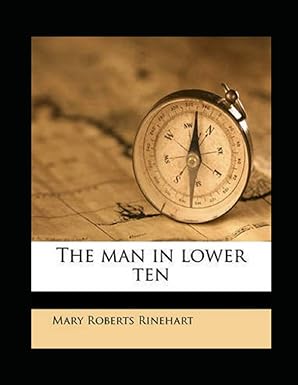
by Mary Roberts Rinehart Avery
McKnight is gradually taking over the criminal end of the busi-ness. I never liked it, and since the strange case of the man in lower ten, I have been a bit squeamish.
Given a case like that, where you can build up a network of clues that absolutely incriminate three entirely different people, only one of whom can be guilty, and your faith in circumstantial evidence dies of overcrowding. I never see a shivering, white-faced wretch in the prisoners' dock that I do not hark back with shuddering horror to the strange events on the Pull-man car Ontario, between Washington and Pittsburg, on the night of September ninth, last. McKnight could tell the story a great deal better than I, although he can not spell three consecutive words correctly. But, while he has imagination and humor, he is lazy. "It didn't happen to me, anyhow," he protested, when I put it up to him. "And nobody cares for second-hand thrills. Besides, you want the unvarnished and ungarnished truth, and I'm no hand for that. I'm a lawyer." So am I, although there have been times when my assumption in that particular has been disputed. I am unmarried, and just old enough to dance with the grown-up little sisters of the girls I used to know. I am fond of outdoors, prefer horses to the aforesaid grown-up little sisters, am without sentiment (am crossed out and was substituted.-Ed.) and completely ruled and frequently routed by my housekeeper, an elderly widow. In fact, of all the men of my acquaintance, I was probably the most prosaic, the least adventurous, the one man in a hundred who would be likely to go without a deviation from the normal through the orderly procession of the seasons, summer suits to winter flan-nels, golf to bridge. So it was a queer freak of the demons of chance to perch on my unsusceptible thirty-year-old chest, tie me up with a crime, ticket me with a love affair, and start me on that sensational and not always respectable journey that ended so surprisingly less than three weeks later in the firm's private office. It had been the most remarkable period of my life. I would neither give it up nor live it again under any inducement, and yet all that I lost was some twenty yards off my drive!
Media reviews not yet available.
This information about Man in Lower Ten was first featured
in "The BookBrowse Review" - BookBrowse's membership magazine, and in our weekly "Publishing This Week" newsletter. Publication information is for the USA, and (unless stated otherwise) represents the first print edition. The reviews are necessarily limited to those that were available to us ahead of publication. If you are the publisher or author and feel that they do not properly reflect the range of media opinion now available, send us a message with the mainstream reviews that you would like to see added.
Any "Author Information" displayed below reflects the author's biography at the time this particular book was published.
Mysteries of the well-known American writer Mary Roberts Rinehart include The Circular Staircase (1908) and The Door (1930).
People often called this prolific author the American version of Agatha Christie . She is considered the source of the phrase "The butler did it," though the exact phrase doesn't appear in her works, and she invented the "Had-I-But-Known" school of mystery writing.
Rinehart wrote hundreds of short stories, poems, travelogues, and special articles. Many of her books and plays were adapted for movies, such as The Bat (1926), The Bat Whispers (1930), and The Bat (1959). Critics most appreciated her murder mysteries.

If you liked Man in Lower Ten, try these:

by John Keyse-Walker
Published 2016
Written with a wry, witty narrative voice and a plot full of twists and turns, John Keyse-Walker's Minotaur Books/Mystery Writers of America First Crime Novel Award-winning debut is a pure delight.

by Dana Stabenow
Published 2008
A brutal murder takes place in a small Alaskan community. People know who the culprit is, and he has evaded justice for many years. But Kate Shugak is determined to find the evidence needed to convict him.
by Michael Connelly
Published 2006
A stunning display of novelistic mastery - as human, as gripping, and as whiplash-surprising as any novel yet from the writer Publishers Weekly has called "today's Dostoyevsky of crime literature.
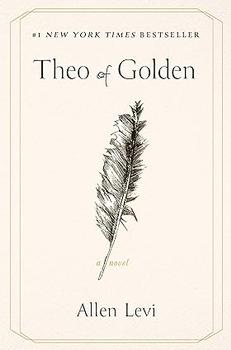
Theo of Golden by Allen Levi
One spring morning, a stranger arrives in the small southern city of Golden. No one knows where he has come from…or why…




Your guide toexceptional books
BookBrowse seeks out and recommends the best in contemporary fiction and nonfiction—books that not only engage and entertain but also deepen our understanding of ourselves and the world around us.

