
-
Your next favorite book
is waiting.

A landmark event years in the making, a brilliant global narrative that unravels the defining story of the past thousand years of human history.
No other phenomenon has shaped human history as decisively as capitalism. It structures how we live and work, how we think about ourselves and others, how we organize our politics. Sven Beckert, author of the Bancroft Prize–winning Empire of Cotton, places the story of capitalism within the largest conceivable geographical and historical framework, tracing its history during the past millennium and across the world. An epic achievement, his book takes us into merchant businesses in Aden and car factories in Turin, onto the terrifyingly violent sugar plantations in Barbados, and within the world of women workers in textile factories in today's Cambodia.
Capitalism, argues Beckert, was born global. Emerging from trading communities across Asia, Africa, and Europe, capitalism's radical recasting of economic life rooted itself only gradually. But then it burst onto the world scene, as a powerful alliance between European states and merchants propelled them, and their economic logic, across the oceans. This, Beckert shows, was modern capitalism's big bang, and one of its epicenters was the slave labor camps of the Caribbean. This system, with its hierarchies that haunt us still, provided the liftoff for the radical transformations of the Industrial Revolution. Fueled by vast productivity increases along with coal and oil, capitalism pulled down old ways of life to crown itself the defining force of the modern world. This epic drama, shaped by state-backed institutions and imperial expansion, corresponded at no point to an idealized dream of free markets.
Drawing on archives on six continents, Capitalism locates important modes of agency, resistance, innovation, and ruthless coercion everywhere in the world, opening the aperture from heads of state to rural cultivators. Beckert shows that despite the dependence on expansion, there always have been, and are still, areas of human life that the capitalist revolution has yet to reach.
By chronicling capitalism's global history, Beckert exposes the reality of the system that now seems simply "natural." It is said that people can more easily imagine the end of the world than the end of capitalism. If there is one ultimate lesson in this extraordinary book, it's how to leave that behind. Though cloaked in a false timelessness and universality, capitalism is, in reality, a recent human invention. Sven Beckert doesn't merely tote up capitalism's debits and credits. He shows us how to look through and beyond it to imagine a different and larger world.
"A clarity that Karl Marx could only long for ... Beckert's agile account marches through the emergence of mercantilism and the invention of double-entry bookkeeping and proceeds through plantation and wage slavery, colonialism and postcolonialism, and a managerial/bureaucratic golden age ... A comprehensive and up-to-date history, essential." —Kirkus Reviews (starred review)
"Epic ... An unparalleled work of scholarship that is also a joy to read, this is a monumental achievement." —Publishers Weekly (starred review)
"It's hard to think of any other contemporary historian who could have written a new history of capitalism of such global scope and impressive scale. Capitalism promises to be an instant classic that will last." —Isabella Weber, author of How China Escaped Shock Therapy
"Sven Beckert has written what will surely become a key reference on the global history of modern capitalism. A monumental book, a must-read." —Thomas Piketty, author of Capital in the Twenty-First Century
This information about Capitalism was first featured
in "The BookBrowse Review" - BookBrowse's membership magazine, and in our weekly "Publishing This Week" newsletter. Publication information is for the USA, and (unless stated otherwise) represents the first print edition. The reviews are necessarily limited to those that were available to us ahead of publication. If you are the publisher or author and feel that they do not properly reflect the range of media opinion now available, send us a message with the mainstream reviews that you would like to see added.
Any "Author Information" displayed below reflects the author's biography at the time this particular book was published.
Sven Beckert is the Laird Bell Professor of History at Harvard University. Holding a PhD from Columbia University, he has written widely on the economic, social, and political history of capitalism. His book Empire of Cotton won the Bancroft Prize, was a finalist for the Pulitzer Prize, and was named one of the ten best books of the year by The New York Times. An elected member of the American Academy of Arts and Sciences, he lives in Cambridge, Massachusetts.

If you liked Capitalism, try these:
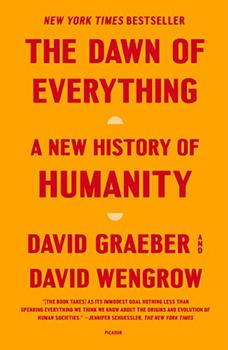
by David Graeber
Published 2023
A dramatically new understanding of human history, challenging our most fundamental assumptions about social evolution―from the development of agriculture and cities to the origins of the state, democracy, and inequality―and revealing new possibilities for human emancipation.

by Eman Abdelhadi
Published 2022
By the middle of the twenty-first century, war, famine, economic collapse, and climate catastrophe had toppled the world's governments.

by John E.. Wideman
Published 2019
With characters ranging from everyday Americans to Jean-Michel Basquiat to Nat Turner, American Histories is a journey through time, experience, and the soul of our country.

Theo of Golden by Allen Levi
One spring morning, a stranger arrives in the small southern city of Golden. No one knows where he has come from…or why…






Your guide toexceptional books
BookBrowse seeks out and recommends the best in contemporary fiction and nonfiction—books that not only engage and entertain but also deepen our understanding of ourselves and the world around us.

