
-
Your next favorite book
is waiting.

Selected Essays (Penguin Classics)
by Pedro Lemebel
A galvanizing look at life on the margins of society by a crowning figure of Latin America's queer counterculture who celebrated "melodrama, kitsch, extravagance, and vulgarity of all kinds" (Garth Greenwell) in playful, performative, linguistically inventive essays, now in English for the first time.
"I speak from my difference," wrote Pedro Lemebel, an openly queer writer and artist living through Chile's AIDS epidemic and the collapse of the Pinochet dictatorship. In brilliantly innovative essays—known as crónicas—that combine memoir, reportage, fiction, history, and poetry, he brought visibility and dignity to sexual minorities, the poor, and the powerless. Touching on everything from Che Guevara to Elizabeth Taylor, from the aftermath of authoritarian rule to the daily lives of Chile's locas—a slur for trans women and effeminate gay men that he boldly reclaims—his writing infuses political urgency with playfulness, realism with absurdism, and resistance with camp, and his AIDS crónicas immortalize a generation of Chileans doubly "disappeared" by casting each loca, as she falls sick, in the starring role of her own private tragedy. This volume brings together the best of his work, introducing readers of English to the subversive genius of a literary activist and queer icon whose acrobatic explorations of the Santiago demimonde reverberate around the world.
For more than seventy-five years, Penguin has been the leading publisher of classic literature in the English-speaking world. With more than 2,000 titles, Penguin Classics represents a global bookshelf of the best works throughout history and across genres and disciplines. Readers trust the series to provide authoritative texts enhanced by introductions and notes by distinguished scholars and contemporary authors, as well as up-to-date translations by award-winning translators.
 National Book Critics Circle Awards, 2024
"What a joy for English readers to at last meet this humanist provocateur who celebrates and memorializes queer lives in a fascist state with fire, love, and a tireless spirit of play." —Publishers Weekly
"An exquisitely original writer ... He uses humor, vulgarity, acidic commentary, and tenderness to describe the lives of the most marginalized people in his society... . The collection has been brilliantly edited and translated." —The New Yorker
"This intoxicating and profane selection has been rendered into English with eye-bulging frankness by Gwendolyn Harper. Each brief 'crónica' ... is a mini-revelation. Sexy, political and deeply humane, these coiled essays demonstrate clearly the perennial importance of radical speech acts... . Harper excels at capturing the spirit of source material often considered untranslatable. Significant lexical inspiration is required to express Lemebel's arch, rat-a-tat punning, while ninja syntax skills are needed to re-create the fragments and convolutions of his sentences. What she makes of his crónicas retains the eccentricities of the original while being quite exquisite in English... . We all owe Penguin Classics a round of shots for A Last Supper of Queer Apostles." —The Washington Post
This information about A Last Supper of Queer Apostles was first featured
in "The BookBrowse Review" - BookBrowse's membership magazine, and in our weekly "Publishing This Week" newsletter. Publication information is for the USA, and (unless stated otherwise) represents the first print edition. The reviews are necessarily limited to those that were available to us ahead of publication. If you are the publisher or author and feel that they do not properly reflect the range of media opinion now available, send us a message with the mainstream reviews that you would like to see added.
Any "Author Information" displayed below reflects the author's biography at the time this particular book was published.
Pedro Lemebel (1952–2015) is considered one of the most important queer writers of twentieth-century Latin America and was also an activist and a performance artist. Born in Santiago, Chile, he became a renowned voice of Latin American counterculture during the Pinochet dictatorship and its aftermath. He received Chile's José Donoso Prize and a Guggenheim Fellowship. He is best known for his crónicas and one novel, My Tender Matador, which has been translated into more than a dozen languages and was adapted in 2020 into a critically acclaimed film by Chilean director Rodrigo Sepúlveda.

If you liked A Last Supper of Queer Apostles, try these:

by Caro De Robertis
Published 2026
Award-winning novelist Caro De Robertis offers a first-of-its-kind, deeply personal, and moving oral history of a generation of queer and trans elders of color, from leading activists to artists to ordinary citizens to tell their stories of breathtaking courage, cultural innovations, and acts of resistance, all in their own words.

by Fernanda Trias
Published 2025
Winner of the Uruguayan National Literature Prize for Fiction, the Bartolomé-Hidalgo Fiction Prize, and the Sor Juana Inés de la Cruz Literature Prize.
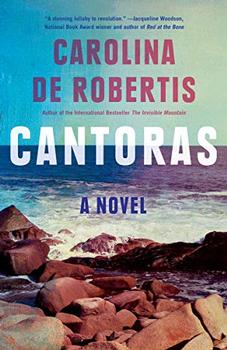
by Caro De Robertis
Published 2020
From the highly acclaimed, award-winning author of The Gods of Tango, a revolutionary new novel about five wildly different women who, in the midst of the Uruguayan dictatorship, find one another as lovers, friends, and ultimately, family.
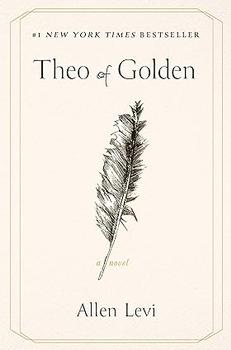
Theo of Golden by Allen Levi
One spring morning, a stranger arrives in the small southern city of Golden. No one knows where he has come from…or why…


Your guide toexceptional books
BookBrowse seeks out and recommends the best in contemporary fiction and nonfiction—books that not only engage and entertain but also deepen our understanding of ourselves and the world around us.

