
-
Your next favorite book
is waiting.

An Investigation of Missing Sound: A Memoir
by Raymond Antrobus
A groundbreaking exploration of deafness by a young award-winning poet—a memoir, a cultural history, and a call to action.
I live with the aid of deafness. Like poetry, it has given me an art, a history, a culture and a tradition to live through. This book charts that art in the hopes of offering a map, a mirror, a small part of a larger story.
Raymond Antrobus was first diagnosed as deaf at the age of six. He discovered he had missing sounds—bird calls, whistles, kettles, alarms. Teachers thought he was slow and disruptive, some didn't believe he was deaf at all.
The Quiet Ear tells the story of Antrobus's upbringing at the intersection of race and disability. Growing up in East London to an English mother and Jamaican father, educated in both mainstream and deaf schooling systems, Antrobus explores the shame of miscommunication, the joy of finding community, and shines a light on deaf education.
Throughout, Antrobus sets his story alongside those of other D/deaf cultural figures—from painters to silent film stars, poets to performers—the inspiring models of D/deaf creativity he did not have growing up. A singular, remarkable work, The Quiet Ear is a much-needed examination of deafness in the world.
"A spellbinding account of [Antrobus's] youth as a deaf, mixed-race child in East London...With lyrical prose, bruising candor, and remarkable tenderness toward his wounded younger self, Antrobus provides an unforgettable account of finding one's voice. It's masterful." —Publishers Weekly (starred review)
"Illuminates a unique corner of experience with clarity and compassion, including compassion for the author's younger self." —Kirkus Reviews
"Poignant, illuminating, and perceptive...Rewriting myths of deafness, Antrobus depicts the diversity of sound worlds, reframing the loss of hearing as a gain." —Booklist
"His poetic sensibility infuses his moving memoir about living between the worlds of the hearing and the deaf, and brings color to his observations about a life spent noticing and attempting to fill in the gaps." —The Washington Post
"Beautifully complicates and expands our understanding of what deafness is... The Quiet Ear has given me new ways to think about the vibration of sound, the movement of language, and the complicated contours of shame. It is a book that changed how I will move through the world." —Clint Smith, author of How the Word Is Passed
"In The Quiet Ear, Raymond Antrobus lifts up a defiant mirror to the mainstream world that has long ignored and shamed the d/Deaf communities and masterfully crafts a world we all deserve: one free of shame, one where deaf people are uplifted, empowered, no longer at the margins of society, but in the center, full of joy and thriving." —Javier Zamora, author of Solito
This information about The Quiet Ear was first featured
in "The BookBrowse Review" - BookBrowse's membership magazine, and in our weekly "Publishing This Week" newsletter. Publication information is for the USA, and (unless stated otherwise) represents the first print edition. The reviews are necessarily limited to those that were available to us ahead of publication. If you are the publisher or author and feel that they do not properly reflect the range of media opinion now available, send us a message with the mainstream reviews that you would like to see added.
Any "Author Information" displayed below reflects the author's biography at the time this particular book was published.
Raymond Antrobus is the author of three collections of poetry, most recently Signs/Music, of which the title poem was published in The New Yorker. His work has won numerous prizes in the UK, where his poems are frequently taught in schools. He is also the author of two children's books, including Can Bears Ski?, which became the first story broadcast on the BBC entirely in British Sign Language. Antrobus was elected a Fellow of the Royal Society of Literature and appointed an MBE. He lives in London.

If you liked The Quiet Ear, try these:

by Andrew Leland
Published 2024
A witty, winning, and revelatory personal narrative of the author's transition from sightedness to blindness and his quest to learn about blindness as a rich culture all its own
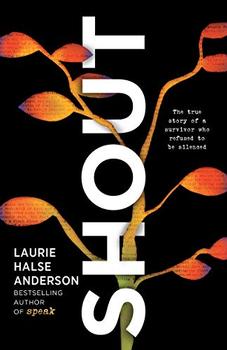
by Laurie Halse Anderson
Published 2020
A searing poetic memoir and call to action from the bestselling and award-winning author of Speak, Laurie Halse Anderson!
by Kimberly Elkins
Published 2015
A vividly original literary novel based on the astounding true-life story of Laura Bridgman, the first deaf and blind person who learned language and blazed a trail for Helen Keller.
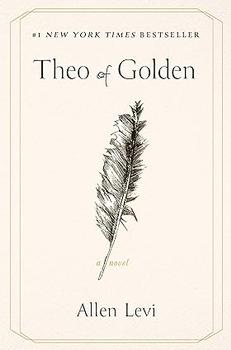
Theo of Golden by Allen Levi
One spring morning, a stranger arrives in the small southern city of Golden. No one knows where he has come from…or why…






Your guide toexceptional books
BookBrowse seeks out and recommends the best in contemporary fiction and nonfiction—books that not only engage and entertain but also deepen our understanding of ourselves and the world around us.

