-
Your next favorite book
is waiting.
Summary | Excerpt | Discuss | Reviews | Beyond the book | Read-Alikes | Genres & Themes | Author Bio
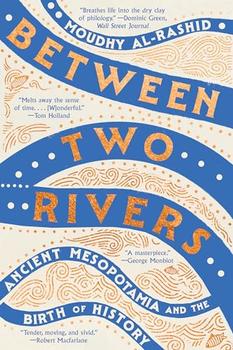
Ancient Mesopotamia and the Birth of History
by Moudhy Al-Rashid Book Reviewed by:
Humanity's earliest efforts at recording and drawing meaning from history reveal how lives millennia ago were not so different from our own.
Thousands of years ago, in a part of the world we now call ancient Mesopotamia, people began writing things down for the very first time.
What they left behind, in a vast region between the Tigris and Euphrates rivers, preserves leaps in human ingenuity, like the earliest depiction of a wheel and the first approximation of pi. But they also capture breathtakingly intimate, raw, and relatable moments, like a dog's paw prints as it accidentally stepped into fresh clay, or the imprint of a child's teeth.
In Between Two Rivers, historian Dr. Moudhy Al-Rashid reveals what these ancient people chose to record about their lives, allowing us to brush hands with them millennia later. We find a lullaby to soothe a baby, instructions for exorcising a ghost, countless receipts for beer, and the messy writing of preschoolers. We meet an enslaved person negotiating their freedom, an astronomer tracing the movement of the planets, a princess who may have created the world's first museum, and a working mother struggling with "the juggle" in 1900 BCE.
Millennia ago, Mesopotamians saw the world's first cities, the first writing system, early seeds of agriculture, and groundbreaking developments in medicine and astronomy. With breathtaking intimacy and grace, Al-Rashid brings their lives―with all their anxieties, aspirations, and intimacies―vividly close to our own.
Introduction
Mesopotamia Matters
A stepped pyramid soars almost 100 feet above the sprawling ruins of the city of Ur, which once sat at the mouth of the Euphrates River in the sandy expanse of what is now southern Iraq. The meandering waters of the river changed course millennia ago, leaving the inhabitants of Ur with no choice but to abandon the desiccated site. In what remains of this ancient city, in the shadow of the pyramid, lie the ruins of a small palace built for a princess over 2,000 years ago. For those millennia, most of Ur has remained buried; only after careful excavation did it start to reveal its many ancient secrets.
When excavators began to uncover the princess's palace in the 1920s, they found a seemingly ordinary chamber with an eroded but otherwise intact brick floor. That floor was so covered in layers of dust and ancient rubbish that the diggers initially doubted they would find a single relic of its long-gone inhabitants. But over the course of several days, they ...
What are you reading this week? And what did you think of last week’s books? (10/09/2025)
This week I'm squeezing in some time to read Between Two Rivers by Moudhy Al-Rashid. It's easy to pick up and put down as each chapter follows an ancient article found in an archeaological excavation, expanding on its meaning through...
-Robin_G
Al-Rashid is an engaging and endearing guide through these muddled layers of history, one who knows how to breathe life into dry clay fragments. An Oxford University academic immersed in her subject, she isn't afraid to weave herself into the story. Indeed, it's often through personal anecdote that the immensity of the timescales she's dealing with comes into stark relief. Telling the Epic of Gilgamesh to her three-year-old daughter as a bedtime story, she's filled with a sense of wonder at the thought that the same tale (albeit in a less child-friendly version) was recounted by poets in the palaces of Mesopotamia some 5,000 years earlier. It's hard not to share her frisson in moments like those, when we can feel the ancient world brush against our own...continued
Full Review
 (658 words)
(Reviewed by Alex Russell).
 James Barr, author of A Line in the Sand
Moudhy al Rashid describes her job of reading ancient Mesopotamian texts as like shaking hands with strangers. She introduces them in this marvelous book, which not only brims with her humanity but offers fascinating and often funny insights into everyday life in this crucial era of world history. Fart jokes to exam stress, motherhood and tax evasion: you'll find something here that reminds you that it is not as remote as you might think. Sarah Parcak, author of Archaeology from Space: How the Future Shapes Our Past
An extraordinary invitation to the magical land of Mesopotamia...Stunning.
James Barr, author of A Line in the Sand
Moudhy al Rashid describes her job of reading ancient Mesopotamian texts as like shaking hands with strangers. She introduces them in this marvelous book, which not only brims with her humanity but offers fascinating and often funny insights into everyday life in this crucial era of world history. Fart jokes to exam stress, motherhood and tax evasion: you'll find something here that reminds you that it is not as remote as you might think. Sarah Parcak, author of Archaeology from Space: How the Future Shapes Our Past
An extraordinary invitation to the magical land of Mesopotamia...Stunning.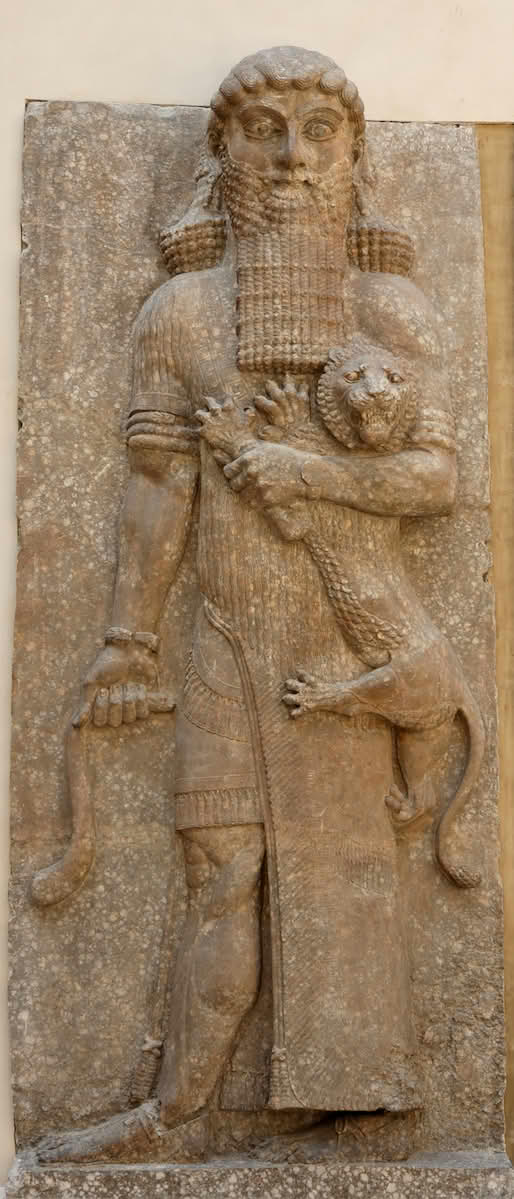 Between Two Rivers by Moudhy Al-Rashid explores the history of the early city-states that sprang up in Mesopotamia between the Tigris and Euphrates rivers in the third millennium BCE, focusing on the beliefs, practices, and technological advances that impacted the lives of everyday people. One of the most important cultural artifacts from that time is the Epic of Gilgamesh, considered today to be the oldest surviving literary work. As Al-Rashid notes in her book, this tale of a legendary king not only played an important role in how Mesopotamian rulers determined what made a good monarch, but also continues to resonate to this day.
Although Gilgamesh is widely accepted to have been a real historical figure and an early king of the ...
If you liked Between Two Rivers, try these:

by Elif Shafak
Published 2025
In the ancient city of Nineveh, on the bank of the River Tigris, King Ashurbanipal of Mesopotamia, erudite but ruthless, built a great library that would crumble with the end of his reign.
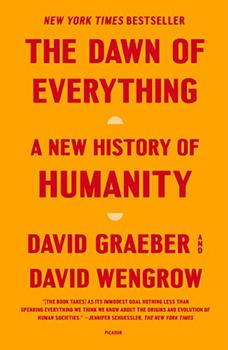
by David Graeber, David Wengrow
Published 2023
A dramatically new understanding of human history, challenging our most fundamental assumptions about social evolution―from the development of agriculture and cities to the origins of the state, democracy, and inequality―and revealing new possibilities for human emancipation.

by Barry Unsworth
Published 2010
In Land of Marvels, a thriller set in 1914, Barry Unsworth brings to life the schemes and double-dealings of Western nations grappling for a foothold in Mesopotamia (now Iraq) in the dying days of the Ottoman Empire.

L.A. Women by Ella Berman
Two ambitious writers in 1960s LA face betrayal when one writes a novel based on the other's life.