
-
Your next favorite book
is waiting.

by Marissa Davis
From a prizewinning poet whose work "points to an unfathomably bright future for the canon" (Danez Smith), a stunningly lush collection about desire, resilience, and our fraught and ecstatic relationship with the natural world.
A collection as remarkable for the force of its feeling as for the range of its vision, End of Empire explores the tensions of Black and American identity within an ecological framework. Inspired by the language and landscape of the poet's rural Kentucky hometown and the ways that inherited religious and political narratives shape our relationships with our surroundings and ourselves, these poems reckon with the ways the speaker, their body, and their natural and ideological surroundings continuously remake each other. Formally dynamic, emotionally resonant, and rich with biblical, mythological, and historical allusions, these are elegant, impeccably crafted pieces that evoke the fearsome power of nature and of the tangled, sensual self.
"A rich, sprawling work that nods toward biblical and mythological references, history, and rural landscapes...Davis deploys her innovative approach to language and inquiry. The work moves with a wise and deliberate eye, creating a visceral resonance of meaning...The poems look closely at politics, a Kentucky childhood, the Black body, and human resilience with a skill that maps the interconnectedness of people, place, and consequence across time...One is encouraged to return for repeated and close examinations of a truly beautiful work." —Booklist
"In Marissa Davis's stunning and wide-ranging debut, End of Empire takes as its task the unraveling of what we have learned in the crucible of home, country, gender. Fragmented and lush, economical but expansive, this collection finds solace in the possibilities of new grammars. From Paducah, Kentucky to Paris, France, from Ecclesiastes to Persephone, Davis's poems refuse what is no longer tolerable, instead practice the slow, long ways knowing that can bring us back to ourselves and each other. " —Donika Kelly, author of Bestiary and The Renunciations
"Against eloquence, ennoblement, and the first person, Marissa Davis's End of Empire pursues language to the limits of the unutterable. What's amazing is that, at this bare point where she tears syntax apart, Davis hovers at an extravagant perpetual crescendo ... Read this book!" —Ken Chen, author of Juvenilia
This information about End of Empire was first featured
in "The BookBrowse Review" - BookBrowse's membership magazine, and in our weekly "Publishing This Week" newsletter. Publication information is for the USA, and (unless stated otherwise) represents the first print edition. The reviews are necessarily limited to those that were available to us ahead of publication. If you are the publisher or author and feel that they do not properly reflect the range of media opinion now available, send us a message with the mainstream reviews that you would like to see added.
Any "Author Information" displayed below reflects the author's biography at the time this particular book was published.
Marissa Davis is a poet and translator from Paducah, Kentucky. Her writing has appeared in Poetry magazine, Narrative, Gulf Coast, and Prairie Schooner, among other journals. Her chapbook, My Name & Other Languages I Am Learning How to Speak (Jai-Alai Books, 2020) was selected for Cave Canem's 2019 Toi Derricotte and Cornelius Eady Chapbook Prize. Davis holds an MFA from New York University and was a 2024 Ruth Lilly and Dorothy Sargent Rosenberg Fellow. Following years in Nashville, Tennessee, and Brooklyn, New York, she now lives in Paris, France, where she is pursuing a master's in Editorial, Economic, and Technical Translation at the Sorbonne Nouvelle.

If you liked End of Empire, try these:

by Jessica J.. Lee
Published 2025
A prize-winning memoirist and nature writer turns to the lives of plants entangled in our human world to explore belonging, displacement, identity, and the truths of our shared future
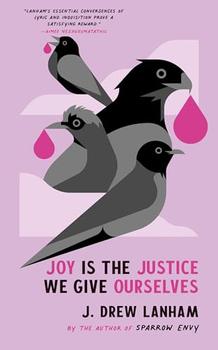
Joy Is the Justice We Give Ourselves
by J Drew. Lanham
Published 2024
From J. Drew Lanham, MacArthur "Genius" Grant recipient and author of Sparrow Envy: A Field Guide to Birds and Lesser Beasts, comes a sensuous new collection in his signature mix of poetry and prose.
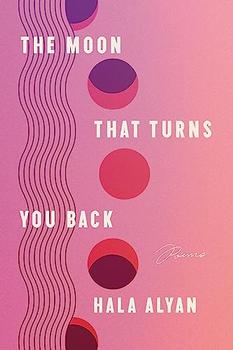
by Hala Alyan
Published 2024
From the author of The Arsonists' City and The Twenty-Ninth Year, a new collection of poetry that traces the fragmentation of memory, archive, and family–past, present, future–in the face of displacement and war.
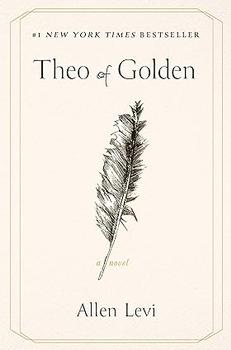
Theo of Golden by Allen Levi
One spring morning, a stranger arrives in the small southern city of Golden. No one knows where he has come from…or why…






Your guide toexceptional books
BookBrowse seeks out and recommends the best in contemporary fiction and nonfiction—books that not only engage and entertain but also deepen our understanding of ourselves and the world around us.

