
-
Your next favorite book
is waiting.

Confronting Dark Truths in the American Classroom
by Ranita Ray
A powerful exposé of the American public education system's indifference toward marginalized children and the "slow violence" that fashions schools into hostile work and learning environments.
In 2017, sociologist Ranita Ray stepped inside a fourth-grade classroom in one of the nation's largest majority-minority districts in Las Vegas, Nevada. She was there to conduct research on the lack of resources and budget cuts that regularly face public schools. However, a few months into her immersion, a disturbed Ray recognized that that greatest impediment to students was the "slow violence" that preys on their minds, bodies, and spirits at the hands of teachers and administrators who are charged with their care.
Slow Violence lays bare the routine indifference, racism, and verbal and emotional abuse and harassment that teachers and administrators perpetrate routinely against the most vulnerable children in our schools. We meet Nazli, a bright, funny Black girl, and math wiz, who loses her baby brother, and is told that "grit" will enable her to rise above her grief. Reggie is a devoted student and curious scholar, but his path to success is derailed when teachers fashion him as a predator after they find him looking at two inappropriate photos on his iPad. There's Nalin, a shy and determined Filipina who has just arrived in the US, but is ignored based on her educator's assumption that "Asians" are "good at math." Her entire journey through school is darkened by this stereotype. And there's Miguel, a sharp, distracted Latino boy who can't overcome his teachers' urge to incorrectly diagnose him with autism.
Bolstered by an empathetic and passionate voice as well as the latest breaking research in the social sciences, Ray goes beyond timeworn discussions about the school-to-prison pipeline, funding, and achievement gaps to directly address what happens behind the closed doors of classrooms, introducing a compelling―and crucial―new perspective into the conversation about our education system.
In the warm, luminous spirit of character-driven books like Invisible Child, Slow Violence allows us to see that the way we've tried to make a start in education reform is wrong. To forge new approaches that foster young minds and flourishing generations we have to start with how children experience the classroom. Unflinchingly, Slow Violence tells us―and shows us where to begin.
"It's an eyewitness account of the crushing of the human spirit, and it's heartbreaking. Yet as Ray tells these stories, she only sporadically zooms out to put her observations into broader sociological context. When she does, it's great; when she doesn't, readers may scratch their heads wondering what her point is. An unvarnished look at the troubling ways in which schools can harm students." —Kirkus Reviews
"[An] alarming exposé…This adds to the chorus of provocative recent studies positing that majority-white environments negatively impact students of color." —Publishers Weekly
"A beautiful and aching book―at once a careful meditation on the hope we find in the eyes of our nation's most vulnerable children, and a searing indictment of our failure to recognize their humanity...Ray shows us, in masterful strokes and through the eyes of children she followed, that teaching is a job, and that teachers are people who bring their gifts and biases into the classroom. [It] will change how you think about education." ―Reuben Jonathan Miller, author of Halfway Home
"Gripping and powerful...Ray's clear-eyed and full-hearted analysis shows how the precarity of public education―particularly in communities marginalized by systemic racism and economic injustice―can push teachers to punch down on kids and parents who are even more powerless than they are." ―Jessica Calarco, author of Holding It Together
This information about Slow Violence was first featured
in "The BookBrowse Review" - BookBrowse's membership magazine, and in our weekly "Publishing This Week" newsletter. Publication information is for the USA, and (unless stated otherwise) represents the first print edition. The reviews are necessarily limited to those that were available to us ahead of publication. If you are the publisher or author and feel that they do not properly reflect the range of media opinion now available, send us a message with the mainstream reviews that you would like to see added.
Any "Author Information" displayed below reflects the author's biography at the time this particular book was published.
Ranita Ray is Associate Professor of Sociology at the University of New Mexico, where she holds an endowed chair. For 15 years, her research program has centered on youth, education, and gender and racial injustice. Ray is a 2019 National Academy of Education/Spencer fellow, as well as a 2018 Racial Democracy and Criminal Justice Network fellow. Her research has been funded by the National Science Foundation several times, including in 2018 when her team was awarded a large grant to study urban inequalities in Las Vegas. Slate, The Atlantic, The New York Times, the Las Vegas Review Journal, Las Vegas Sun, and the Las Vegas Weekly have featured Ray's research and original writing. She is author of The Making of a Teenage Service Class, which won four prizes and is widely adopted for classroom use. In addition, Ray's TED talk is often used by educators. And, Slow Violence was shortlisted for the 2024 Lukas Work-in-Progress Prize.

If you liked Slow Violence, try these:

by Christina Dalcher
Published 2021
From the critically-acclaimed author of the international bestseller VOX comes a suspenseful new novel that examines a disturbing near future where harsh realities follow from unreachable standards.
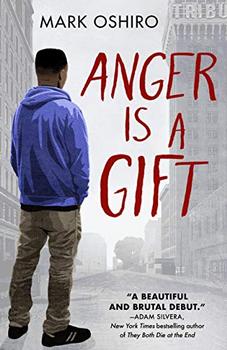
by Mark Oshiro
Published 2019
A story of resilience and loss, love and family, testifying to the vulnerability and strength of a community living within a system of oppression.
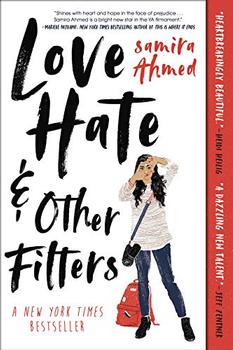
by Samira Ahmed
Published 2019
In this unforgettable debut, a Muslim teen copes with Islamophobia, cultural divides among peers and parents, and a reality she can neither explain nor escape.

L.A. Women by Ella Berman
Two ambitious writers in 1960s LA face betrayal when one writes a novel based on the other's life.






Your guide toexceptional books
BookBrowse seeks out and recommends the best in contemporary fiction and nonfiction—books that not only engage and entertain but also deepen our understanding of ourselves and the world around us.

