
-
Your next favorite book
is waiting.

Population, Progress, and the Case for People
by Dean Spears
An eye-opening exploration of humanity's unprecedented path to global depopulation and its significance from economists Dean Spears and Michael Geruso.
The world's population has surged over the past 200 years—not due to increased fertility, but thanks to improvements in survival. Since then, our larger society has thrived like never before: scientific breakthroughs, a global economy, healthier lives, and social progress.
A significant shift is now on the horizon. Humanity is projected to peak at 10 billion, followed by a rapid decline. It would be easy to think that fewer people would be better—better for the planet, better for the people who remain. This book asks you to think again. Depopulation is not the solution we urgently need for environmental challenges, nor will it raise living standards by dividing what the world can offer across fewer of us.
In After the Spike, economists Dean Spears and Michael Geruso shed light on the consequences of this unprecedented shift. They carefully analyze the stakes of global depopulation, exploring its impact on living standards, climate, and even extinction. Surprisingly, they reveal that stabilizing the global population doesn't have to mean sacrificing our dreams of a greener future or reverting to past gender inequities. Their insights challenge us to view the fight against depopulation as intertwined with social equity and the inherent value of every human life. After the Spike is a rallying call to action to ensure a thriving future for generations to come.
"Counterintuitive... . Spears and Geruso have started an essential conversation on how humans might realistically address the vexing challenges of population change." ―Booklist (starred review)
"Though somewhat dry, this offers important food for thought for those concerned about climate change." —Publishers Weekly
"Spears and Geruso take us by the hand to understand the most dramatic period of human history—how a global population of millions became billions—but, importantly, what happens next. The insights and rigor—which come thick and fast—are matched by human and empathetic narrative." —Hannah Ritchie, lead researcher at Our World in Data and author of Not the End of the World
"With stunning clarity, Spears and Geruso show why our assumptions about population, progress, and prosperity are leading us astray. If you want to understand where humanity is going, and why that matters, this book is essential reading." —Daniel H. Pink, #1 New York Times bestselling author of The Power of Regret, When, and Drive
This information about After the Spike was first featured
in "The BookBrowse Review" - BookBrowse's membership magazine, and in our weekly "Publishing This Week" newsletter. Publication information is for the USA, and (unless stated otherwise) represents the first print edition. The reviews are necessarily limited to those that were available to us ahead of publication. If you are the publisher or author and feel that they do not properly reflect the range of media opinion now available, send us a message with the mainstream reviews that you would like to see added.
Any "Author Information" displayed below reflects the author's biography at the time this particular book was published.
Dr. Dean Spears is an economic demographer, development economist, and associate professor of economics at the University of Texas at Austin. He is also the founding executive director of the Research Institute of Compassionate Economics (r.i.c.e.) and the director of the Population Wellbeing Initiative at UT-Austin. With Dr. Diane Coffey, he is the author of the award-winning book Where India Goes: Abandoned Toilets, Stunted Development, and the Costs of Caste. He holds a master's in public affairs and a PhD in economics, both from Princeton. He is an affiliate of the Institute for Labor Economics (IZA) and of the Population Research Center at UT-Austin. His work has been published in top peer-reviewed outlets including the Proceedings of the National Academy of Sciences, Nature Climate Change, and Demography, and has been featured in The New York Times, National Geographic, Time, The Wall Street Journal, NPR, Vox, The Atlantic, and The Economist.

If you liked After the Spike, try these:

by Eman Abdelhadi
Published 2022
By the middle of the twenty-first century, war, famine, economic collapse, and climate catastrophe had toppled the world's governments.
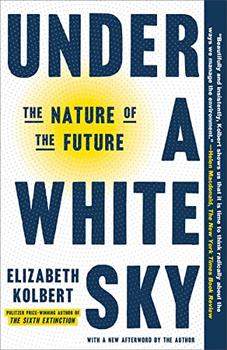
by Elizabeth Kolbert
Published 2022
The Pulitzer Prize–winning author of The Sixth Extinction returns to humanity's transformative impact on the environment, now asking: After doing so much damage, can we change nature, this time to save it?

by Eric Holthaus
Published 2020
The first hopeful book about climate change, The Future Earth shows readers how to reverse the short- and long-term effects of climate change over the next three decades.

L.A. Women by Ella Berman
Two ambitious writers in 1960s LA face betrayal when one writes a novel based on the other's life.







Your guide toexceptional books
BookBrowse seeks out and recommends the best in contemporary fiction and nonfiction—books that not only engage and entertain but also deepen our understanding of ourselves and the world around us.

