
-
Your next favorite book
is waiting.

An Oral History of the Making and Unleashing of the Atomic Bomb
by Garrett M. Graff
On the 80th anniversary of the Hiroshima and Nagasaki bombings, the Pulitzer Prize finalist whose work is "oral history at its finest" (Pittsburgh Post-Gazette) delivers an epic narrative of the atomic bomb's creation and deployment, woven from the voices of hundreds of scientists, generals, soldiers, and civilians.
The building of the atomic bomb is the most audacious undertaking in human history: a rush by a small group of scientists and engineers in complete secrecy to unlock the most fundamental power of the universe. Even today, eighty years later, the Manhattan Project evokes boldness, daring, and the grandest of dreams: bringing an end to World War II in the Pacific, a conflict that already had stretched from Pearl Harbor to Guadalcanal to Leyte Gulf to Iwo Jima and Okinawa. As Marines, soldiers, sailors, and airmen fight those battles, men and women strive to discover the atom's secrets at laboratories and plants in places like Chicago, Berkeley, Oak Ridge, Hanford, and Los Alamos. On August 6, 1945, the world discovers what the end of the war—and the new global age—will look like. Science and politics will never be the same again.
The road to the first atomic bomb ends in Hiroshima, Japan, but it begins in Hitler's Europe, where brilliant physicists following the path that Einstein blazed are forced to flee fascism and antisemitism—bringing to America their determination to harness atomic power before it falls into the Führer's arsenal. The Devil Reached Toward the Sky traces the breakthroughs and the breakneck pace of atomic development in the years leading up to 1945, then takes us inside the B-29 bombers carrying Little Boy and Fat Man and finally to ground zero at Hiroshima and Nagasaki.
From Pulitzer Prize finalist Garrett M. Graff, The Devil Reached Toward the Sky is the panoramic narrative of how ordinary people grapple with extraordinary wartime risks, sacrifices, and choices that will transform the course of history. Theorists and engineers dare to experiment with forces of terrifying power for the purpose of creating an atomic bomb, knowing each passing day costs soldiers' lives—but fearing too the consequences of their creation. Hundreds of thousands of workers toil around the clock to produce uranium and plutonium in an endeavor so classified that most people involved learn the reality of their effort only when it is announced on the radio by President Truman. The 509th Composite Group trains for a mission whose details are kept a mystery until shortly before takeoff, when the Enola Gay and Bockscar are loaded with bombs the crew has never seen. And the civilians of two Japanese cities that have been spared American attacks—preserved for the sake of judging the power of the bomb on an intact city—escape their pulverized homes into a greater hellscape.
Drawing from dozens of oral history archives and hundreds of books, reports, letters, diaries, and transcripts from across the US, Japan, and Europe, Graff masterfully blends the memories and perspectives from the known and unknown—key figures like J. Robert Oppenheimer, General Leslie Groves, and President Truman; the crews of the B-29 bombers; and the haunting stories of the Hibakusha—the "bomb-affected people." Both a testament to human ingenuity and resilience and a compelling drama told by the participants who lived it, The Devil Reached Toward the Sky is a singular, profound, and searing book about the inception of our most powerful weapon and its haunting legacy.
"Journalist Graff delivers a magisterial oral history of the atomic bomb... . The result is a stunning account that brings to the fore the nuclear saga's surreal combination of ingenuity, fate, and terror." —Publishers Weekly (starred review)
"A comprehensive and engrossing account of the atomic bomb's creation—and its effects... . The 500 voices who make up the oral history include famous and less-known figures, such as members of the crew who created the first controlled nuclear chain reaction; farmers whose land was needed to build massive complexes to produce enriched uranium and plutonium for the bombs; 'project spouses' at all three locations raising families under difficult living conditions; politicians and military men involved in planning and executing the bombing of Hiroshima and Nagasaki; and Japanese survivors of the bombings... . Excellent oral history." —Kirkus Reviews
This information about The Devil Reached Toward the Sky was first featured
in "The BookBrowse Review" - BookBrowse's membership magazine, and in our weekly "Publishing This Week" newsletter. Publication information is for the USA, and (unless stated otherwise) represents the first print edition. The reviews are necessarily limited to those that were available to us ahead of publication. If you are the publisher or author and feel that they do not properly reflect the range of media opinion now available, send us a message with the mainstream reviews that you would like to see added.
Any "Author Information" displayed below reflects the author's biography at the time this particular book was published.
Garrett M. Graff has spent two decades covering politics, technology, and national security. Today, he's a columnist for The Washington Post, where he writes on leadership, serves as the director of cyber initiatives at the Aspen Institute, and hosts the history podcast, Long Shadow, which received a 2024 Edward R. Murrow Award. The former editor of POLITICO Magazine and a longtime contributor to WIRED and CNN, he's written for publications like Esquire, Rolling Stone, Vanity Fair, and Foreign Affairs, and authored nine books—including the #1 national bestseller The Only Plane in the Sky: An Oral History of 9/11, the FBI history The Threat Matrix, Raven Rock (about the government's Cold War Doomsday plans), and the New York Times bestsellers When the Sea Came Alive (an oral history of D-Day) and Watergate: A New History, which was a finalist for the Pulitzer Prize in History.

If you liked The Devil Reached Toward the Sky, try these:
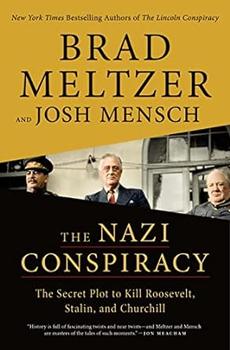
by Brad Meltzer
Published 2024
From the New York Times bestselling authors of The First Conspiracy and The Lincoln Conspiracy comes the little-known true story of a Nazi plot to kill FDR, Joseph Stalin, and Winston Churchill at the height of World War II.
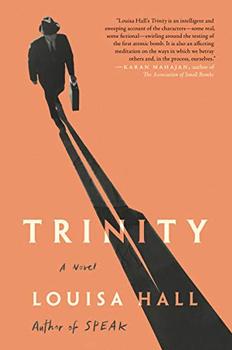
by Louisa Hall
Published 2019
From the acclaimed author of Speak comes a kaleidoscopic novel about Robert Oppenheimer - father of the atomic bomb - as told by seven fictional characters.
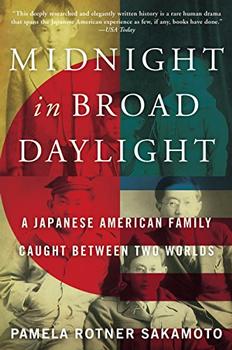
by Pamela Rotner Sakamoto
Published 2017
Alternating between American and Japanese perspectives, Midnight in Broad Daylight provides a fresh look at the dropping of the first atomic bomb.

L.A. Women by Ella Berman
Two ambitious writers in 1960s LA face betrayal when one writes a novel based on the other's life.






Your guide toexceptional books
BookBrowse seeks out and recommends the best in contemporary fiction and nonfiction—books that not only engage and entertain but also deepen our understanding of ourselves and the world around us.

