
-
Your next favorite book
is waiting.

The Forgotten History of Easter Island
by Mike Pitts
In the tradition of Hampton Sides and Simon Winchester comes a vital and timely work of historical adventure and reclamation by British archeological scholar Mike Pitts—a book that rewrites the popular yet flawed history of Rapa Nui (Easter Island) and uses newly unearthed findings and documents to challenge the long-standing historical assumptions about the manmade ecological disaster that caused the island's collapse.
Rapa Nui, known to Western cultures as Easter Island for centuries, has long been a source of mystery. While the massive stone statues that populate the island's landscape have loomed in the popular Western imagination since Europeans first set foot there in 1722, in recent years, the island has gained infamy as a cautionary tale of eco-destruction. The island's history as it's been written tells of Polynesians who carelessly farmed, plundered their natural resources, and battled each other, dooming their delicate ecosystem and becoming a warning to us all about the frailty of our natural world.
But what if that history is wrong?
In The Island at the Edge of the World, archeological writer and scholar Mike Pitts offers a direct challenge to the orthodoxy of Rapa Nui, bringing to light new research and documents that tell a dramatic and surprising story about what really led to the island's downfall. Relying on the latest archaeological findings, he paints a vastly different portrait of what life was like on the island before the first Europeans arrived, investigating why a Polynesian people who succeeded for centuries throughout the South Pacific supposedly failed to thrive in Rapa Nui. Pitts also unearths the vital story of one of the first anthropologists to study Rapa Nui, an Oxford-trained iconoclast named Katherine Routledge, who was instrumental in collecting firsthand accounts from the Polynesians living on Rapa Nui in the late nineteenth and early twentieth centuries. But though Routledge's impressive scholarship captured the oral traditions of what life had been like pre-1722, her work was widely dismissed because of her gender, her reliance on indigenous perspectives, and her conclusions which contradicted her historical peers.
A stunning work of revisionism, this book raises critical questions about who gets to write history and the stakes of ignoring that history's true authors. Provocative and illuminating, The Island at the Edge of the World will change the way people think about Easter Island, its colonial legacy, and where the blame for its devastation truly lies.
"Striking ... a stunning unraveling of many layers of hidden history." —Publishers Weekly (starred review)
"A bold and convincing revision of Rapa Nui's history." —Kirkus Reviews
This information about Island at the Edge of the World was first featured
in "The BookBrowse Review" - BookBrowse's membership magazine, and in our weekly "Publishing This Week" newsletter. Publication information is for the USA, and (unless stated otherwise) represents the first print edition. The reviews are necessarily limited to those that were available to us ahead of publication. If you are the publisher or author and feel that they do not properly reflect the range of media opinion now available, send us a message with the mainstream reviews that you would like to see added.
Any "Author Information" displayed below reflects the author's biography at the time this particular book was published.
Mike Pitts is a writer and broadcaster (a frequent voice on BBC radio), archaeologist (directing excavations at Stonehenge), and one-time museum curator. He has written for The Times, Telegraph, Sunday Times, Observer, and Guardian, and many magazines including New Scientist, Archaeology (US)and BBC History. He edited British Archaeology magazine for 20 years, and has written books on topics from the discovery of Richard III's grave to How to Build Stonehenge, his last title. His original research has been published in peer-reviewed journals such as Nature, World Archaeology, and Antiquity. He is a Fellow of the Society of Antiquaries.

If you liked Island at the Edge of the World, try these:

by Tao Leigh. Goffe
Published 2026
A groundbreaking investigation of the Caribbean as both an idyll in the American imagination and a dark laboratory of Western experimentation, revealing secrets to racial and environmental progress that impact how we live today.
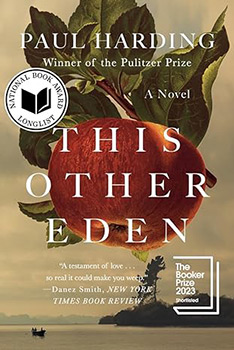
by Paul Harding
Published 2023
From the Pulitzer Prize–winning author of Tinkers, a novel inspired by the true story of Malaga Island, an isolated island off the coast of Maine that became one of the first racially integrated towns in the Northeast.
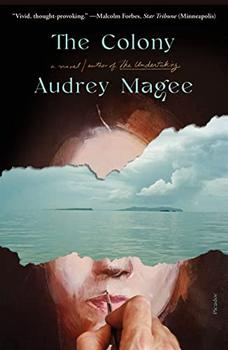
by Audrey Magee
Published 2023
In 1979, as violence erupts all over Ireland, two outsiders travel to a small island off the west coast in search of their own answers, despite what it may cost the islanders.

L.A. Women by Ella Berman
Two ambitious writers in 1960s LA face betrayal when one writes a novel based on the other's life.






Your guide toexceptional books
BookBrowse seeks out and recommends the best in contemporary fiction and nonfiction—books that not only engage and entertain but also deepen our understanding of ourselves and the world around us.

