
-
Your next favorite book
is waiting.
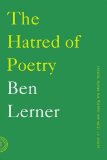
An entertaining, personal, and entirely original examination of a vocation no less essential for being impossible.
No art has been denounced as often as poetry. It's even bemoaned by poets: "I, too, dislike it," wrote Marianne Moore. "Many more people agree they hate poetry," Ben Lerner writes, "than can agree what poetry is. I, too, dislike it and have largely organized my life around it and do not experience that as a contradiction because poetry and the hatred of poetry are inextricable in ways it is my purpose to explore."
In this inventive and lucid essay, Lerner takes the hatred of poetry as the starting point of his defense of the art. He examines poetry's greatest haters (beginning with Plato's famous claim that an ideal city had no place for poets, who would only corrupt and mislead the young) and both its greatest and worst practitioners, providing inspired close readings of Keats, Dickinson, McGonagall, Whitman, and others. Throughout, he attempts to explain the noble failure at the heart of every truly great and truly horrible poem: the impulse to launch the experience of an individual into a timeless communal existence.
"Starred Review. Lerner's brief, elegant treatise on what poetry might do and why readers might need it is the perfect length for a commute or a classroom assignment, clearing a space for both private contemplation and lively discussion." - Publishers Weekly
"Lerner reasons that the love/hate duality is innate to the Western tradition of poetry and that is as it should be ... Recommended for anyone interested in poetry." - Library Journal
"His struggle to give concrete form to an increasingly abstract concept of art is just 'form gulping after formlessness,' as Wallace Stevens put it. A learned but knotty defense on poetry's behalf, persuasive to no one but those who need no convincing." - Kirkus
This information about The Hatred of Poetry was first featured
in "The BookBrowse Review" - BookBrowse's membership magazine, and in our weekly "Publishing This Week" newsletter. Publication information is for the USA, and (unless stated otherwise) represents the first print edition. The reviews are necessarily limited to those that were available to us ahead of publication. If you are the publisher or author and feel that they do not properly reflect the range of media opinion now available, send us a message with the mainstream reviews that you would like to see added.
Any "Author Information" displayed below reflects the author's biography at the time this particular book was published.
Ben Lerner was born in Topeka, Kansas, in 1979. He has been a Fulbright Fellow, a finalist for the National Book Award for Poetry, a Howard Foundation Fellow, and a Guggenheim Fellow. His first novel, Leaving the Atocha Station, won the 2012 Believer Book Award. His second novel, 10:04, an international bestseller, won The Paris Review's 2012 Terry Southern Prize, was a finalist for the 2014 New York Public Library's Young Lions Fiction Award and the Folio Prize, and was named one of the best books of 2014 by more than a dozen major publications. He has also published three poetry collections: The Lichtenberg Figures, Angle of Yaw, and Mean Free Path. Lerner is a professor of English at Brooklyn College.

If you liked The Hatred of Poetry, try these:
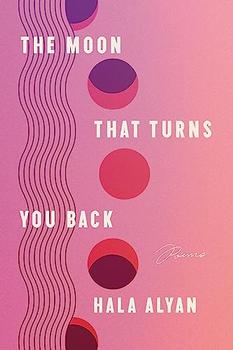
by Hala Alyan
Published 2024
From the author of The Arsonists' City and The Twenty-Ninth Year, a new collection of poetry that traces the fragmentation of memory, archive, and family–past, present, future–in the face of displacement and war.

by Elaine Castillo
Published 2022
An exploration and polemic that redefines the power and potential for reading by a novelist whose "prose is as good as it gets" (NPR) and who has "a real voice: vernacular and fluid, with a take-no-prisoners edge" (Kirkus).
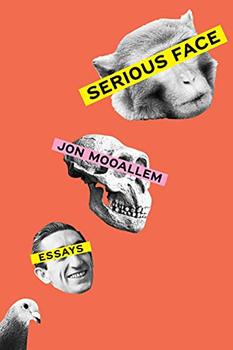
by Jon Mooallem
Published 2022
From the discovery of the author's face in a century-old photograph to a triple-amputee hospice director working at the border of life and death, here are thirteen hopeful, heartbreaking, and profound essays from "one of the most intelligent, compassionate, and curious authors working today" (Elizabeth Gilbert).
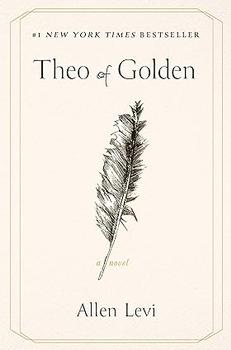
Theo of Golden by Allen Levi
One spring morning, a stranger arrives in the small southern city of Golden. No one knows where he has come from…or why…




Your guide toexceptional books
BookBrowse seeks out and recommends the best in contemporary fiction and nonfiction—books that not only engage and entertain but also deepen our understanding of ourselves and the world around us.


