
-
Your next favorite book
is waiting.
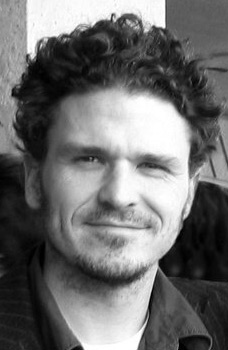
A conversation with Dave Eggers on Contrapposto
Q: This is a very funny, very moving book about the deepest kind of friendship. It unfolds over many decades, and the novel took shape over decades for you, too. When did you begin thinking about these characters?
Dave Eggers: I've been thinking about Cricket and Olympia for about twenty years, and was writing random passages about them much of that period. Sometimes a certain book takes an especially long time to gestate and make its correct form known, and this was one of those books. When I finally arrived at the idea of having the book in seven sections, each leaping ahead in years, it felt like I'd arrived at the book's right shape. I've always wanted to follow a friendship between a man and a woman over decades, especially one in which there's no question of the two of them remaining close, despite countless trials and troubles. Cricket and Olympia have no choice but to remain in each other's lives, even though they have little in common beyond art, and their undying loyalty to each other.
Q: Cricket and Olympia's relationship overlaps with the art world throughout their lives, and you're a practicing artist yourself. What is it about the milieu of art school, and artists' lives that led you to base the novel in that world?
DE: It's a world I know a bit. I went to art school for a while, I've written about art, and in the last fifteen years I've shown a lot of my own drawings and paintings, so I've found myself inside the art world to some extent or another. Between Cricket and Olympia, Cricket is more of an outsider, baffled by the workings of the marketplace, while Olympia is very comfortable with the business of art. Their opposing stances mirror the tension that all artists feel — the romance of creating for creation's sake versus the need to make a living. That unbalanced balance is reflected, I hope, in the title.
Q: Cricket and Olympia know each other so well that they bicker with total, hilarious abandon, but they also fight fiercely for each other. Were you always sure about their path together?
DE: I've had the same friends since grade school, so with these ancient friendships, you can speak candidly to each other, and bullshit doesn't have a lot of value. But there's an element of mild resistance, too, embedded in these old friendships. Cricket and Olympia want to reinvent themselves, but they also know they can't pull one over on someone who's known them since they were eight years old. At that point, you know each other on a molecular level. So you fight for that person as you would fight to keep a limb of your own body.
Q: In a time when AI relationships have suddenly left the realm of sci-fi and are seemingly both common and legitimate, this novel argues for the irreplaceable connection that can occur between two humans, in either romance or friendship. Do you think Cricket and Olympia share something rare in their relationship?
DE: I don't know that it's rare, but I do think we're at a strange juncture in the history of human relations. Georgia O'Keeffe once said, "To see takes time, like to have a friend takes time." I grew upgoing to the Art Institute of Chicago, where O'Keeffe's "Sky Above Clouds IV" hung above a bright and well-traveled staircase, and every time I saw that painting I thought of that quote. Now that I'm in my fifties, that quote hits harder. There's a group of about fifteen of us who have been friends since we were about ten years old, and I think it's both an art, and a lot of work — not hard work, but sustained effort — to maintain those bonds. And lately we see so many pop-psych theorists suggest cutting off friends any time they displease us (always citing something "toxic" they did), and so we're left with billions of lonely people who carry on relationships with machines. These machines, increasingly, will be trained to algorithmically affirm and praise their users, and this will stand in (for the poor suckers who fall for it) for the love, human heat, complexity and exuberance of actual human friendship.
Q: Time feels like one of the most powerful tools you deploy in Contrapposto. The characters' hurts and disappointments tend to fade as the years go on, just as their tenderness for one another increases. Can you say more about what time does in this novel, and whether you could have told any version of this story over a shorter span of years?
DE: I've always loved leaps of time in novels, and the happy work a reader has to do in filling in the gaps. It reminds us that books are the ultimate participatory art — a collaboration between author and reader. I don't always explain what happens between chapters in Contrapposto, but I'd like to think the reader will know Cricket and Olympia well enough to know. Otherwise, I always knew the book would start in childhood and end late in life, and would illuminate the ways we change, and often don't change all that much. In the later chapters, my hope would be that you have in mind the boy Cricket was and thegirl Olympia was, and know that the space between those two eras in life is collapsible, negligible. We blink and we're seventy, but no less exuberant and alive.
Q: Contrapposto is a pose in figure drawing, which is something we see Cricket and Olympia take part in again and again over the course of the book. Can you say more about the long tradition of learning to draw the body—the rigor of it, the intimacy—and all of what that means in the context of the book?
DE: When you see that trope of an artist holding their thumb out and squinting, that's the artist "measuring" the proportions of a figure. It's a real thing! You look at the model, and you cover their head with your thumb. That thumb-height becomes your unit of measure. Then you count how many heads the model's total height is, how many heads the width of their shoulders are, on and on. By comparing all of these dimensions against each other, you can arrive at perfect accuracy (if you're seeking that, of course). I was taught this as a teenager in Chicago, at a classical academy, and I'm convinced most people can be taught these techniques, too; it's the same process that's been observed for hundreds of years. The rigor of classical drawing was revelatory to me, and I wanted to convey that to a reader, too — the fact classical art education was much like a classical musical education, in that it was based on hard skills, hundreds of hours of practice, and a certain humility, too. But it is imminently learnable, and in an exhilarating way, it teaches the student how to see.
Unless otherwise stated, this interview was conducted at the time the book was first published, and is reproduced with permission of the publisher. This interview may not be reproduced or reprinted without permission in writing from the copyright holder.
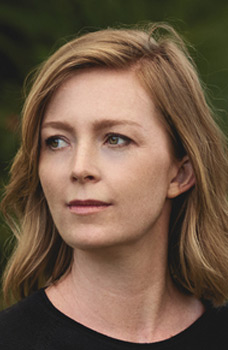
C. Morgan Babst is a native of New Orleans. She studied writing at NOCCA, Yale, and NYU, and her essays and short fiction have appeared in Garden and Gun, The Oxford American, Guernica, the Harvard Review, Lenny Letter, and ... (more)
If you enjoyed:
Zeitoun
Try:
The Floating World
by C. Morgan Babst

Julian Barnes is the author of fourteen novels, including The Sense of an Ending, which won the 2011 Booker Prize, and Sunday Times bestsellers The Noise of Time and The Only Story. He has also written three books of short ... (more)
If you enjoyed:
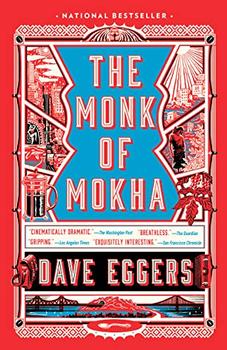
A Heartbreaking Work of Staggering Genius
Try:
Levels of Life
by Julian Barnes
We recommend 26 similar authors



There is no science without fancy and no art without fact
Click Here to find out who said this, as well as discovering other famous literary quotes!

Can you name the title?
Test your book knowledge with our daily trivia challenge!
Your guide toexceptional books
BookBrowse seeks out and recommends the best in contemporary fiction and nonfiction—books that not only engage and entertain but also deepen our understanding of ourselves and the world around us.
