
-
Your next favorite book
is waiting.

How to pronounce Stephanie Sy-Quia: sigh-KEY-uh
A conversation with Stephanie Sy-Quia, author of A Private Man.
What is the real-life inspiration behind A Private Man?
My grandfather was a Catholic priest. In the early 1960s, he met and fell in love with my grandmother, a feminist theologian. They didn't tell their only child (my mother) until she was in her teens—and she didn't tell me until I was about the same age. I remember her being a bit uneasy about telling me, that it was a difficult topic for her and that it was shrouded in mystery and pain and scandal.
My grandfather died when I was 6, but my grandmother lived on into her nineties, eventually developing dementia. In the later period of her life, I was newly out of college and unemployed, so I went to live with her and care for her. I initially tried to get the 'truth' of her love story out of her, but she was very elusive and remained private about it until the very end.
I wanted to write a book about that love story—one that was so intellectual, and impassioned, at a time when cultural revolution was afoot in every sphere—but also about the experience of caring for an elderly person. Looking after my nana remains the hardest thing I have ever done but also one of the best.
Can you explain the importance of the Second Vatican Council and the Regina Mundi Pontifical Institute in Rome? What hopes did they represent for progressive theologians like your grandparents?
The Second Vatican Council is really interesting, because it acts as a kind of litmus test for the decline of religion in our culture today. Chances are, if you weren't raised Catholic, you don't know what it is. But it was a huge deal: after the Second World War, the Catholic Church decided it might be time to modernize. The last time they had thought this deeply about their role in the world had been during the Counter-Reformation, when they decided to just double down on a very authoritarian mode. So what you have in the mid-20th century, is a medieval institution trying to lumber up into the light. But the men who are setting the terms of the debates—the cardinals—were all born in the 19th century and were already adults when the 20th century began. And just think about everything that has changed in those four hundred years. Feudalism, the divine right of kings, laws around the person, habeas corpus, the rights of man. It's nuts.
Regina Mundi was a really interesting, though sadly short-lived institution. What makes it so significant is that it was the first place where women—and not just nuns, but laywomen—could study theology. It gave a lot of hope to people like my grandmother that the Church might be preparing to open up to women and let women take a more active and intellectual role within it. The idea that laywomen could study theology—normally a high level reserved only for men in religious orders or the priesthood. Of course, letting the women access this material meant the women's interpretation of it, which they were less keen on. The central issue of scripture is: who is reading it, and with what agenda? And we know that the Catholic priesthood has been highly aware of this for thousands of years. I was fascinated by these questions in my role as a book critic more than anything else.
In the novel, Margaret is pushed out of her job at a Catholic university after sharing information about contraception with her students. What can we learn from that generation about activism? What made your grandmother continue to pursue reproductive rights activism even as it alienated her from the church?
I think one quality which I wanted Margaret to have in her activism was pragmatism. My nana, to whom the character of Margaret is a sometimes embellished or ennobled homage, was an incredibly plainspoken, matter-of-fact person, never more so than in her support of LGBTQ+ rights and reproductive rights. She wasn't a boomer, but the generation before that, and I think she never took any activist gains for granted. And she talked about these issues, which set her apart from many of her contemporaries. I remember friends coming to stay and saying they'd never talked about abortion with someone in their nineties before. She had hope that there was space for change in the church, and, when those hopes were dashed, she didn't give up on the causes she believed in. She left the church and carried on outside it—and I think there was a big sense of betrayal and disappointment there, that she couldn't achieve what she wanted to within the church, because I think she still had a lot of love for it, even as it had let her down and been very cruel to David.
There is a strong undercurrent of sensuality throughout the novel, long before the main characters consummate their relationship. How did you approach weaving sensuality, intimacy, and eroticism into the novel?
When I was trying to get the 'truth' out of my grandmother, I was fixated on whether they'd had sex before he was defrocked (expelled from the priesthood). But very quickly she called me out on this, saying "celibacy is about so much more than sex." And I realized that I had it all wrong, that my fixation on that detail was symptomatic of a hypersexualized, but actually deeply unsexy, culture. So much of the novel then became a quest to investigate other forms of eroticism, and to ask: how can you have an affair, if physical intimacy is off the table? In practice, that turned into a lot of scenes about food.
Like the grandson in the novel, you cared for your grandmother in your early twenties. Why did you choose to portray this type of care in the novel? Why was it important to follow Margaret's story through to old age?
I was observing the publishing and general discourse boom around maternal cynicism: there have been so many memoirs lately, or podcasts, about how hard it is to be a mother. And that is valid and important work. But I was starting to feel we were reaching a bit of a saturation point. My first experience of caring for someone was not for a child; it was for an elderly person at the end of their life. It was the hardest thing I've ever done, but also the best. It is an extraordinary form of physical intimacy, and I wanted to do justice to that.
I also needed a younger character who could act as a guide for readers who were not raised Catholic: Adrian is there as a king of long-deracinated cultural Christian in order to hold the reader's hand, and keep them company in their moments of feeling overwhelmed and confused by the histories they are encountering. Most of the time, when Adrian finds something out about his grandparents, he doesn't understand what he's looking at, and never will. I did a lot of research for this novel but ultimately I came to the realization that I was never going to really imbibe Catholicism properly; it was never going to get into the marrow of me in that kind of deep way that it does if you've been raised in it. So I decided that the more artistically, intellectually honest thing to do would be to put my hands up in defeat, and be humbled before my material. I will never truly understand, and that's OK. Hopefully Adrian also reaches a similar kind of peace.
Unless otherwise stated, this interview was conducted at the time the book was first published, and is reproduced with permission of the publisher. This interview may not be reproduced or reprinted without permission in writing from the copyright holder.


Sue Monk Kidd's debut novel, The Secret Life of Bees, spent more than one hundred weeks on the New York Times bestseller list, has sold more than six million copies in the United States, was turned into both an award winning ... (more)
If you enjoyed:
A Private Man
Try:
The Book of Longings
by Sue Monk Kidd
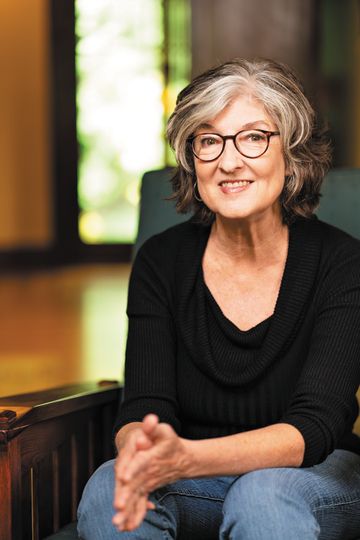
Barbara Kingsolver was born in 1955, and grew up in rural Kentucky. She earned degrees in biology from DePauw University and the University of Arizona, and has worked as a freelance writer and author since 1985. At various ... (more)
If you enjoyed:
A Private Man
Try:
The Poisonwood Bible
by Barbara Kingsolver
We recommend 3 similar authors

L.A. Women by Ella Berman
Two ambitious writers in 1960s LA face betrayal when one writes a novel based on the other's life.






Your guide toexceptional books
BookBrowse seeks out and recommends the best in contemporary fiction and nonfiction—books that not only engage and entertain but also deepen our understanding of ourselves and the world around us.

