
-
Your next favorite book
is waiting.
A conversation with Nancy Foley about her novel, I Am Agatha.
Could you elaborate a bit more on the remark your grandmother made about Agnes Martin that in part inspired I Am Agatha?
A: As a child, I often visited my grandparents in the small town where my mother grew up, not far from Agnes Martin's house at Mesa Portales. Decades later, when I learned that Martin had lived there, I mentioned this to my grandmother, who nodded and said that her best friend had struck up some kind of friendship with Martin, and that a packet of letters they exchanged was destroyed by the friend's son after she died. This was electrifying to me. My grandmother's friend was personally conservative and married; Agnes Martin was unconventional and queer. I couldn't fathom a relationship between them. Are you sure the letters were burned? I asked. And why would her son feel the need to burn them?
My grandmother clearly regretted her remark and rebuffed my questions. She'd been a schoolteacher, wasn't prone to gossip, and could shut down any talk she didn't care for with a sharp look I knew was unassailable. Even after my grandmother died a few years later, something in me resisted tracking down the letter-burning son. I'm not an art historian or an academic. It was the mystery of the story that I loved, and mostly I kept it to myself. But years later, when I was 53, the thought of Martin living alone at Mesa Portales at a similar age, facing thorny problems, resonated differently than it had before, and Agatha's voice started up in my head.
How did you determine when to adhere closely to fact, and when to just take inspiration from it?
A: I was inspired by Agnes Martin's life and art, and especially by her time at Mesa Portales, but I never envisioned a story about Martin, the actual person. This wasn't a difficult decision, as Agatha's voice was immediately vivid to me. As I worked on the first few drafts, I borrowed details from Martin's life only when it suited me and didn't deliberate too much about it otherwise; this was a kind of strategy in order not to falter or lose momentum, as I did have doubts about borrowing aspects of Martin's life and art. But the truth is that out of creative ruthlessness I quickly put those concerns aside and never seriously considered doing otherwise. Mostly I thought about an old friend of mine, someone I had become estranged from; she had died a few years earlier, and so our conflict could never be resolved. My friend had been a maddening combination of sensitivity, rough charm and controlling obstreperousness, and those qualities showed up in Agatha. I added images and stories that I'd been sifting through for years: my grandmother's anecdote, my own experiences with art, details about Martin's life that I remembered, the landscape that I loved and the people I had known there.
How did your family's history in New Mexico influence your writing, particularly the descriptions of the landscape?
A: I grew up in Los Alamos, the site of the Manhattan Project and the Los Alamos National Laboratory. I think it's fair to say that it's unlike any other place in New Mexico, and I understood the town's divisive history more clearly only after I left for college. My emotional connection to the landscape there was complicated. The town is built on a high plateau that extends into finger mesas, with deep canyons between them. We often explored the canyon at the end of my street, brushing past Beware signs warning of the possibility of stepping on undetonated munitions from earlier eras; this canyon was also where some of my classmates played the "bottle" game that Josey describes in the novel. There was always a feeling of danger and trepidation in this landscape for me.
The true source of my love for New Mexico was my grandparents' small town and the breathtaking area surrounding it. Their house and garden (minus the grave in the backyard) is the model for Alice's house—though I should note that my grandparents' house was never falling down around them; my grandmother would not have appreciated that invented detail. I often walked by myself to a small watering hole, which was the inspiration for the reservoir in the novel, and my sisters and I roamed outside all day until an adult shouted up into the clay hills that it was time for dinner. The vistas were grand in every direction but the land was not empty: it was full of relatives, friends, and people from town—most of whom I viewed as old, possibly ancient, always talking, working, smoking cigarettes and cracking jokes. They didn't have a lot of money, they had lived through two world wars and the Great Depression, and a great-uncle of mine had been a POW on the Bataan Death March. They were affectionate to me in all moments, but also they were emotionally reticent and didn't talk about hard times; they just got on with things. I have mixed feelings about that kind of stoicism, which in the American West is mostly viewed approvingly, romantically. These adults were monumental people to me, beloved, but also mysterious and at some level unknowable—similar, in fact, to how I felt about the landscape around me. When Agatha describes Ma Binney's face as "a craggy mountain beneath a snowy nightcap," that's what I'm getting at.
What is your own relationship to visual art, including the work of Agnes Martin?
A:
I read all the time. It's important to me to know what I don't admire as much as what I do, and why; the downside is that it's hard for me to turn off the mode of always analyzing. But when I look at paintings or photographs, I get out of my own way. I gravitate toward what I like, and don't bother with things I don't. I had a dear friend, a painter who was much older than me. I would go over to his studio and he showed me work; this went on for decades. He would fuss over the light, mess with the blinds, make sure I wasn't standing too close. He was a color field painter, which I'll say is basically adjacent to Abstact Expressionism. His paintings are abstract landscapes, about color and emotion, transcendence. If you look at them and let your eyes relax, the paintings shift and move. He never talked while I was looking, but he would talk afterward, over a meal, about art, and he was an example to me about how to make a life as an artist, for the long-term. We never once discussed writing, but knowing him was the most important experience in my creative life because he gave me a parallel track to consider process, which was freeing, and I would come back to writing with new ideas. A painting is a landscape. A book is a landscape. But they work on you differently.
The older I've gotten, the more Agnes Martin's work affects me. My favorites are her later paintings with horizontal stripes of soft color. Somehow you are invited beyond the painting itself. I don't like to overthink my response to them. I don't think that's why she made them; I think they are about not-thinking. I'll never know for sure, and I steer clear of her own writing or lectures, which I find that I don't enjoy. In general I don't like to read exhibition labels or text until after I've finished looking at work, and I always try to stay with the images or paintings a little longer than sometimes feels comfortable. At one time I worked with a photographer who told me that he once boarded a plane and spotted a man riffling very quickly through his latest photo essay in a magazine; this photographer stopped in the aisle, put his hand on the man's arm and said: Slow down, friend. It was good advice, and I've always remembered it when looking at what someone has made.
Did you always know that the title would be I Am Agatha?
A: I typed I Am Agatha at the top of the page just a few days after I started writing in 2020. I was surprised to find that the title stuck—I'd thought I'd come up with something different along the way, or someone else would. Many book titles pose a kind of oblique question or suggestion, something that invites the reader to wonder about the story, but this title is a forthright assertion—it draws a boundary more than invites you in. That has always felt right to me, because Agatha thinks of herself as a sovereign nation.
What was your approach to writing I Am Agatha? Did you have a method for keeping the timeline and twists straight?
A: All I knew when I started was that the book would be about Alice and Agatha. I saw them standing together near my grandmother's flower garden, with the clay hills in the background. I had only the haziest idea of a plot, but I did know the setting, and so I started writing them into sentences and paragraphs that I could feel the landscape in. The earliest scene I wrote was Alice and Agatha at the reservoir, and after that the first confrontation at Alice's house between Agatha and Frank Jr. At some point I sat down to write a scene about Agatha and Josey, and I thought, what if? and suddenly they're picking up shovels.
After a few drafts I started to see the story, though I never felt in control of it. Sometimes I worried that I would write myself into a dead end, and so I tried making lists of scenes going forward. I attempted an outline. I wrote things down in a notebook, but never opened the notebook again. I bought a pack of index cards to jot down scenes and tape them to my wall; I still have the unopened package. In the end I just rewrote the book over and over, instinctively, with no real plan, every time from beginning to end, until I understood it. New things would happen with each draft, strange scenes I hadn't anticipated, and so I'd reckon with them in the next draft. All along I had a feeling that the story already existed and I was excavating rather than inventing it. It was chaotic; but then it resolved.
As you were developing and writing the novel, did you reach for any books or other media?
A: I read three books over and over: Magda Szabó's The Door, for tenderness and complicated people; Leonora Carrington's The Hearing Trumpet, for narrative anarchy; and Charles Portis' True Grit, for voice and humor.
I also often rewatch movies for mood and atmosphere, which is honestly what I care about above all else. Terrence Malick's Days of Heaven (1978) is one I still return to. The actor Linda Manz, who played Richard Gere's younger sister, made a formative impression on me when I first saw this movie in the late '80s. Manz's performance is very natural, but at the same time otherworldly: realism, yes, but with a deceptively simple and elusive quality, a kind of transparency that feels akin to a fable. Her uniqueness, the way she speaks and moves, her voiceover narration that frames the story—it was everything I wanted to do on the page but had no idea how to do. I've been trying ever since.
Which of the characters did you find easiest to write? Were there any that gave you particular trouble?
A: Agatha's voice came very clearly to me. One day I wrote down "My house looks
west out over a canyon that although far from any ocean whatsoever yet resembles one in scope and light," and after that I just kept going. First-person is a deep vein, but it's also a big limitation. Agatha's voice and opinions often overpowered all the other characters, and in particular I struggled to make Frank Jr. anything more than a joke or her punching bag. A friend suggested that I write a letter from Frank Jr. to Agatha, explaining his grievances, to get a better feel for him. I was doubtful about this suggestion—I rarely do writing exercises or prompts—but I was really stuck, and it did help.
The other problem I had was with Alice. Agatha is the only one telling this story—it's basically a monologue. But she's in crisis and preoccupied primarily with action, rather than memory or reflection. So I tried to make all of Agatha's memories of Alice resonate and do extra emotional work—to feel heightened, even when otherwise ordinary—and let other characters drop in details about Alice's past when possible. I also wanted to include the letter from Alice to Agatha, to give her some direct voice. I don't know what it's like to have dementia, or how a person might feel and experience herself in the midst of that. But I do have some knowledge of how it affects people who love someone with dementia. It's a profound loss, a confrontation with a disorienting and unreconcilable absence, and I tried to write around that absence. Any of these characters could have had a bigger presence in the novel, but ultimately it's Agatha's world.
Is there a scene or sentence in I Am Agatha that you especially enjoy?
A: The scene in the café—when Alice notices the baby over and over again, each time for the first time—is rooted in a memory of my own. I was at a diner with my grandmother's best friend, who by that point had dementia. We were seated across from each other in a booth, and my infant son was in his car seat on the floor next to me. My grandmother's friend was surprised and delighted anew every time she glanced down at him—What a beautiful baby! —and I introduced them many times over the course of our meal. In the novel, I wrote this scene with a darker undercurrent—but in my real life, it was poignant and funny in the way that moments with older people can sometimes be.
But my favorite scene is the one with Alice and Agatha at the reservoir. I'd tried writing a scene in this landscape a few times over the years, but never with these characters. It's in the first chapter, and I wanted it to establish them as romantic and erotic partners—a mutual seduction, but one in which no one was playing a role, only that they were being truly themselves. I wanted it to be tender. I also wanted an emotional moment that wasn't just about desire, and that was Agatha's recognition under the water that she couldn't judge Alice on the basis of a few poorly-chosen words about Ma Binney. The reader doesn't yet know the extent of how much Agatha generally does judge absolutely everyone else, but it is a rare moment of insight and acceptance on her part.
Would you ever return to the world of I Am Agatha, whether to continue Agatha's story, or focus on another character?
A: Possibly! Sometimes I find myself wondering about Lorna—not as a young person, but the older Lorna who appears at the end of the book; in my imagination she has grown into a powerful person, one to rival Agatha. But the character who has been in my head for years—long before Agatha, and who always brings my blood up—is Ma Binney. I have a first-person voice for her, but so far the difficulty for me has been figuring out how to sidestep the Americana-vibe of that 1930s-1940s era which we are all steeped in it, via all kinds of media, and I'm certainly not impervious to it. I would want Ma Binney to feel alive, not stuck in time, so I'll need a kind of energy on the page that I haven't quite figured out yet. I did reread Hilary Mantel's Wolf Hall trilogy recently and admired again how she succeeded in avoiding the lacquering that usually encases that era of British history. So that gives me hope that a story about Ma Binney is possible in the way that I envision.
Unless otherwise stated, this interview was conducted at the time the book was first published, and is reproduced with permission of the publisher. This interview may not be reproduced or reprinted without permission in writing from the copyright holder.


Melissa Febos is the national bestselling author of four books, including Girlhood—which won the National Book Critics Circle Award in Criticism, and Body Work: The Radical Power of Personal Narrative. She has been ... (more)
If you enjoyed:
I Am Agatha
Try:
The Dry Season
by Melissa Febos
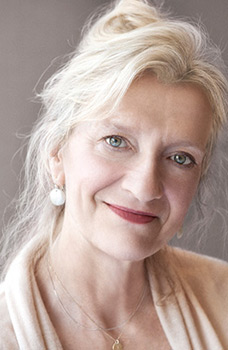
Elizabeth Strout is the #1 New York Times bestselling author of Lucy by the Sea; Oh William!, which was shortlisted for the Booker Prize; Olive, Again; Anything Is Possible, winner of the Story Prize; My Name Is Lucy Barton; ... (more)
If you enjoyed:
I Am Agatha
Try:
Tell Me Everything
by Elizabeth Strout
We recommend 3 similar authors




A library is a temple unabridged with priceless treasure...
Click Here to find out who said this, as well as discovering other famous literary quotes!

Can you name the title?
Test your book knowledge with our daily trivia challenge!
Your guide toexceptional books
BookBrowse seeks out and recommends the best in contemporary fiction and nonfiction—books that not only engage and entertain but also deepen our understanding of ourselves and the world around us.
