
-
Your next favorite book
is waiting.

A Q&A with Chloe Dalton, author of BookBrowse favorite, Raising Hare
The book beautifully captures both the tenderness and the tension of caring for a wild creature. How did your relationship with the hare challenge or change your understanding of the natural world?
Well, thank you. The experience woke up my senses and brought me much closer to nature, after years of city life. It brought me peace and contentment. And it has made me think about the importance of the wild that remains: most living things on earth now are humans, pets and livestock. Wild animals, like the hare, are in a tiny minority, clinging on. I find that thought electrifying, and a reason to change some of my priorities.
You write with vivid precision about the countryside—the textures, sounds, and weather. Did your background as a foreign policy adviser shape the way you observe and describe nature? Why or why not?
With hindsight, I think that it did inform the way I wrote the book. I always tried in my work to avoid assuming that, as an outsider, I understood the experience of people in other countries. Without being conscious of it, I approached the hare as if she came from another land, about which I knew very little. I tried not to assume that I could interpret her behavior or emotional states. It also helped, I think, that I'd lived so far from nature for many years, in the city. I had to re-learn what I know about nature from first principles. I spent a lot of time walking the fields, trying to get a feel for a hare's world, sometimes dropping down into the grass to imagine the landscape seen through her eyes. Hares, for example, have a nearly 360-degree field of vision, something we humans can't even imagine.
Many readers have described Raising Hare as a meditative or even healing book. Did writing it have a similar effect on you?
I wrote the book with the hare alongside me, usually with her asleep across the doorway to my office. It meant that when I wanted to describe her fur or whiskers, I could study her. It gave the experience of writing the book immediacy and poignancy: I didn't know where the story would go, and knew that at any moment, it could come to an end. I spent hours at a time watching the hare and her leverets. I could feel my pulse slowing in those intervals. Irritations would drop away, time would slow, happiness would bubble up inside me. It was a very joyful experience, full of surprise and wonder. It rekindled a curiosity about the world that I hadn't felt so clearly since childhood.
The pandemic forms a subtle backdrop to your story. How did the stillness of that period influence your writing and your connection to the hare?
When I think about the strange confluence of events that brought the hare into my life and made it possible for me to live alongside her for so long, it feels miraculous. As is so often the case with our most important experiences in life, it very nearly didn't happen. I could have easily missed that moment when the leveret was chased by a dog. I could have not gone outside to see what had happened. I could have decided not to intervene in the life of the leveret and let nature take its course. She was with me for nearly four years. I only wish it could have been even longer.
The book raises questions about freedom and control, about what it means to love something wild without possessing it. How did you navigate that emotional boundary?
It is not something I had ever thought about before. But it was clear to me, from the very first moments, that this was a wild animal that needed to be free, that could never be a pet, and that didn't belong in a human home. She had a faraway look in her eyes, limbs that were built for speed, fur that was intended to camouflage and protect her in the coldest temperatures. I never imagined that she would choose to live alongside me in the way she did, but the idea of caging her against her will was unbearable to me, instinctively.
Your life before this experience was fast-paced and global. How did the hare alter your sense of what "purpose" looks like, either personally or professionally?
I am still the same person – I love to travel, I care deeply about the state of the world, and I am committed to the same values. But the hare did make me reconsider what constitutes a good life. I wrote in the book that, under her subtle influence, my own 'wants' have simplified, and, on a practical level, I spend much more time in the countryside.
Raising Hare has been celebrated for its blend of memoir and natural history. Which writers or books guided or inspired you as you shaped this hybrid narrative?
Thank you. I think it's the accumulation of a lifetime of reading. I have always loved novels in which nature is a character, because the action is set at sea or in the desert and it involves a journey or struggle for survival. I read a lot of poetry growing up, from authors like Yeats and Tennyson, Robert Frost and Emily Dickinson , who evoke a certain feeling about nature and the landscape. I love adventure stories, sensitivity to language and simplicity of style. In Garden of Eden, one of Hemingway's characters says that to write well, you should 'know how complicated it is and then state it simply'. That has always stayed with me.
Unless otherwise stated, this interview was conducted at the time the book was first published, and is reproduced with permission of the publisher. This interview may not be reproduced or reprinted without permission in writing from the copyright holder.

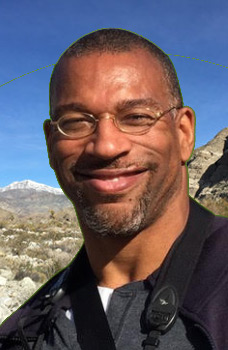
Christian Cooper is a science and comics writer and editor and the host and consulting producer of Extraordinary Birder on National Geographic. One of Marvel's first openly gay writers and editors, Cooper introduced the first... (more)
If you enjoyed:
Raising Hare
Try:
Better Living Through Birding
by Christian Cooper
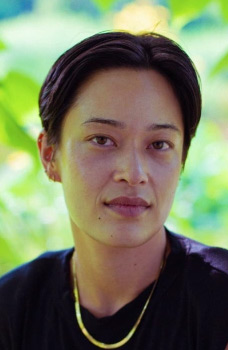
Sabrina Imbler is a writer and science journalist living in Brooklyn. Their first chapbook, Dyke (geology) was published by Black Lawrence Press. They have received fellowships and scholarships from the Asian American Writers... (more)
If you enjoyed:
Raising Hare
Try:
How Far the Light Reaches
by Sabrina Imbler
We recommend 5 similar authors
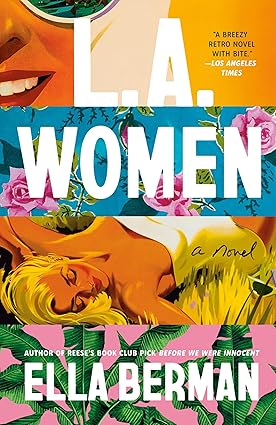
L.A. Women by Ella Berman
Two ambitious writers in 1960s LA face betrayal when one writes a novel based on the other's life.






Your guide toexceptional books
BookBrowse seeks out and recommends the best in contemporary fiction and nonfiction—books that not only engage and entertain but also deepen our understanding of ourselves and the world around us.

