-
Your next favorite book
is waiting.
Summary | Excerpt | Reviews | Beyond the book | Read-Alikes | Genres & Themes | Author Bio

 Book Reviewed by:
An "eerie, brilliant, and touching" (The New York Times) modern classic about mass culture and the numbing effects of technology.
Jack Gladney teaches Hitler Studies at a liberal arts college in Middle America where his colleagues include New York expatriates who want to immerse themselves in "American magic and dread." Jack and his fourth wife, Babette, bound by their love, fear of death, and four ultramodern offspring, navigate the usual rocky passages of family life to the background babble of brand-name consumerism.
Then a lethal black chemical cloud floats over their lives, an "airborne toxic event" unleashed by an industrial accident. The menacing cloud is a more urgent and visible version of the "white noise" engulfing the Gladney family—radio transmissions, sirens, microwaves, ultrasonic appliances, and TV murmurings—pulsing with life, yet suggesting something ominous.
1
Waves and Radiation
THE STATION WAGONS arrived at noon, a long shining line that coursed through the west campus. In single file they eased around the orange I-beam sculpture and moved toward the dormitories. The roofs of the station wagons were loaded down with carefully secured suitcases full of light and heavy clothing; with boxes of blankets, boots and shoes, stationery and books, sheets, pillows, quilts; with rolled-up rugs and sleeping bags; with bicycles, skis, rucksacks, English and Western saddles, inflated rafts. As cars slowed to a crawl and stopped, students sprang out and raced to the rear doors to begin removing the objects inside; the stereo sets, radios, personal computers; small refrigerators and table ranges; the cartons of phonograph records and cassettes; the hairdryers and styling irons; the tennis rackets, soccer balls, hockey and lacrosse sticks, bows and arrows; the controlled substances, the birth control pills and devices; the junk food still in shopping bags&...
Compared to the hypersaturated media landscape of the 21st century, the 1980s seem like a period of comparative authenticity, when people lived "in the moment." But it was also the decade when all the major technologies of attention were born: the personal computer, the mobile phone, video game consules, the building blocks of the internet. Perhaps that's why DeLillo's novel seems so eerily prophetic. A postmodern satire meshed with a Baudrillardian nightmare, the themes and questions it poses are, it turns out, more relevant than ever and worth a second look...continued
Full Review
 (742 words)
(Reviewed by Grace Graham-Taylor).
Death is a central theme of White Noise, stalking the narrative at every turn—one of DeLillo's working titles for the book was The American Book of the Dead. Another major theme is the psychological consequences of a media-saturated society. White Noise overlaps strongly with the ideas of Jean Baudrillard, whose influential treatise Simulacra and Simulation was released just a few years earlier. In that book, Baudrillard argued that twentieth-century developments in mass media engendered a breakdown in the relationship between sign and meaning. Television in particular, whether through news channels or entertainment networks, presented a simulated, highly curated version of reality, creating a disconnect between actual events, ...
If you liked White Noise, try these:

by Tony Tulathimutte
Published 2025
From the Whiting and O. Henry–winning author of Private Citizens ("the first great millennial novel," New York Magazine), an electrifying novel-in-stories that follows a cast of intricately linked characters as rejection throws their lives and relationships into chaos.
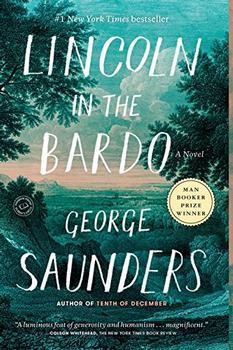
by George Saunders
Published 2018
In his long-awaited first novel, American master George Saunders delivers his most original, transcendent, and moving work yet.
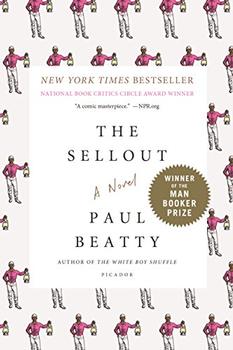
by Paul Beatty
Published 2016
The Sellout is the first book by an American author to win the UK's prestigious Man Booker Prize.
A biting satire about a young man's isolated upbringing and the race trial that sends him to the Supreme Court, Paul Beatty's The Sellout showcases a comic genius at the top of his game. It challenges the sacred tenets of the United States Constitution,...
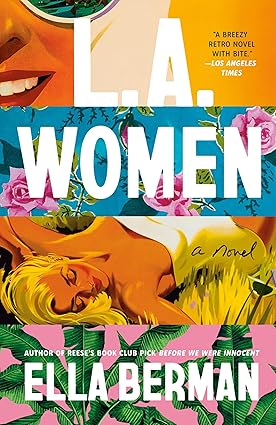
L.A. Women by Ella Berman
Two ambitious writers in 1960s LA face betrayal when one writes a novel based on the other's life.