
-
Your next favorite book
is waiting.
Summary | Excerpt | Reviews | Beyond the book | Read-Alikes | Genres & Themes | Author Bio

 Book Reviewed by:
On my way to work each day I pass by a small bakery, which recently began attracting massive queues that slink down the road and clog the pavement for about a block. One of their products went viral on social media, so now there is a line of people, rain or shine, waiting patiently for "The Best Cinnamon Rolls in London." This, at any rate, is the title of multiple TikTok videos about the rolls, including one with 240,000 views (there are also some referring to them as "Must-Try"). Anyone who lives in a big city has likely witnessed, or even taken part in, something similar: one day a crowd magically materializes around an ordinarily sleepy store, drawn by promises made by an image transmitted through a phone screen.
This scene could have been ripped straight out of the pages of White Noise, Don DeLillo's breakout 1985 novel. Compared to the hypersaturated media landscape of the 21st century, the 1980s seem like a period of comparative authenticity, when people lived "in the moment." But it was also the decade when all the major technologies of attention were born: the personal computer, the mobile phone, video game consoles, the building blocks of the internet. Perhaps that's why DeLillo's novel seems so eerily prophetic. A postmodern satire meshed with a Baudrillardian nightmare (see Beyond the Book), the themes and questions it poses are, it turns out, more relevant than ever and worth a second look.
The novel is narrated by Jack Gladney, a professor of Hitler studies and a family man with a mortal dread of death. He shares this fear with his wife Babette. The couple has made a quiet home with their four children from prior marriages. The family enjoy eating junk food, shopping, watching disasters reenacted on television, and discussing who will die first. Jack befriends visiting professor Murray Siskind, an eccentric semiotician who reads every situation through media tropes and esoteric symbolism. When an ecological disaster hits their neighborhood, the pleasant, orderly systems Jack relies on are turned on their head. He also finds out that Babette is not as straightforward as she seems.
White Noise is full of bursts of language, seemingly simplistic descriptions that hold more weight than their words would allow. Jack's narration is charmingly deadpan; a little ironic, but also clear-eyed and thoughtful. Speaking about family, he says, "The family is the cradle of the world's misinformation. There must be something in family life that generates factual error. Over-closeness, the noise and heat of being." On his wife's posture classes at the local church, he says, "We seem to believe it is possible to ward off death by following the rules of good grooming." DeLillo's style, at once satirical and profound, grounds the novel even as it veers towards surreality. Jack's trajectory becomes increasingly bizarre, but the novel possesses a core of sensitivity that requires the reader to take it seriously.
The titular "white noise" is the flash of logos, the sound of the interstate, the hum of radio, and the buzz of TV. It's an overload of information, which, while disorientating, keeps our mind off darker realities. Reality and media blur into an intractable mass, soothing and confusing at the same time. Jack, awash in this sea of signs and "psychic data" (as Murray would say), is desperate for something solid to cling onto. But DeLillo denies the reader an easy answer to the problems of postmodern flux. In some ways, the novel's message is that our tools of escapism are in fact inescapable, even as they harm our ability to live authentically.
To drive home my earlier point about White Noise's prescience, here is an actual scene from the novel: Early on, Jack accompanies Murray to see a nearby tourist attraction known as "The Most Photographed Barn in America." As the pair drive up to the attraction, they pass by multiple roadside signs reinforcing that the barn they are about to see is the most photographed barn in America. When they arrive at the site, sure enough, the parking lot is full of tour buses and cars, and there are hundreds of onlookers with cameras taking pictures of the barn. After watching the photographers for a while, Murray remarks excitedly, "No-one sees the barn … we're not here to capture an image, we're here to maintain one. Every photograph reinforces the aura. Can you feel it, Jack? An accumulation of nameless energies … They're taking pictures of pictures."
 This review
first ran in the January 28, 2026
issue of BookBrowse Recommends.
This review
first ran in the January 28, 2026
issue of BookBrowse Recommends.

If you liked White Noise, try these:

by Tony Tulathimutte
Published 2025
From the Whiting and O. Henry–winning author of Private Citizens ("the first great millennial novel," New York Magazine), an electrifying novel-in-stories that follows a cast of intricately linked characters as rejection throws their lives and relationships into chaos.
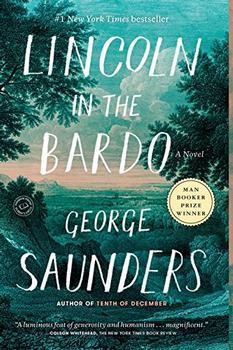
by George Saunders
Published 2018
In his long-awaited first novel, American master George Saunders delivers his most original, transcendent, and moving work yet.
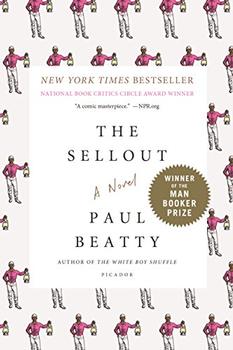
by Paul Beatty
Published 2016
The Sellout is the first book by an American author to win the UK's prestigious Man Booker Prize.
A biting satire about a young man's isolated upbringing and the race trial that sends him to the Supreme Court, Paul Beatty's The Sellout showcases a comic genius at the top of his game. It challenges the sacred tenets of the United States Constitution,...
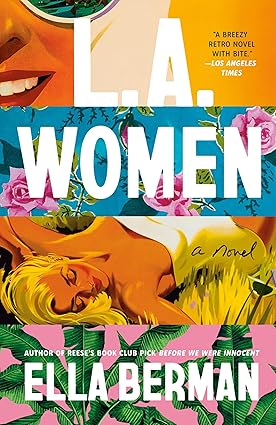
L.A. Women by Ella Berman
Two ambitious writers in 1960s LA face betrayal when one writes a novel based on the other's life.

Your guide toexceptional books
BookBrowse seeks out and recommends the best in contemporary fiction and nonfiction—books that not only engage and entertain but also deepen our understanding of ourselves and the world around us.

