-
Your next favorite book
is waiting.
Summary | Excerpt | Reviews | Beyond the book | Read-Alikes | Genres & Themes | Author Bio

 Book Reviewed by:
Hailed as one of the world's supreme masterpieces on the subject of death and dying, The Death of Ivan Ilyich is the story of a worldly careerist, a high court judge who has never given the inevitability of his death so much as a passing thought.
But one day death announces itself to him, and to his shocked surprise he is brought face to face with his own mortality. How, Tolstoy asks, does an unreflective man confront his one and only moment of truth?
This short novel was the artistic culmination of a profound spiritual crisis in Tolstoy's life, a nine-year period following the publication of Anna Karenina during which he wrote not a word of fiction. A thoroughly absorbing and, at times, terrifying glimpse into the abyss of death, it is also a strong testament to the possibility of finding spiritual salvation.
CHAPTER 1
In the large building housing the Law Courts, during a recess in the Melvinsky proceedings, members of the court and the public prosecutor met in the office of Ivan Egorovich Shebek, where the conversation turned on the celebrated Krasov case. Fyodor Vasilyevich vehemently denied that it was subject to their jurisdiction, Ivan Egorovich clung to his own view, while Pyotr Ivanovich, who had taken no part in the dispute from the outset, glanced through a copy of the News that had just been delivered.
"Gentlemen!" he said. "Ivan Ilyich is dead."
"Really?"
"Here, read this," he said to Fyodor Vasilyevich, handing him the fresh issue, still smelling of printer's ink.
Framed in black was the following announcement: "With profound sorrow Praskovya Fyodorovna Golovina informs relatives and acquaintances that her beloved husband, Ivan Ilyich Golovin, Member of the Court of Justice, passed away on the 4th of February, 1882. The funeral will be held on Friday at one o'clock."
Ivan Ilyich ...
Though the book is short and written in clear and accessible prose, the heaviness of its themes makes it by no means an easy read. It is devastatingly bleak. Tolstoy masterfully portrays death and the physical and mental decline of a man who knows he is about to die. The book's prose is direct, restrained, and deliberately unornamented. This straightforwardness gives the novella its power, reflecting the rigid life of the protagonist while making his emotional unraveling and final acceptance more striking. What makes The Death of Ivan Ilyich especially powerful for me, though, is its psychological focus. The main character's gradual realization that his life has been guided by false values, and that now it's too late to correct this, is portrayed with increasing intensity...continued
Full Review
 (1056 words)
(Reviewed by Sofia Chatzistefanou).
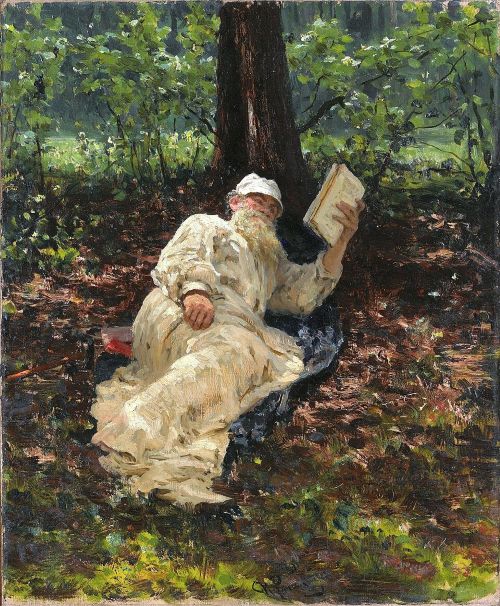 The central question Tolstoy tries to answer with The Death of Ivan Ilyich is, what does it mean to live a moral life? His examination is presented directly, through Ivan's ruminations, and indirectly, through the juxtaposition of two opposing ways of living: that of Ivan and his peers, and that of his servant Gerasim.
Although the answer is never stated outright, it gradually emerges through this contrast. Ivan has lived a "most simple and most ordinary and therefore most terrible" life, concerned only with keeping up appearances, accumulating material goods, and avoiding important questions. On the other hand, Gerasim is full of compassion and honesty, functioning as a moral counterpoint.
The "Correct" Life
Ivan pursued a ...
If you liked The Death of Ivan Ilyich, try these:

by Garth Greenwell
Published 2025
A medical crisis brings one man close to death―and to love, art, and beauty―in a profound and luminous novel by award-winning author Garth Greenwell.

by Fyodor Mikhailovich Dostoevsky
Published 2024
A young, lonely man strolls the streets of St. Petersburg contemplating his solitude when he happens upon a young woman in tears.

by Vincenzo Latronico
Published 2022
A scathing, provocative novel about contemporary existence by a rising star in Italian literature.
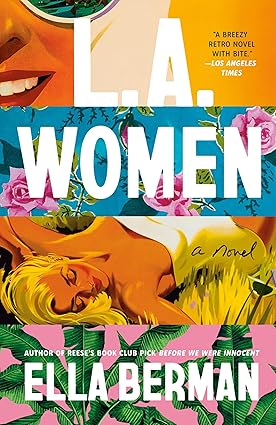
L.A. Women by Ella Berman
Two ambitious writers in 1960s LA face betrayal when one writes a novel based on the other's life.