
-
Your next favorite book
is waiting.
Summary | Excerpt | Reviews | Beyond the Book | Read-Alikes | Genres & Themes | Author Bio

 Book Reviewed by:
This article relates to The Death of Ivan Ilyich

 The central question Tolstoy tries to answer with The Death of Ivan Ilyich is, what does it mean to live a moral life? His examination is presented directly, through Ivan's ruminations, and indirectly, through the juxtaposition of two opposing ways of living: that of Ivan and his peers, and that of his servant Gerasim.
Although the answer is never stated outright, it gradually emerges through this contrast. Ivan has lived a "most simple and most ordinary and therefore most terrible" life, concerned only with keeping up appearances, accumulating material goods, and avoiding important questions. On the other hand, Gerasim is full of compassion and honesty, functioning as a moral counterpoint.
The "Correct" Life
Ivan pursued a respectable career in the judiciary, married the appropriate wife, furnished his apartment according to the tastes of "good society," and aligned his opinions with those of his superiors. His guiding principles have been accumulating wealth and admiration, valuing work over family, admiration over kindness, and possessions over compassion.
He was a careerist, and as his arguments with his wife grew, he spent more time working, concluding that having a wife served only as a means to having food laid on the table. He spent his life preoccupied with promotions, money, and buying stuff that looked expensive as opposed to taking care of his children. An outburst at work, threatening his career, was far more worrying and painful than his daily arguments with his wife.
Ivan has also been pretentious, acting in a performative and emotionally barren way. When he danced, he did so to show people that, in spite of his position, he could still do something as trivial as dancing. Even moments of apparent benevolence, such as showing leniency in court, were motivated by the desire to appear rather than be humane.
His moral fall is shown clearly through symbolism, as Ivan literally falls off a ladder while hanging his new curtains; his physical fall mirrors his moral collapse, while the injury that claims his life occurs during an act devoted entirely to material appearance.
The above flaws are not incidental, nor only present in Ivan's character. Nearly everyone around him is plagued by the same vices. His colleagues, for example, respond to his death by immediately speculating on who will replace him and discussing the unpleasant obligation of having to attend his funeral, suggesting that human relationships are often built on false pretenses. His doctors avoid answering the crucial question of whether Ivan is dying and instead focus on vague diagnoses, emphasizing Tolstoy's critique of institutional falsehood and pseudo-rationality.
Even Ivan's family is not immune to the above. His wife focuses on maximizing the financial benefit from his death, and as Ivan is dying, his daughter impatiently keeps looking at her watch, a gift from Ivan, before announcing flatly that it is time for her to leave.
Ivan knew, in an abstract sense, that all mortals die, and as he was a mortal too, he would eventually die. Yet until his illness, he believed that somehow this truth did not apply to him. As for most of those around him, they refuse to acknowledge the seriousness of Ivan's illness in an attempt to avoid facing their own mortality. They even go as far as blaming Ivan for not getting better, convincing themselves that he must be doing something wrong because, if death is his fault, perhaps when their time comes, it can be avoided. Tolstoy notes that, after he dies, they are almost glad, because his death confirms that they are still alive.
The Moral Life
In contrast to the above, Gerasim embodies Tolstoy's interpretation of a moral life. He is compassionate, sincere, and possesses moral clarity. As Ivan's health worsens, he becomes his only genuine source of comfort and companionship by holding his feet up, an act that alleviates the dying man's pain. And Gerasim does this happily and willingly, not out of duty but a sincere desire to ease Ivan's suffering. And when the latter asks him why he is so kind to him, he responds by acknowledging Ivan's impending death as well as his own. We're all going to die, so why not try to ease the pain of a dying man? All in all, Gerasim represents the life Ivan should have lived, and perhaps this is why he is the only one Ivan tolerates in his final days. Everybody else reminds him of his failures and moral shortcomings. While it is never clearly revealed if Gerasim is simply morally superior or if his social status is what keeps him uncorrupted, Tolstoy's continuous critique of bourgeois society's values and ideals seems to hint that Gerasim's moral clarity is inseparable from his social status.
Another character that functions as a counterpoint is Ivan's youngest son. Unspoiled as of yet by the family's social circle, he shows true compassion and openly expresses his sorrow and grief for his father. As Ivan approaches death, he starts recalling his own childhood. He realizes that back then, everything felt richer, realer, brighter. It was the last time he was genuinely happy. Thus, it seems that for Tolstoy, when we're born, we're all like Gerasim, but somewhere along the way, we may lose our compassion and sincerity. Under this reading, another important question arises: Was Ivan merely a victim of social conditioning, and if so, should one condemn him directly for his flaws?
Death as Light
As we've seen, Ivan has lived an immoral, selfish, and hollow life. At times, it seems like death is his punishment, and thus, his initial resistance to it is rooted in his conviction that, since he has lived correctly, death is unjust.
But as Ivan's body keeps deteriorating, his moral awareness sharpens. He first recognizes the falseness of those around him before turning his gaze inward. He starts asking questions he has never asked before: What is death? Why do we die? What constitutes a moral life? Have I lived authentically? And through these questions, he concludes that he has not lived correctly at all. At the moment of his death, he experiences a vision of light. The terror that has tormented him disappears. Death is no longer just darkness but light. Not his punishment but his salvation. By fully acknowledging that his real sickness, his real pain, is moral, he accepts death as the cure that will free him from the suffering of having lived wrongly.
And just before his final breath, he performs a genuinely compassionate act for the first time in his life. Feeling empathy for his son's suffering, he sends him away so that he won't have to witness his death. He also asks forgiveness from his wife, albeit in his limited way. These final gestures suggest that redemption within life is possible. Yet they come at the very edge of life, when no meaningful transformation can follow, and can't undo a lifetime of immoral living. So, as readers, we can't help but wonder: Would Ivan's awakening have endured if he had survived, or was it only a way to ease his pain? Is death the only way to achieve clarity?
Another important observation is that while Ivan arrives at this recognition, no one else around him does. Not his wife, not his colleagues, not his doctors. They will understand only when their own deaths approach. They all, it seems, are destined to experience the same regrets.
Here, Tolstoy intersects with a broader philosophical tradition concerned with authenticity and mortality. Martin Heidegger, writing decades later in Being and Time (1927), explicitly references The Death of Ivan Ilyich as a literary articulation of what he calls "Being-towards-death": the idea that an authentic life requires an honest confrontation with one's own mortality. Heidegger argues that most people exist in a state of distraction, absorbed in social norms, routines, and expectations. Ivan's life, governed entirely by what is socially approved and expected, closely resembles this inauthentic mode of existence. Yet where Heidegger insists that such recognition can and must occur within life, Tolstoy appears far more pessimistic. In The Death of Ivan Ilyich, moral clarity arrives only at the threshold of death itself, raising the unsettling possibility that authenticity may come too late to be lived, and that the structure of society may prevent clarity until life is nearly over.
Conclusion
To sum up, Tolstoy does not merely depict a man who lived wrongly, but a society that makes authentic life almost impossible until death forces honesty. Ivan had to die so that he could confront the falseness of his life, portraying a lesson that could shield those who are willing to listen from the same fate. That is, living an inauthentic life. Tolstoy does not offer immunity from death. Only a warning about how one lives before it arrives, because death is indifferent to one's moral standing.
Yes, I know. This sounds rather bleak, especially during this time of year. But as we're all making our New Year's resolutions, it is crucial to remember that our time here is limited and that sometimes the world seems disproportionately obsessed with progress, success, and Instagram-worthy lifestyles. So it is important to reconsider how we want to live and start asking the right questions, the questions Ivan only asked too late.
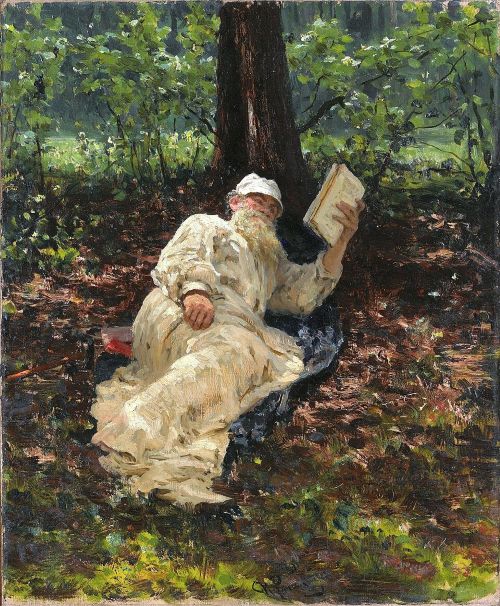
Lev Nikolayevich Tolstoy resting in the forest (1891) by Ilya Repin, via Wikimedia Commons
Filed under Books and Authors
 This article relates to The Death of Ivan Ilyich.
It first ran in the January 28, 2026
issue of BookBrowse Recommends.
This article relates to The Death of Ivan Ilyich.
It first ran in the January 28, 2026
issue of BookBrowse Recommends.
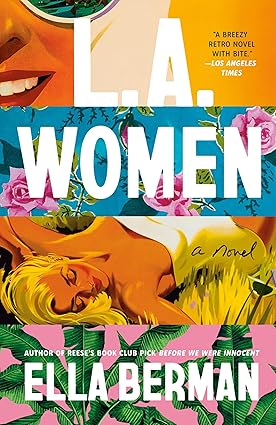
L.A. Women by Ella Berman
Two ambitious writers in 1960s LA face betrayal when one writes a novel based on the other's life.






Your guide toexceptional books
BookBrowse seeks out and recommends the best in contemporary fiction and nonfiction—books that not only engage and entertain but also deepen our understanding of ourselves and the world around us.


