-
Your next favorite book
is waiting.

An Oral History of the New York Commune, 2052–2072
by M.E. O'Brien, Eman Abdelhadi Book Reviewed by:
By the middle of the twenty-first century, war, famine, economic collapse, and climate catastrophe had toppled the world's governments.
In the 2050s, the insurrections reached the nerve center of global capitalism—New York City. This book, a collection of interviews with the people who made the revolution, was published to mark the twentieth anniversary of the New York Commune, a radically new social order forged in the ashes of capitalist collapse.
Here is the insurrection in the words of the people who made it, a cast as diverse as the city itself. Nurses, sex workers, antifascist militants, and survivors of all stripes recall the collapse of life as they knew it and the emergence of a collective alternative. Their stories, delivered in deeply human fashion, together outline how ordinary people's efforts to survive in the face of crisis contain the seeds of a new world.
What emerges is a beautiful, carefully constructed ecosystem of communal care that highlights the greatest facets of the human condition. In the commune, people still have private living spaces, but multiple families or couples often choose to live together, raising children as a group so that no one person is responsible for taking care of all of a child's needs. While most of the events and aspects of life at the commune take place in the New York metropolitan area, there is an occasional dip into the international, as in the chapter "Hassan on Liberating the Levant," in which a Brooklyn resident recalls the successful uprising that freed Palestine from Israeli occupation in the 2040s. A non-linear plot is constructed out of these interviews that follows how things changed over the twenty-year period covered, but Everything for Everyone is a revolutionary novel in ways beyond just subject matter. It is a utopian vision with minimal conflict or dramatic tension...continued
Full Review
 (849 words)
(Reviewed by Lisa Butts).
 Joseph Osmundson, author of Virology
Leftists are often accused of being against everything, but not having a vision of what we're fighting for. Everything for Everyone is a corrective, a sweeping vision of the type of world and society we imagine can and will provide for us all, abundantly. Not all beautiful novels are invested in social restructuring, and not all social restructuring is envisaged in novels, but here we have exactly their meeting point: a beautiful novel bristling with the necessary changes we must make to survive on this planet. The future has sex in it, and community; it has food and labor and joy. It has trauma and memories of the harm, the nightmare, of capitalist precarity. The future is sure to exist; will it have us in it? Everything for Everyone imagines that it will, and, given this remarkable vision, this perpetual possibility, it's now our work to live up to it. Katrina Forrester, author of In the Shadow of Justice
In this genre-bending work of utopian fiction, O'Brien and Abdelhadi imagine a world that might emerge from the ashes of our own. Part speculative social science, part abolitionist manifesto, it explores the social forms and political possibilities of life after capitalism—the novel ways of organizing life, doing gender, and coping with the psychic costs of transformation that may follow the inevitable crises of capital and climate that lie in our future. Like the best utopian fiction, Everything for Everyone is also a startling work of political theory: it gives us the opportunity, as all utopias do, to learn about our own desires and hopes for a way out of our current conjuncture.
Joseph Osmundson, author of Virology
Leftists are often accused of being against everything, but not having a vision of what we're fighting for. Everything for Everyone is a corrective, a sweeping vision of the type of world and society we imagine can and will provide for us all, abundantly. Not all beautiful novels are invested in social restructuring, and not all social restructuring is envisaged in novels, but here we have exactly their meeting point: a beautiful novel bristling with the necessary changes we must make to survive on this planet. The future has sex in it, and community; it has food and labor and joy. It has trauma and memories of the harm, the nightmare, of capitalist precarity. The future is sure to exist; will it have us in it? Everything for Everyone imagines that it will, and, given this remarkable vision, this perpetual possibility, it's now our work to live up to it. Katrina Forrester, author of In the Shadow of Justice
In this genre-bending work of utopian fiction, O'Brien and Abdelhadi imagine a world that might emerge from the ashes of our own. Part speculative social science, part abolitionist manifesto, it explores the social forms and political possibilities of life after capitalism—the novel ways of organizing life, doing gender, and coping with the psychic costs of transformation that may follow the inevitable crises of capital and climate that lie in our future. Like the best utopian fiction, Everything for Everyone is also a startling work of political theory: it gives us the opportunity, as all utopias do, to learn about our own desires and hopes for a way out of our current conjuncture. A large number of contemporary American works of speculative fiction, if not the majority, could reasonably be classified as dystopian in some sense—imagining a future world in which the era-defining problems of our time like climate change, white supremacy, fascism, and the obscenely wide income gaps of late-stage capitalism have gotten exponentially worse. This is likely not because the authors who write this kind of fiction are pessimists, though surely some are, but because dystopia seemingly lends itself more easily to a compelling plot. Storytelling, we have been told, requires conflict. The protagonist must be up against something—in the dystopian plot, it is usually a fascist government, societal collapse, climate ...
If you liked Everything for Everyone, try these:

by Richard Powers
Published 2025
A magisterial new novel from the Pulitzer Prize–winning and New York Times best-selling author of The Overstory and Bewilderment.

There Is a Rio Grande in Heaven
by Ruben Reyes
Published 2025
An electrifying debut story collection about Central American identity that spans past, present, and future worlds to reveal what happens when your life is no longer your own.
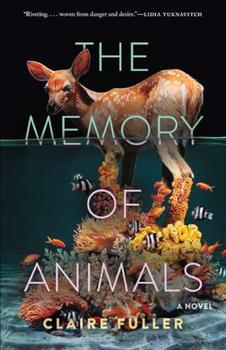
by Claire Fuller
Published 2024
From the award-winning author of Our Endless Numbered Days, Swimming Lessons, Bitter Orange, and Unsettled Ground comes a beautiful and searing novel of memory, love, survival—and octopuses.

L.A. Women by Ella Berman
Two ambitious writers in 1960s LA face betrayal when one writes a novel based on the other's life.