Book Club Discussion Questions
Please be aware that this discussion guide will contain spoilers!
Plot Summary
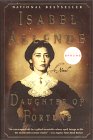
Can we control our own destinies? What does it take to change the course of our lives so that we may pursue our dreams? And how do we know that our decisions are the right ones, especially if we hurt others or ourselves in the process? These are the questions posed by Isabel Allende's fascinating story of bravery and passion, of a young woman's incredible journey from one world to another, from innocence to wisdom. Born into a 19th-century society that values birthright above character, Eliza Sommers is at a startling disadvantage. An orphan of unknown heritage, Eliza is raised in the British colony of Valpara’so, Chile, by the Victorian spinster Rose Sommers and her brother Jeremy. She is not even sure how she arrived at the Sommers household-only that she is lucky enough to be cared for, educated, and even loved by her adopted family. So when Eliza exhibits the signs of a first love, the women in her life come to her "rescue," certain that this adolescent passion will lead to trouble. But Eliza's feelings for Joaqu’n, a young, penniless revolutionary, are all-consuming. Meanwhile, in America, gold has been discovered in the hills of northern California, and by 1849, everyone is swept up in the promise of the Gold Rush. When Joaqu’n leaves Eliza in hopes of striking it rich in California, she is determined to follow him there, risking every comfort and certainty she has ever known.
Allende's portrait of California illustrates the chaos and excitement of the Gold Rush-the promise of wealth, and of a new world. Like Valpara’so, San Francisco is a major port into which foreigners stream daily. But Eliza is a stranger in California. Cloaking her identity-and her sex-she must carve out a new life for herself by whatever means possible. Like thousands of other newcomers, and like her Chinese friend Tao Chi'en, she is thrust into a melting pot of unfamiliar languages and customs. But Eliza and Tao Chi'en quickly learn the value of assimilation, gradually discarding their own suspicions and prejudices. Eliza's love for Joaqu’n leads her to California, but the majesty of the land, the opportunities it holds, and the chance to reinvent herself as a woman in control of her own life are forces that eventually usurp her youthful infatuation. Spirited and sensual, willful and determined, Eliza is a modern woman living in a world that is just learning to be modern. Her courageous story compels us to look beyond the boundaries imposed on us by others and by ourselves. And it teaches us that by opening our minds - and our hearts - we are opening ourselves up to golden opportunities for love, happiness and good fortune.
Topics for Discussion
- Eliza thinks that the facts of her birth don't matter: "It is what you do in this world that matters, not how you come into it," she claims. Ta Ch'ien, on the other hand, cannot imagine "his own life apart from the long chain of his ancestors, who not only had given him his physical and mental characteristics but bequeathed him his karma. His fate, he believed, had been determined by the acts of his family before him." How do these different beliefs determine the way Tao Chi'en and Eliza make decisions about their lives? What are your own feelings about ancestry and self-determination?
- Eliza grows up under the influence of a number of strong individuals--Mama Fresia, Rose, Jeremy Sommers and his brother, John. What does she learn from each of people? How do their differing philosophies contribute to Eliza's experience of the world? How do they shape her personality?
- In 19th century Chile, a married woman could not travel, sign legal documents, go to court, sell or buy anything without her husband's permission. No wonder Rose doesn't want to get married! How would the lives of the women you know be different under those conditions? What are the consequences in a society that limits the freedoms of a segments of its citizens?
📖
Get the full reading guide
Join BookBrowse free to unlock all 9 discussion questions, author background, themes, and more for Daughter of Fortune.
Join free — it takes 30 seconds
Already a member? Log in →
- How does the author develop themes of identity and belonging throughout the narrative?
- What role does the setting play in shaping the characters' decisions and relationships?
- Discuss how the ending reframes the events of the story. Were you surprised?
Unless otherwise stated, this discussion guide is reprinted with the permission of Harper Perennial.
Any page references refer to a USA edition of the book, usually the trade paperback version, and may vary in other editions.