The Stolen Child Reading Guide & Discussion Questions

Summary |  Excerpt |  Reading Guide |  Reviews |  Beyond the Book |  Read-Alikes |  Genres & Themes |  Author Bio
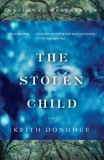
The Stolen Child by Keith Donohue

The Stolen Child

A Novel

by Keith Donohue
  • BookBrowse Review:
  • Critics' Consensus (7):
  • Readers' Rating (21):
  • First Published:
  • May 9, 2006, 336 pages
  • Paperback:
  • May 2007, 384 pages
  • Rate this book

About this Book

Book Club Discussion Questions

Print PDF


For supplemental discussion material see our Beyond the Book article, and our BookBrowse Review of The Stolen Child.


Please be aware that this discussion guide will contain spoilers!

Discussion Questions

  1. The very first words out of Henry Day's mouth are "Don't call me a fairy," and then he takes the reader on a quasi-scientific account of the differences between fairies, hobgoblins, and other "sublunary spirits." Yet Aniday and the rest of the changelings refer to themselves as faeries throughout the book. Why does Henry insist on not being called a fairy? In what other ways does Henry attempt to distance himself from his prior life?
     
  2. Twins and other twosomes figure predominantly in the book: Henry and Aniday, Tess and Speck, Big Oscar and Little Oscar, Edward and Gustav, Mary and Elizabeth. Other characters form pairs: Luchog and Smaolach, Kivi and Blomma, Onions and Beka, George Knoll and Jimmy Cummings. What is the significance of the doubles? In what ways can Henry and Aniday be read as two halves of one being? How does the author, beyond using two alternating narrators, play with the theme of doubles?
     
  3. Rather than each chapter echoing its counterpart, the two stories run at different speeds until the end of the book. How does the author manage time in the novel? Where in the narrative does he relate the same incident from different perspectives and in different sequences?
     
📖

Get the full reading guide

Join BookBrowse free to unlock all 14 discussion questions, author background, themes, and more for The Stolen Child.

Join free — it takes 30 seconds

Already a member? Log in →

  1. How does the author develop themes of identity and belonging throughout the narrative?
  2. What role does the setting play in shaping the characters' decisions and relationships?
  3. Discuss how the ending reframes the events of the story. Were you surprised?


Unless otherwise stated, this discussion guide is reprinted with the permission of Anchor Books. Any page references refer to a USA edition of the book, usually the trade paperback version, and may vary in other editions.


Membership Advantages
  • Reviews
  • "Beyond the Book" articles
  • Free books to read and review (US only)
  • Find books by time period, setting & theme
  • Read-alike suggestions by book and author
  • Book club discussions
  • and much more!
  • Just $60 for 12 months or $20 for 3 months.
  • More about membership!
Win This Book
Win Theo of Golden

Theo of Golden by Allen Levi

One spring morning, a stranger arrives in the small southern city of Golden. No one knows where he has come from…or why…

Enter

BookBrowse Book Club

  • Book Jacket
    Days of Sun and Shadow
    by India Hayford
    A young woman’s coming-of-age story set in the early American frontier, shaped by tragedy, nature, and resilience.
  • Book Jacket
    Chelsea Girls
    by Catherine Lloyd
    A glamorous biographical novel on Mary Quant, whose daring design of the miniskirt revolutionized fashion.

Members Recommend

  • Book Jacket
    Summer of Love
    by Kerri Maher
    Three women reshape their family's Napa Valley winery after the 1967 Summer of Love.
  • Book Jacket
    Somebody Worth Killing
    by Jessica Payne
    Meet Nadia Davis, loving mom, devoted wife, secret assassin… and she needs a babysitter.
Book
Trivia
  • Book Trivia

    Can you name the title?

    Test your book knowledge with our daily trivia challenge!

Wordplay

Solve this clue:

The C is A R

and be entered to win..

Your guide toexceptional          books

BookBrowse seeks out and recommends the best in contemporary fiction and nonfiction—books that not only engage and entertain but also deepen our understanding of ourselves and the world around us.