Boring Asian Female
by Canwen Xu
Unsettling, sharp, and not entirely satisfying (3/20/2026)
Boring Asian Female by Canwen Xu is one of those books that quietly gets under your skin—and then stays there.
From the start, I felt unsettled, but also intrigued. Elizabeth Zhang is easy to sympathize with in the beginning. She's disciplined, ambitious, and painfully aware of how she's perceived—never quite exceptional enough in the ways that seem to matter. Her drive, shaped by both internal and external expectations, feels very real.
As the story progresses, though, that sympathy starts to erode. Elizabeth's choices become increasingly uncomfortable to witness, and what begins as determination starts to feel like something much darker. By the midpoint, I found myself less connected to her and more disturbed by her—watching her unravel in ways that felt, at times, extreme.
The novel leans heavily into that discomfort. The tone is consistently uneasy, and the fixation on Harvard Law School becomes almost overwhelming, especially as Elizabeth's actions escalate. While the story does build in intensity, I'm not sure the payoff felt entirely satisfying for me. It goes far—arguably too far—without fully delivering a sense of resolution that matches that escalation.
That said, Canwen Xu's writing is strong. The dialogue, in particular, stands out—it feels natural and sharp, and it does a lot of work in revealing character dynamics and tension. Elizabeth herself is fully developed, even if her behavior sometimes stretches believability. Her mindset—so driven by pressure, comparison, and the need to stand out—rings uncomfortably true.
This is not a light read. It's unsettling, intentionally so, and it lingers in a way that may not be enjoyable for everyone. But if you're drawn to character-driven stories that explore ambition, identity, and the darker edges of self-perception, this one is worth picking up.

The Jellyfish Problem
by Tessa Yang
A thoughtful story of grief and connection—if you're on board with the sci-fi (3/20/2026)
I went into The Jellyfish Problem expecting something grounded in science and human connection, and while I did find both of those things, the book ultimately leaned much more heavily into science fiction than I had anticipated.
At its core, this is a story about grief. Jo is a compelling protagonist, and I connected with her—particularly in how she navigates the loss of Aldo. Her expertise, her relationships, and the quiet ways her grief shapes her decisions all felt authentic and well developed. I also appreciated the reconnection between Jo and Nadia, which added emotional weight to the story, even if some aspects of that relationship left me with lingering questions.
Where the book lost me was in its more surreal elements. The jellyfish, Clementine, was often confusing and frustrating for me as a reader. I understand that there may be a metaphorical layer at work, but I struggled to fully engage with it. The story pushed further into speculative territory than I was comfortable with, and that made it difficult for me to stay immersed.
That said, there is a lot here to appreciate. The scientific aspects were accessible and genuinely interesting—I learned quite a bit about jellyfish, and the lab scenes in particular were well done. The island setting was also incredibly effective; this story couldn't exist anywhere else, and the sense of isolation added to the overall atmosphere. Characters like Margo stood out as well, bringing resilience and texture to the community.
The pacing was strong, and the ending felt emotionally consistent with Jo's journey, even if its open-ended nature wasn't entirely satisfying for me.
Overall, I think this will really resonate with readers who enjoy science fiction blended with emotional, character-driven storytelling. For me, the balance tipped a bit too far into the speculative—but I can still appreciate what the author was trying to do.

This Book Made Me Think of You
by Libby Page
A tender story of love, loss, and renewal (10/31/2025)
Libby Page’s This Book Made Me Think of You is a beautifully written, deeply compassionate novel about loss, love, and renewal. I was immediately drawn to Tilly Nightingale, whose husband Joe has died far too young—and yet continues to reach her through a year of carefully chosen books and letters meant to help her heal. It’s an imaginative and moving premise, and Page handles it with warmth, sincerity, and emotional honesty.
What struck me most was the balance between grief and hope. The story never rushes Tilly’s healing, and yet there’s an undercurrent of optimism that feels both comforting and believable. Her trip to Paris was a personal favorite section—it reminded me of a recent visit with my mom—and it’s where Tilly’s transformation truly takes shape.
Tilly’s connection with Alfie, the gentle bookseller, feels genuine and understated, and while Joe’s letters lean slightly sentimental (he's a guy, after all!), they’re still profoundly touching. Page’s prose is graceful without being overly polished, and her insights into love and loss feel earned. I’d recommend this to anyone who enjoys character-driven fiction, quiet romances, or novels where books themselves become catalysts for change.

Next Time Will Be Our Turn
by Jesse Q. Sutanto
A heartfelt coming-of-age story with some jarring details (9/18/2025)
Next Time Will Be Our Turn by Jesse Q. Sutanto is, at its heart, a tender love story framed as a grandmother sharing her past with her sixteen-year-old granddaughter. Magnolia, now seventy-three, recounts her own teenage years and the ways love, identity, and culture shaped her. The structure is ambitious and creative, and I found myself pulled in by the intimacy of her voice.
That said, a few elements felt jarring. Magnolia is sixteen in 1998, yet in the "present day" chapters she is seventy-three, which places the book's present in 2055. Oddly, there is nothing futuristic in those sections to reflect that jump forward in time, which was disorienting. The amount of texting in the late 1990s also didn't ring true to my own memories of the era's clunky, number-pad phones. And on a tonal level, some of Magnolia's very frank descriptions of her sexual encounters—shared directly with Izzy—felt off. I couldn't help thinking: what granddaughter wants to hear about her grandmother's wedding night?
If you can set aside those issues, though, the novel shines as an LGBTQ coming-of-age story. Magnolia's Chinese-Indonesian heritage is woven throughout in ways that felt fresh and engaging, offering a perspective I don't often encounter in fiction. Her journey of self-discovery, her experiences with love, and her struggles with family expectations gave the book real emotional weight.
For me, the novel works best when read as a story about memory and identity rather than as a strictly realistic account of time or family conversations. Sutanto has written an affecting exploration of queerness, love, and cultural identity across generations.

Play Nice
by Rachel Harrison
Not quite my genre, but the humor delivered (5/20/2025)
Horror isn't usually my genre, but I picked up Play Nice thinking it was about an influencer—Clio Louise Barnes—flipping a house. Instead, it's a story about a demon-possessed home and the lingering effects on Clio and her family. Unfortunately, I was never able to fully suspend disbelief, so the horror elements didn't quite land for me.
That said, Clio's dry, often biting humor kept me engaged. There are plenty of funny moments, like her deadpan reaction to her brother-in-law's love for his Nespresso machine: she's "tempted to record him so she can watch... whenever she wants to experience joy again."
While digging in the closet in the bedroom she grew up in, Clio finds an old hoodie: "...a band geek with good hair whose name I can't remember. Sean? Scott? Sam? The hoodie is big in just the right way and still smells like Axe. Makes me want to go to second base."
Even the creepy parts come with a wink, like her mom's line: "A demon will move into a split-level on a cul-de-sac. I mean, in this market…"
The ARC had some missing or scrambled text, but it didn't affect the read. Fans of snarky horror may enjoy this one.
Too Old for This
by Samantha Downing
"I always cry at funerals and memorials. It doesn't matter who it is or if I'm responsible for it." (4/23/2025)
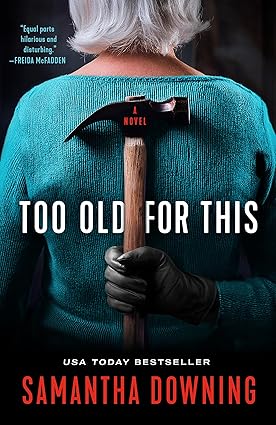
Lottie Jones is not your typical retiree. She plays bingo, prepares stuffed chicken roll for the church potluck, and critiques bridal gowns over text. She's also a former serial killer. These days, her biggest concern should be choosing a retirement home—but unfortunately, her past isn't finished with her yet.
Told in Lottie's sharp, first-person voice, this novel is a darkly funny meditation on aging, guilt, and reinvention. The humor is biting—after one early killing, she wakes up with "a bit of regret," noting, "I don't use that term lightly, because regret is one of the most insidious things out there. Arthritis is a close second."
Surrounding Lottie is a wonderfully nosy supporting cast: Glenda, who judges her for bringing store-bought spinach dip to bingo night; Bonnie, who spikes the punch from her flask; Sheila, who teaches her to cook; and her son Archie, whose upcoming wedding to a much younger woman with questionable fashion sense gives Lottie plenty of material for commentary.
Woven between church drama and family dysfunction is a thread of quiet menace—Lottie is still tying up loose ends, and people are still dying. The less said about that, the better.
This genre-bending book defies easy classification. Part mystery, part black comedy, part character study, it also reads like a coming-of-age novel—just one centered on someone in her seventies. Lottie isn't discovering who she is for the first time; she's deciding what she can live with, and what (or who) she needs to erase to get there.
Whether you're here for the blood or the bingo, this story delivers both—with a wry smile and a body count.

The Lost Story of Eva Fuentes
by Chanel Cleeton
Engaging Across Eras—With One Historical Hiccup (2/18/2025)
Overall, I enjoyed reading this book. The story unfolds in three parts across three distinct time periods: Margo, an American living in London in 2024; Pilar, a woman navigating life in Havana under the Castro regime in 1966; and Eva, also a Havanan woman, working as a teacher in 1900.
Margo's and Pilar's stories felt realistic and engaging, but Eva's narrative didn't ring as true for me. In Chapter 3, she's described in a way that suggests she has considerable teaching experience, but the text later reveals that she was born at the end of the Ten Years' War, which would make her only twenty-two in 1900. I realize teacher training requirements were different in the late nineteenth century, but that discrepancy stood out. Additionally, part of Eva's story involves spending significant time alone with a man, including public displays of affection—behavior that seems unlikely for a young, unmarried woman of that time. Her lack of concern about her reputation or the social norms of the era made her character less convincing to me.
While I found Pilar's and Margo's stories compelling, the novel's central focus on a book Eva wrote—and my difficulty connecting with her character—made the overall reading experience less satisfying.

Jane and Dan at the End of the World
by Colleen Oakley
A quick read (12/18/2024)
I enjoyed parts of this book, including the humorous writing style, but the plot was a little outlandish. I read the book quickly a couple of weeks ago but remember little of the ending. I also received an ARC of The Mostly True Story of Tanner & Louise, which I enjoyed more than this book.
We'll Prescribe You a Cat
by Syou Ishida
I love cats. I wanted to love this book. (5/31/2024)
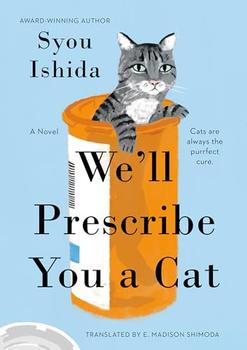
The concept of "We'll Prescribe You a Cat" by Syou Ishida is charming. Somewhere in Kyoto, there is a mysterious clinic in an alley that treats patients by letting them borrow a cat. The clinic is impossible for most people to find, and the door is difficult to open. The clinic staff members bear a striking resemblance to the staff at a nearby veterinary office.
The novel consists of five chapters--almost short stories--that are connected via their relationship to the clinic. Each chapter is named for the cat or cats that are prescribed. But there is little connection between the chapters, and some mysteries are never explained. For example, why does the clinic exist? How did it come about? There are hints, but no resolution.
As a cat lover, I was bothered by the descriptions of patients carrying cats around in carriers all day, or the cats sliding in carriers as they were moved. There was also talk of euthanizing one of the prescribed cats after it was returned, but fortunately, the patient adopted it.
I wanted the story to have a more consistent storyline, even though I liked that the patients learned from the cats and their experiences positively impacted their lives.
Follow the Stars Home
by Diane C. McPhail
Fascinating story told through too modern a lens (5/3/2024)
The true story of Lydia Latrobe Roosevelt and her husband, inventor and steamboat pioneer Nicholas Roosevelt, is fascinating. However, I found myself distracted by the very modern points of view the author gave Lydia.
Despite facing numerous challenges, such as a dangerous boat journey along the Mississippi River, including navigating through the Falls of the Ohio, potential attacks from Native Americans, and a destructive earthquake and its aftershocks, just after giving birth to her second child and taking care of a toddler, Lydia frequently reflects on her significance in history. In Chapter 19, she writes, "I am part of this history, this wild adventure. Will anyone remember that I was? Are women never remembered unless they happened to have been a queen?" This seems far-fetched. I'd expect her to focus on survival, not worry about being excluded from history books because she's a woman.
In addition, Lydia comes across as a modern woman who is an equal partner in her marriage and muses about the roles we assign men and women. I know there were feminists in the early nineteenth century, but I don't think their thoughts about women's rights were as nuanced as today's. For example, after a crew member apologizes for using the word "hell" in front of her, she muses to herself, "What a shame that men cannot simply be themselves in front of women!"
There were several unresolved storylines, too. For example, Lydia worries about food and fuel shortages, but the steamboat floats past earthquake-destroyed settlements for several days without running out of food or fuel.
The story was interesting, but I expect more realistic details about cultural attitudes and roles than I found here.
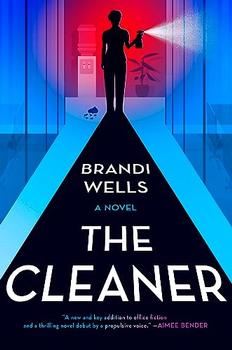
The Cleaner: A Novel
by Brandi Wells
Strange book (2/29/2024)
Imagine reading the innermost thoughts of a cleaning woman as she sweeps and dusts an office building under the embrace of darkness. At first, her thoughts and actions appear mundane. However, it quickly becomes evident that she is actively searching through desks, gaining access to employees' computers, and reorganizing office items, all while pretending to "help" the company. Creepy, eh?
As the story unfolds, the main character's delusion becomes more pronounced, blurring the lines between reality and her distorted perception. With each page, I was left questioning the authenticity of the events, creating a sense of unease and anticipation for a shocking twist that could turn everything upside down. Except there was no shocking twist. The book was disappointing.

Becoming Madam Secretary
by Stephanie Dray
An excellent historical novel (10/26/2023)
I learned about Frances Perkins when I took a women's studies class in college (many years ago!). However, I had no idea of all the things she did for the country. This novel is based on Perkins' life, with some artistic license when documentary evidence was missing or when it served to move the story along more efficiently. It's very easy to read and left me proud of this powerful but humble woman.
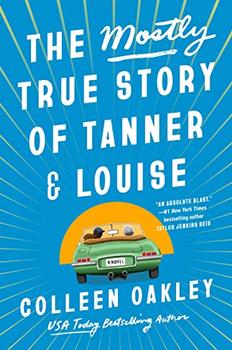
The Mostly True Story of Tanner & Louise
by Colleen Oakley
A good read! (10/12/2022)
This was a fun tale about the unlikely relationship between a young woman (Tanner) and a much older woman (Louise). I enjoyed the story a lot, and it was a fairly quick read. Although the novel seemed to be plot-driven, the author developed the characters nicely. Tanner had to drop out of college when she lost her soccer scholarship after breaking her leg. Louise needed a caregiver after breaking her hip (or so her adult children believed). Of course, their relationship got off to a rocky start, but they found common ground and learned to appreciate each other as the story progressed. I highly recommend this book.
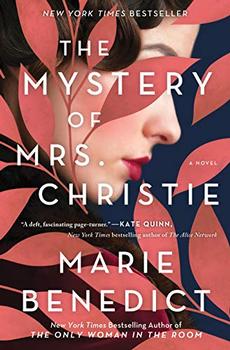
The Mystery of Mrs. Christie
by Marie Benedict
Recommended for fans of Agatha Christie (11/10/2020)
By the time I enrolled in college, I had read all of Agatha Christie's books. I loved them. This book, a fictional look at a real event in Agatha Christie's life, was quite good. The author wrote the story in a way that was as interesting as a "real" Agatha Christie and offered a believable backstory to her disappearance.
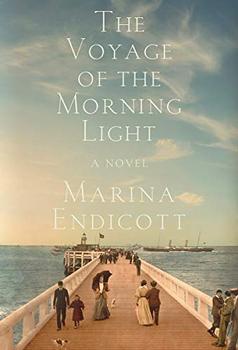
The Voyage of the Morning Light: A Novel
by Marina Endicott
This book needs to be edited! (6/7/2020)
This book is interesting in that the characters travel to far-away places on a sailing vessel, and later, on a steamship. However, the story is disjointed and confusing. The first half of the book is about two half-sisters. The book is written in the third person and the viewpoint shifts between the two sisters. Although one sister—Kay—is 11 and the other—Thea—is near 30, their voices are indistinguishable. There are many unnecessary details, including a temper tantrum that the younger sister throws, after which she alludes to other problems with her temper that aren't illustrated in the book. I couldn't see what the temper tantrum had to do with the plot or with Kay's character development, possibly because there was so little character development.
At the end of part one, we find one character in a tuberculosis hospital (I'm being cagey so as not to spoil the plot). One character notes that, if the sick character is released from the hospital, it will mean that the hospital staff have given up and that character can no longer be treated. I figured that meant the character would die. Two pages later, the nurse tells Thea that they are discharging the sick character. Then we jump to part two, eleven years later, and the former tuberculosis patient is a healthy young adult, and we never find out how he recovered. And there's a new character who was born shortly after part one ended.
Part two involves another around-the-world boat trip, this time at Kay's instigation. Again, the ports of call are interesting, but the rest of the story is stilted. A red toothbrush that the character bought at Filene's in Boston makes an appearance three times in part two, and I can't figure out why we needed to know about it.
I'll admit I like character-driven novels, and this novel is very much plot-driven. I think it could be a decent book with a lot more editing, including both reworking the story and cutting parts that don't help the plot move forward.
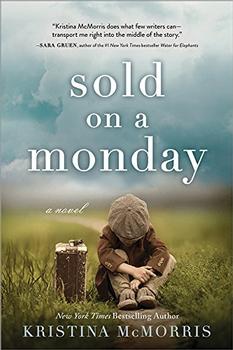
Sold on a Monday
by Kristina McMorris
Fascinating premise (8/1/2018)
I really enjoyed the first half of this book. The story is based on the author's interpretation of a famous photo taken during the Depression, and she weaves quite a tale around a similar fictional photo taken by a young journalist. There's romance, newsroom rivalry, and good character development. The second half of the book seemed more forced to me. It was more plot-driven and there was a lot of what I felt was gratuitous violence from mob figures. Overall, I enjoyed the book and would recommend it.
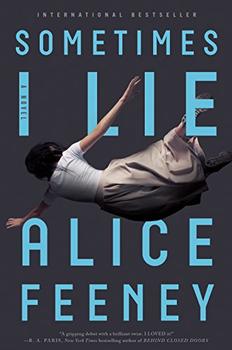
Sometimes I Lie
by Alice Feeney
A haunting read (11/6/2017)
Sometimes I Lie is a fast-paced and exciting book. The story of a woman in a coma is told by flipping back and forth from "now" (during the coma) to "then" (a week before and up to the accident) and to a childhood diary from the more distant past. There are many plot twists... maybe a few too many for my taste. Although this is the author's first novel, it's very well-written and I am not surprised that a TV series is already in the works (according to a blurb on the ARC I received).
The Book That Matters Most: A Novel
by Ann Hood
I wanted to like it more (6/28/2016)
I was disappointed with this book. The plot was more important to the author than character development. I enjoyed the fact that many chapters of the book dealt with a book club, and I liked the parts about the daughter, but there were too many coincidences (or plot devices, really). The plot twist at the end of the book was predictable and I felt like it left me hanging with a lot of unanswered questions.
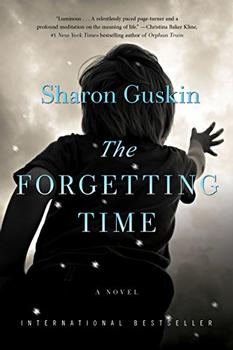
The Forgetting Time
by Sharon Guskin
Interesting but far-fetched (1/5/2016)
I understand that this book was based on actual research on reincarnation, but it still required some suspension of disbelief for me to read it. Not only was the story itself a little unbelievable, the characters seemed two-dimensional. The story was obviously plot-driven rather than being character-driven, and the plot was a little contrived.
I read the book several weeks ago, shortly after I received my advance copy, and was unable to write my review immediately due to the holidays and a work deadline. When I received a reminder email, I had to really stop and think hard to recall what the book was about. It just didn't do it for me.
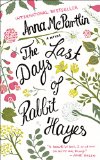
The Last Days of Rabbit Hayes
by Anna McPartlin
A very realistic and poignant story (8/1/2015)
I recently witnessed my father's illness and decline, and his (and my entire family's) experience with hospice. The Last Days of Rabbit Hayes was a very realistic and beautiful story about the end of a life, and how life goes on for the family. I enjoyed this book immensely and I highly recommend it.