What We Can Know: A Novel
by Ian McEwan
How Poetry Connects Us to Our Pasts & Futures (9/25/2025)
I was drawn to review What We Can Know because I was sure I would love reading it as I had McEwan's earlier novel, Atonement, and had enjoyed watching its movie version. I knew that What We Can Know took place in two time periods : around the beginning of both the 20th & 21st centuries and that there was a missing poem, a corona, from the earlier period as a focus for a later search. As an English major, that structure & determination to recover a poem written so long ago fascinated me.
I was curious as to why McEwan was interested in time travel of a sort, from a century when the effects of extreme climate change came due & destroyed much of the planet; then moving on to a later epoch with a long-lost poem as focus of a quest.
I was fascinated to follow a description of the searcher's focus as a literary mystery & a symbol of long ago lost loves & connections emerging through a dedication to literature.
The various relationships & changes within them over time were engaging & indicative of the author's focus on what could occur if we aren't more attentive in looking out for what matters : both with nuclear accidents along with the power of human relationships colliding & hidden words in lines.
His descriptions of the "new" England were shocking but believable. Travel was primitive; food choices very limited & high ground the best locations to safely inhabit.
The most prescient lines for me were on page 178: "With civil action barely 10,000 years old, an eyeblink of time, we hardly know our cycles yet…In 500 years there might be a Literature Department somewhere on the planet. In 5,000 ? Five million ?"
That the story is such an amalgam throughout: full of the poetic life of academia in a majority of the chapters, yet also marital journeys, love affairs, betrayals, even a brutal murder along with nuclear destruction friendships & migration. What also held its significance for me was how deeply poetic forms & research midst preserved manuscripts became even more of a valued template for unity, reverence & talent.
Needed was a pushing forward midst the knowledge rescued from their least ancient cataclysm, hoping to preserve even more of the first part of the 21st century for those millenniums ahead. To search for evidence of the past's mysteries is a unique trait of humanity , first in the present until the future looks back as well. We will always have wanderers from "now" looking for "then", no matter within which realm of discovery.
The various relationships
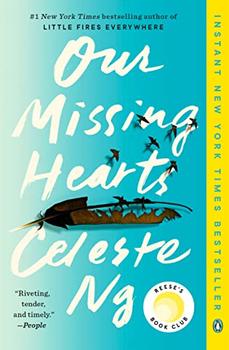
Our Missing Hearts: A Novel
by Celeste Ng
Past, Present and Future (9/12/2022)
After having vividly remembered reading Celeste Ng's previous novels, I was eager for her third, Our Missing Hearts. If possible, I would have preferred to not put the book down before it was finished ! The story line was mesmerizing as it switched between present and past, reminding me of the dystopian qualities of Emily St. John Mandel's Station Eleven. Our Missing Hearts' tell-tale resonance brought to mind the ideas: Poetry is a life force; folktales preserve the past's wisdoms; society unlearns lessons & then must go to extremes to stop repeating the past's dysfunctions; art as protest; and written and spoken words matter because of their potential power for both good and evil. I was touched by the example of the efficacy of libraries in the communities' resilience and librarians as a vital source of protection for literature's and children's survival. Our memories can be the engines to drive change; our creative genomes can endure. Ng's voice is both an essential warning and paean to the protection of all our freedoms lest they disappear.