Page 1 of 1
There are currently 2 reader reviews for The Gales of November
Write your own review!
 techeditor
The Wreck of the Edmund Fitzgerald
techeditor
The Wreck of the Edmund Fitzgerald
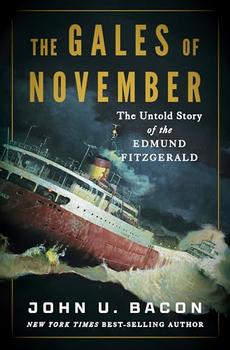
2025, the year THE GALES OF NOVEMBER was published, in particular November 10, 2025, marked 50 years since the Great Lakes ship EDMUND FITZGERALD, along with her entire crew of 29 men, went missing, to be found later at the bottom of Lake Superior. This book is John U Bacon's most excellent retelling of the wreck of the EDMUND FITZGERALD, including some history of Great Lakes shipping and ship wrecks, the sailors lives onboard and off the ship, possible reasons for the wreck, the search for the ship, and the aftermath.
Many facts here may surprise you, especially if you aren't familiar with the Great Lakes (such as with their size) but even if you are. Even someone who, for instance, grew up around Lake Huron, another of the Great Lakes, may not be familiar with the extent of Great Lakes shipping.
Interesting facts such as these could be like a textbook, though, i.e., monotonous, but THE GALES OF NOVEMBER never lets this go on too long without humanizing with stories of the crew, their plans, and what might have happened to them. For sure, a lot of people are involved, and that means lots of names. But Bacon reminds his readers who everyone is whenever he mentions them.
I hope that Bacon wins awards for this book. He certainly deserves to.
labmom55
Draws you in
So, I’ll admit all I knew about the Edmund Fitzgerald is thanks to Gordon Lightfoot. John Bacon did a great job educating me not just about the tragedy, but the economy of the Great Lakes region, the shipping industry and the weather of the area. As with all great narrative nonfictions, this one moved at a brisk speed while teaching me all sorts of facts, big and small. I certainly didn’t know that the Wisconsin Badgers were named for miners, not rodents. Or that Leonardo da Vinci invented the miter lock, which is still used today. Or that the recorded version of Lightfoot’s song was literally the first time the band played it together. But more importantly, how monstrous the Great Lakes economy was during the mid-20th Century.
Bacon includes personal stories about the 29 men lost, which helped make it more than just a book of facts and figures. He was able to interview families, friends and former crew mates. He really was able to impart the sense of community among those who work in the shipping industry. I did question why he often repeated himself about certain facts. Did he think the reader wouldn’t remember what they had read or heard previously?
I listened to this and Johnny Heller did a fine job as narrator, although I did have to turn down the speed I usually use.